Quick summary, what this guide covers:
| You’ll learn | Short answer |
|---|---|
| Can a termination be reversed? | Often yes, especially non-fraud and administrative closures. |
| The appeal process | Read the notice, gather documents, write a focused response, escalate, line up a backup. |
| What underwriters want | License, statements, chargeback history, proof you fixed the problem. |
| Your funds & chargebacks | Reserves can be held; you stay liable for chargebacks after closure. |
| Avoiding the MATCH list | Answer the exact reason and act before the deadline. |
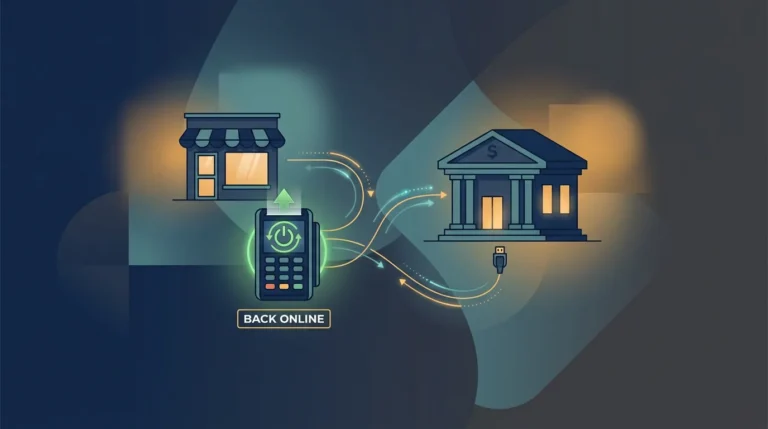
If you just got a closure notice, you already know why you’re searching how to appeal a merchant account termination at 11 p.m. Take a breath. A termination isn’t always the end of the road, and this walkthrough gives you a clear path back. Businesses that rely on enterprise payment services can reduce the impact of unexpected account closures by building stronger processing strategies, maintaining compliance, and creating payment redundancy before problems arise.
What does a merchant account termination actually mean?
A termination means your processor or acquiring bank has closed your ability to accept card payments. Often it comes with a reserve or fund hold while the chargeback window stays open. People mix up three different states, so here’s the plain difference:
| Term | What happens | Reversible? |
|---|---|---|
| Suspension | Processing paused while the bank reviews your account | Usually, once concerns are cleared |
| Fund hold / reserve | Money withheld to cover future chargebacks or refunds | Released after the risk window closes |
| Termination | Account closed; you can no longer process | Sometimes, through an appeal |
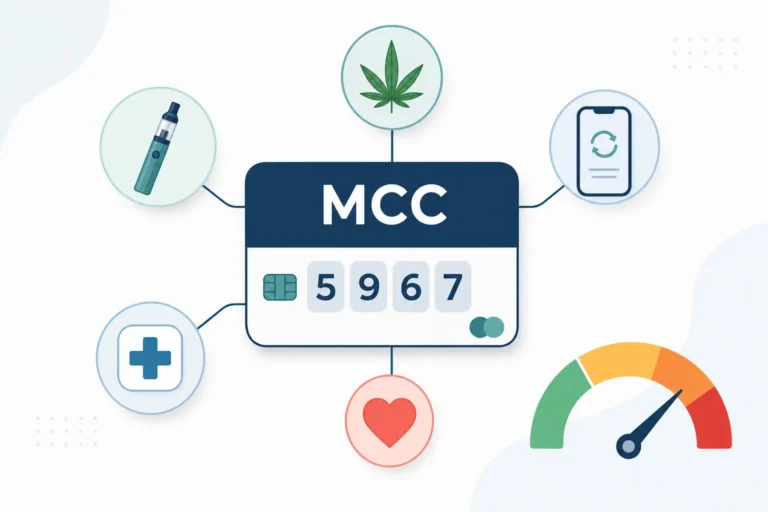
One detail worth knowing: a termination “for cause” can place your business on Mastercard’s MATCH list, a shared record acquirers check that can follow a business for roughly five years. High-risk categories run into this more often, verticals like the nutraceutical and supplement space face stricter underwriting and closures than a typical retail shop.
Why do processors terminate merchant accounts?
You can’t appeal what you don’t understand, so start with the stated reason. Common triggers:
| Trigger | What the underwriter sees |
|---|---|
| Excessive chargebacks | Ratio above card-brand thresholds |
| Sudden volume spikes | Sales far beyond approved limits |
| Prohibited or misclassified products | Goods outside your original application |
| Compliance gaps | Missing licensing or required certifications for regulated goods |
| Reserve shortfall | Held funds too thin to cover potential refunds |
Underwriters weigh your chargeback ratio against the risk your account carries. The U.S. payment system runs under close federal oversight, the Federal Reserve’s overview of payment systems shows where acquiring banks sit in that structure, which is part of why they move fast once a threshold is crossed. The best way to win a dispute, and to keep an account open, is to keep that ratio low in the first place.
Can you appeal a merchant account termination?
Yes, many terminations are appealable, and administrative or non-fraud closures have the best odds. For-cause fraud cases are the hardest to reverse. Set honest expectations before you start:
| Reason for closure | Appeal likelihood |
|---|---|
| Paperwork or verification issue | High |
| Chargebacks with a fixable cause | Moderate to high |
| Volume or business-category mismatch | Moderate |
| Confirmed fraud | Low |
How to appeal a merchant account termination, step by step
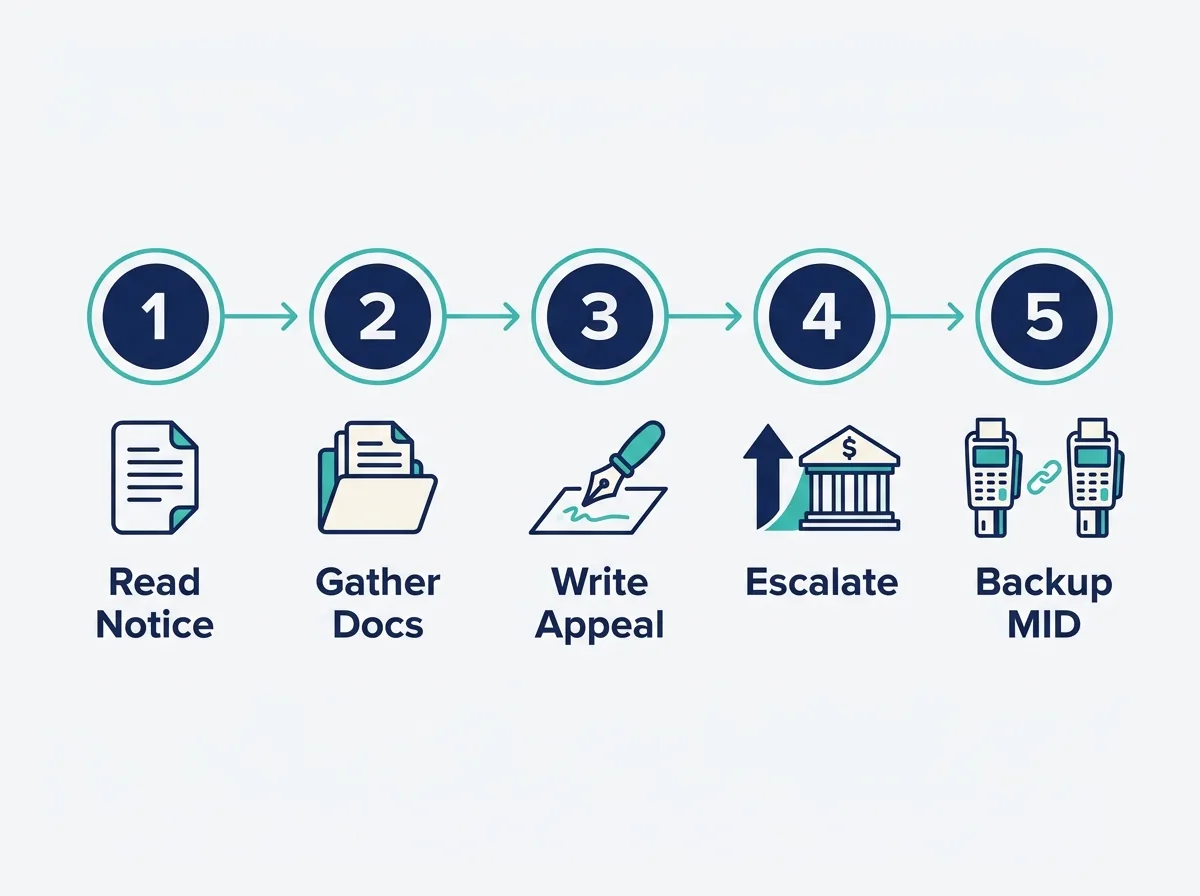
Here’s the core of how to appeal a merchant account termination, in order.
Step 1, Read the notice and find the deadline. Response windows are short, sometimes only a few days. Note who to contact and how.
Step 2, Gather your documentation. Underwriters decide on evidence, not apologies.
| Document | Why it matters |
|---|---|
| Business license | Proves legitimacy |
| Recent bank & processing statements | Shows real, healthy activity |
| Chargeback ratio history | Demonstrates the trend, not one bad month |
| Proof of remediation | Shows what you changed |
| Website & refund policy | Confirms compliance |
Step 3, Write a focused appeal. Answer each stated concern directly and show what’s now different, a new refund policy, a chargeback alert system, corrected product pages. The Consumer Financial Protection Bureau sets a good model for how a calm, evidence-first dispute response should read.
Step 4, Escalate if denied. Contact the acquiring bank directly. Where a card brand drove the decision, know that MATCH removal is limited and depends on the original code.
Step 5, Line up a backup processor in parallel. Don’t sit idle. A second MID keeps revenue flowing, and intelligent payment routing across multiple merchant accounts adds real redundancy so one closure never stops all your sales.
Appealing “online” or through Chase
Most appeals happen through the processor’s online portal or dispute tool, or by written email to underwriting. Larger banks route appeals through their merchant-services support and secure message center.
| Channel | Best for |
|---|---|
| Online portal | Uploading documents and tracking status |
| Email to underwriting | A detailed written appeal |
| Phone support | Clarifying the reason and next steps |
This is where a real partner matters. We answer the phone and the email, and we explain the why, we don’t just say no, we work to find a solution when one exists.
What happens to your funds and chargebacks after closure?
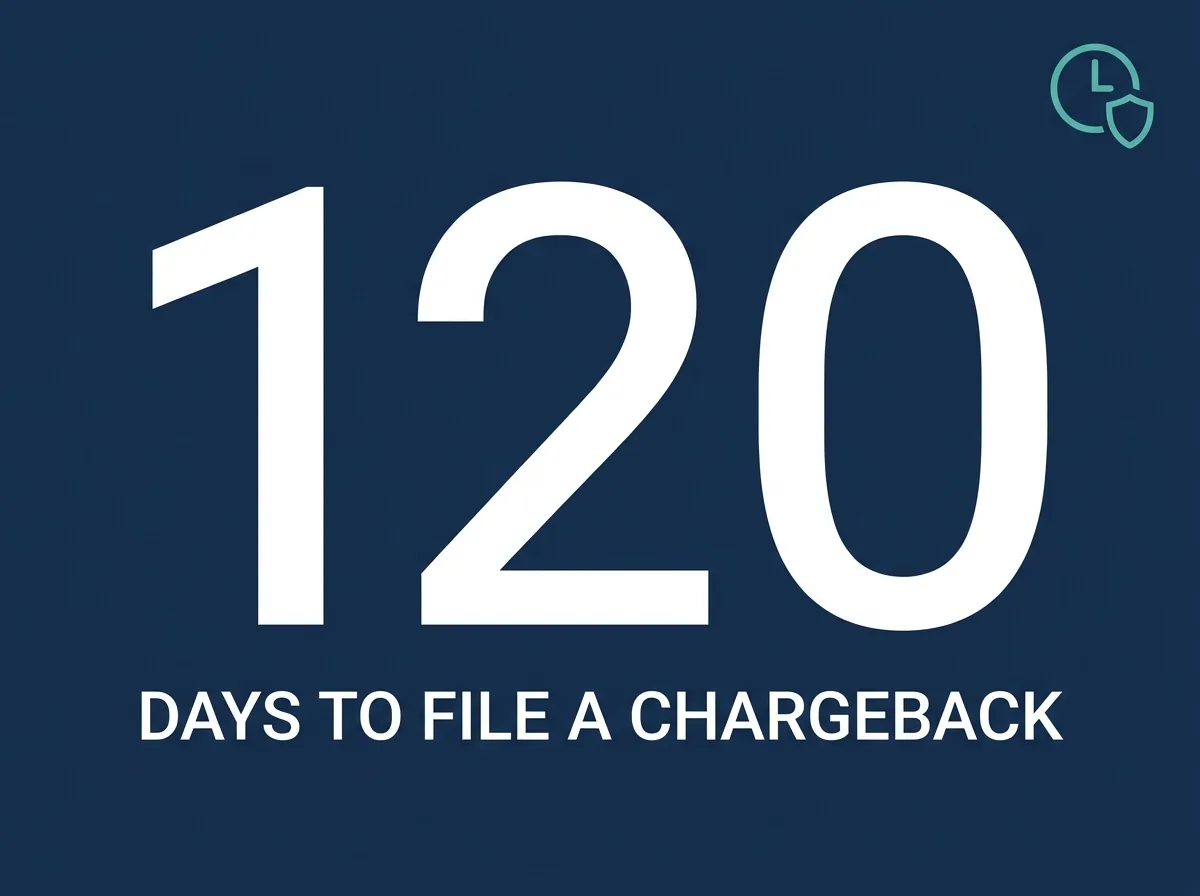
Processors can hold reserves through the chargeback window, and most disputes can be filed up to about 120 days after a transaction. So yes, you can still receive chargebacks after your account closes, and you stay liable for them. If a customer asks whether they can cancel a payment after a merchant shuts down, the cardholder’s dispute rights survive the closure no matter your account status.
Reserve releases and refunds usually move by ACH. Standard ACH transfers settle in about one to three business days, per Nacha, which governs the network, so if you’re wondering how long an ACH transfer takes for a reserve release, plan around that window. Setting up a reliable ACH and check acceptance program also gives you a payment channel that isn’t tied to the terminated card account.
How to avoid another termination
Prevention beats appeals every time.
| Trigger | Prevention |
|---|---|
| High chargeback ratio | Alerts and prevention tools |
| Volume mismatch | Match approved limits to real sales |
| Compliance lapse | Keep licensing and certifications current |
| Single point of failure | Add a redundant secondary MID |
Strong risk and fraud management keeps a high-risk account healthy instead of flagged, and the U.S. Small Business Administration offers solid baseline guidance on the recordkeeping that supports it.
Key Takeaways
| Point | Action |
|---|---|
| Move fast | Deadlines are short, respond right away |
| Answer the exact reason | Address each stated concern with proof |
| Expect held funds | Reserves and chargebacks outlive closure |
| Build redundancy | A backup MID protects revenue |
| Prevent the next one | Watch ratios, stay compliant |
Ready to reopen or place a hard-to-approve account?
We place merchants other processors turn away, and we help you appeal a merchant account termination the right way, with the documentation and follow-through underwriters respond to. Talk to a team that explains the why and works toward a solution. See how our high-risk merchant account solutions can get your business processing again.