High-risk merchant accounts cost more because processors, acquiring banks, and payment partners take on more exposure. Chargebacks, fraud, cross-border sales, subscription billing, regulated products, higher ticket sizes, and unstable processing history can all affect merchant account fees. This guide explains what those costs mean, how they show up on a statement, and how merchants can reduce payment processing costs without choosing the cheapest provider on paper.
High Risk Merchant Account Fees Explained
They are the costs a business pays to accept credit cards, debit cards, ACH, online payments, mobile payments, or in-store transactions when that business is viewed as harder to underwrite.
That label can feel harsh. In many cases, though, a high-risk merchant is not doing anything wrong. A business may be classified as high risk because it sells online, accepts recurring payments, works with international customers, has higher chargeback rates, operates in a regulated industry, or has a limited track record. Some companies also fall into high risk payment processing because their products or services tend to attract more refunds, fraud attempts, delivery disputes, or compliance reviews.
Here’s the thing: the real issue is not only the rate. A merchant may see a higher percentage fee, a monthly fee, a payment gateway charge, chargeback fees, rolling reserves, PCI compliance costs, batch fees, or early termination fees. Put together, these charges decide the actual cost of a high risk processing merchant account.
Premier Payments Online works with businesses that need practical payment support across online, retail, omni-channel, ACH, invoice, and high-risk environments. For merchants that need a customized setup, PPO’s high-risk merchant payment solutions can help connect business needs with the right processing structure.
What Is a High Risk Merchant Account?
A high risk merchant account is a payment account for a business that banks or processors consider more likely to face fraud, chargebacks, regulatory scrutiny, refund spikes, or unstable payment volume.
A merchant account lets a business accept card payments and receive funds after transactions settle. A payment gateway sends transaction data securely between the checkout, processor, acquiring bank, card network, and issuing bank. The merchant account handles the money movement. The gateway handles the secure communication.
For high risk businesses, underwriting is usually deeper. Hemp and CBD merchants see some of the deepest underwriting of any category, and our breakdown of CBD payment processing rates and approval requirements explains which fees are normal and which ones signal an overpriced offer. provider may ask for business registration documents, bank statements, processing history, refund policies, product terms, supplier details, fulfillment proof, and chargeback records. That review helps the processor decide whether the account can be approved, what merchant account rates apply, and whether a reserve is needed.
The phrase “high-risk merchant” often applies to industries such as CBD, credit repair, online coaching, travel, nutraceuticals, subscription products, gaming, adult services, ticketing, debt consulting, international ecommerce, and other business models with higher dispute or compliance exposure. It can also apply to a new business with no processing history.
What Are Merchant Fees and Why Are High Risk Fees Higher?
Merchant fees are the costs a business pays to accept electronic payments. When people ask what merchant fees are, what is a merchant fee, or what are merchant account fees, they are usually asking why a processor takes a percentage or fixed amount from each transaction.
A standard card transaction can include interchange, card network assessments, processor markup, gateway fees, account fees, PCI costs, and sometimes risk-related charges. In high risk merchant services, the markup can be higher because the provider must account for extra underwriting, monitoring, chargeback exposure, fraud and chargebacks, possible legal or compliance risk, and support needs.
High risk merchant account fees explained another way: a processor is pricing the business’s risk profile, not just the payment itself. A clean processing history, low refund rate, clear billing descriptor, strong fraud tools, and stable sales volume can help lower the pressure. A history of disputes, unclear product claims, weak customer service, or sudden volume spikes can push merchant processing fees higher.
| Fee Area | Standard Merchant Account | High-Risk Merchant Account |
| Processing rate | Usually lower and easier to predict | Often higher due to added risk exposure |
| Underwriting | Basic review in many cases | Deeper review of business model, history, and compliance |
| Chargeback tolerance | Lower dispute tolerance | More active monitoring and higher chargeback fees |
| Reserves | Less common | More common, especially for new or volatile merchants |
| Settlement | Often faster | May include delayed funding or reserve terms |
| Support needs | Standard account support | More guidance around risk, fraud, disputes, and compliance |
Average High Risk Merchant Account Fees in 2026
High risk merchant account fees vary widely. There is no universal price because processors review the industry, chargeback rates, average ticket size, monthly volume, country mix, payment methods, business age, refund policy, and prior account history.
Some current industry guides place high-risk processing fees around 3% to 6% plus a fixed transaction fee, with rolling reserves often around 5% to 15% held for 90 to 180 days. That does not mean every merchant will pay that exact amount. Some accounts pay less. Some high-risk or offshore arrangements cost more, especially when the business has heavy disputes, limited documentation, or cross-border exposure.
| Cost Type | Common Range | What It Means |
| Processing fee | 3%–6%+ plus $0.10–$0.50 | Main merchant processing fee per card transaction |
| Monthly fee | $10–$50+ | Account maintenance, support, and reporting access |
| Payment gateway fee | $10–$30+ | Online gateway access for e-commerce payments |
| Chargeback fee | $15–$100 | Charged when a customer dispute occurs |
| Setup fee | $0–$500+ | Application, underwriting, or onboarding cost |
| Rolling reserve | 5%–10% commonly held for 90–180 days | Cash holdback used to cover refunds and disputes |
| PCI fee | Monthly or annual | Compliance-related account cost |
| Batch fee | $0.10–$0.30 | Small fee tied to daily settlement batches |
A merchant who only looks at the advertised rate may miss the bigger picture. The better number is the effective rate. That means total fees divided by total card volume. If a business processes $50,000 in a month and pays $2,500 in total fees, the effective rate is 5%. That number gives a clearer view than one headline percentage.
The Main Types of High Risk Merchant Account Fees
Transaction fees are the most visible cost. They usually include a percentage of the sale plus a fixed fee. A merchant credit card transaction may appear as 3.75% plus $0.30, though the exact merchant credit card rates depend on the risk profile and pricing model. Card-not-present transactions, international cards, rewards cards, and recurring payments often cost more than simple card-present retail transactions.
Monthly account fees cover account maintenance, support, risk review, access to reporting tools, and sometimes compliance monitoring. This monthly fee is separate from transaction fees. For a small business merchant services account, the monthly fee may seem minor, but it still matters when volume is low.
Payment gateway fees apply when a business accepts online payments. The gateway securely sends payment information from the checkout page to the payment processor and banking network. Businesses that sell online need secure checkout, tokenization, fraud filters, and reporting. PPO’s online payment processing solutions are built around that need, especially for merchants that want online and in-store payments to work together.
Chargeback fees are one of the most painful high risk merchant account costs. A chargeback happens when a customer disputes a transaction through the card issuer. The merchant may pay a fee even if the dispute is later won. Chargeback fees also signal risk to the processor. Too many disputes can lead to higher rates, reserve increases, delayed funding, or account termination.
Rolling reserves are often misunderstood. A reserve is not always a fee. It is usually a temporary holdback. For example, if the reserve is 10% and the business processes $50,000 in a month, $5,000 may be held and released later under the reserve schedule. That money may come back, but while it is held, it affects cash flow.
Setup fees can appear during application or onboarding. Some providers waive them. Others charge for underwriting, account setup, compliance review, or technical configuration. A setup fee is not always a red flag, but it should be disclosed before the merchant signs.
PCI compliance costs may appear as monthly, quarterly, or annual charges. “PCI DSS provides a baseline of technical and operational requirements designed to protect payment account data,” according to the Payment Card Industry Security Standards Council. For a high-risk merchant, compliance is more than a box to check. It can affect processor confidence, fraud exposure, and long-term account stability.
Early termination fees apply when a merchant leaves a contract before the term ends. This fee can hurt if the business later finds better merchant services pricing. Merchants should ask whether the agreement is month-to-month, annual, or locked into a longer contract.
Authorization fees, batch fees, statement fees, voice authorization fees, declined transaction fees, and non-compliance fees may also show up on a statement. These smaller charges can add up. A business owner who sees terms such as “stmt fee,” “merchant service charges,” “bankcard merch fees,” or “voice authorization fee” should ask the provider to explain each line.
What Really Drives High Risk Payment Processing Costs?
Chargeback rates have a direct effect on high risk payment processing. A business with clear policies, good support, proof of delivery, and accurate billing descriptors is usually easier to underwrite than a business with frequent “I don’t recognize this charge” disputes.
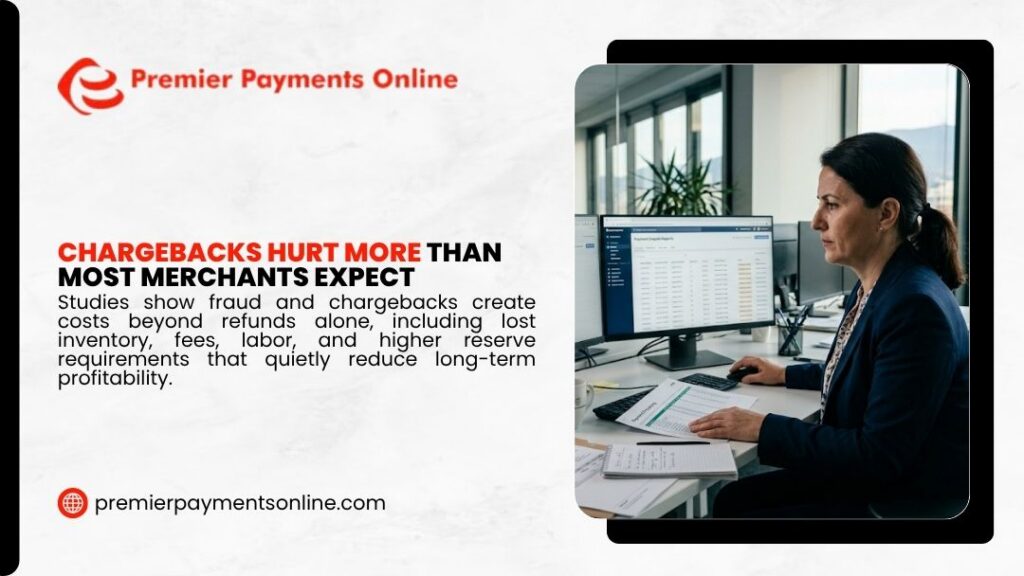
Fraud is another driver. LexisNexis Risk Solutions reported that U.S. merchants incur an average cost of $4.61 for every $1 of fraud, based on its 2025 True Cost of Fraud study. That explains why processors take fraud tools seriously. A fraudulent order can create the original loss, a chargeback fee, lost goods, shipping loss, labor cost, and a higher risk score.
Business models also matter. Recurring payments can create disputes when customers forget they subscribed. International sales can bring more currency, fraud, and identity verification challenges. High-ticket products increase exposure because one dispute can be expensive. Regulated products may require more review. New companies may pay higher fees because they do not yet have a track record.
Processing history can work in the merchant’s favor. Clean statements, low chargebacks, steady volume, low refund ratios, and clear customer terms can support better merchant account pricing over time. That is why setting up a merchant account should not be treated as a one-time task. It is an ongoing relationship between the business, processor, acquirer, and payment partners.
High Risk Merchant Account Pricing Models
Pricing model matters almost as much as the rate. A merchant account cost can look simple at first, then become hard to compare once assessments, markups, gateway fees, PCI costs, and monthly minimums appear.
Flat-rate pricing uses one broad rate for many transaction types. It is easy to read, which helps new merchants. The trade-off is that the rate may include an extra margin.
Tiered pricing groups transactions into qualified, mid-qualified, and non-qualified categories. It can be hard to audit because the merchant may not know why certain transactions fall into a more expensive tier.
Interchange-plus pricing separates card network and interchange costs from the processor’s markup. It is often more transparent, though not every high-risk merchant will qualify for the cleanest structure.
Subscription pricing uses a monthly membership-style fee plus a lower transaction markup. For some high-volume merchants, it can work. For high risk businesses, approval depends on industry, volume, and risk profile.
| Pricing Model | Best Fit | What to Watch |
| Flat-rate | Newer merchants who want simple billing | May cost more once volume grows |
| Tiered | Some retail merchants with predictable card types | Harder to compare and audit |
| Interchange-plus | Businesses that want clearer fee details | High-risk markup may still apply |
| Subscription | Higher-volume merchants | Monthly cost may outweigh savings at low volume |
High Risk Merchant Fees vs. Standard Merchant Fees
Standard merchant services credit card processing fees are usually lower because the account is easier to underwrite. A low-risk local retailer with card-present sales, low refunds, and stable volume may pay less than an online subscription business that sells internationally.
High risk merchant account fees explained through that comparison are easier to understand. The processor is not only moving money. It is accepting more responsibility for disputes, returns, regulatory issues, fraud screening, and possible losses. That added responsibility shows up in merchant account rates, reserves, contract terms, and account monitoring.
For small business merchant services, the goal is not always to find the lowest advertised rate. The goal is to find a provider that can keep the account stable, support the business model, and explain merchant service fees clearly. A cheap account that later freezes funds or shuts down due to a mismatch can cost far more than a properly underwritten account.
How Rolling Reserves Affect Cash Flow
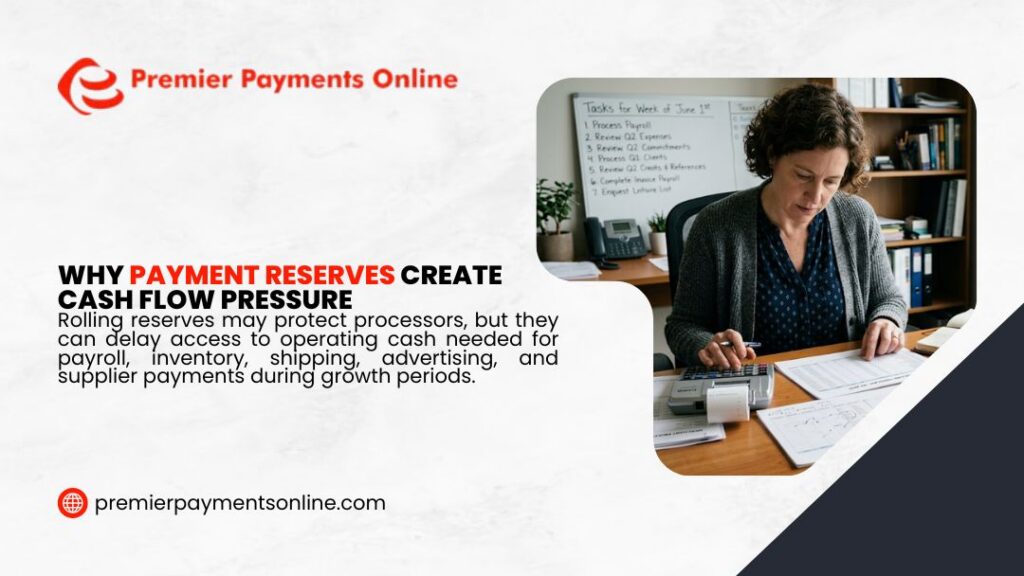
Rolling reserves deserve careful attention. A reserve can protect the processor, but it can also strain the merchant’s cash flow.
Say a business processes $100,000 a month. With a 10% rolling reserve, $10,000 may be held. If that hold lasts 180 days, the business must plan around delayed access to a meaningful amount of revenue. For a company that needs inventory, payroll, ads, shipping, or vendor payments, that matters.
| Monthly Card Volume | Reserve Percentage | Amount Held | Available Before Other Fees |
| $25,000 | 10% | $2,500 | $22,500 |
| $50,000 | 10% | $5,000 | $45,000 |
| $100,000 | 10% | $10,000 | $90,000 |
A reserve is not always bad. In some cases, it helps a high-risk merchant get approved when a provider would otherwise decline the account. The key is clarity. The merchant should know the reserve percentage, release schedule, cap amount, if any, and the conditions that may increase or reduce the reserve.
How to Read a High Risk Merchant Statement
A merchant statement can feel like a maze. Still, it tells the truth if the owner knows where to look.
The first number to calculate is the effective rate. Take the total fees paid for the month and divide that number by the total processing volume. That figure gives a real-world view of merchant processing fees explained beyond the sales pitch.
Next, separate real fees from temporary holds. A monthly fee, gateway fee, PCI fee, batch fee, and chargeback fee are costs. A rolling reserve may be held in cash, not a permanent fee, though it still affects cash flow. Merchants should review reserve activity each month to make sure releases match the agreement.
Then look for avoidable charges. PCI non-compliance fees, duplicate gateway fees, unused software charges, unnecessary statement fees, excessive monthly minimums, and unexplained service charges deserve review. When a statement uses unclear labels, ask for a plain-English breakdown.
Finally, compare transaction types. Card-present retail payments often price differently from card-not-present ecommerce payments. ACH may cost less than card payments for some invoices or recurring transactions. International payments may carry cross-border and currency-related costs. Businesses that sell across channels may benefit from PPO’s omni-channel payment processing because it can bring online, in-store, mobile, and scheduled payments into one setup.
Difference Between a Merchant Account and a Payment Gateway
The difference between a merchant account and a payment gateway is simple once the roles are clear. A merchant account helps receive and settle funds from card transactions. A payment gateway securely transmits payment details for approval.
An e-commerce business usually needs both. The gateway protects and routes the transaction. The merchant account supports settlement. A payment processor connects the transaction to the broader card and banking system.
This matters because fees may apply to each layer. A business might pay merchant account fees, gateway fees, transaction fees, PCI fees, chargeback fees, and software fees. PPO’s comparison of payment gateway vs payment processor helps merchants understand which piece does what before comparing providers.
Special Fee Issues for Online, In-Store, and Omni-Channel Merchants
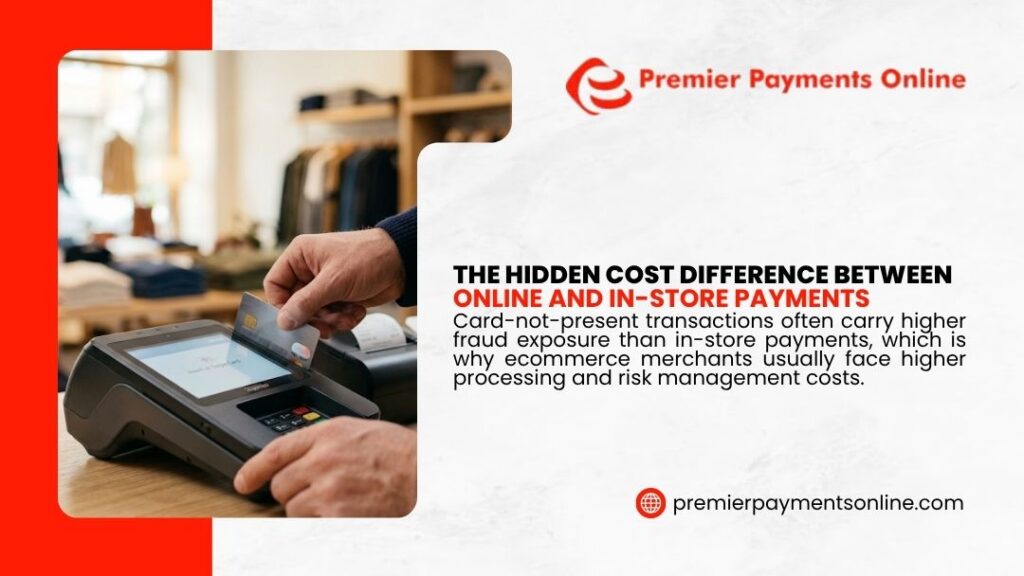
Online merchants often pay more than in-store merchants because card-not-present transactions carry more fraud risk. The customer and card are not physically present, so fraud filters, address checks, CVV review, device data, tokenization, and 3D Secure may play a role.
Retail merchants still face fees, but the risk profile can differ. EMV terminals, smart terminals, and mobile card readers help reduce certain types of card-present fraud. Businesses with a physical location can review PPO’s in-store payment options when they need hardware, reporting, and payment support in one place.
Invoice-based businesses have a different challenge. They need to get paid without chasing customers for paper checks or manual card payments. Bill payment tools can support ACH, card payments, recurring invoices, and customer portals. PPO’s bill payment automation explains how invoice and payment workflows can become easier to manage.
ACH can also help reduce reliance on card payments for certain business models. It is not right for every transaction, and return rules still matter, but ACH can fit invoices, subscriptions, memberships, and B2B payments. PPO’s ACH and check acceptance program gives merchants another route beyond card-only processing.
How to Reduce High Risk Merchant Account Fees
The best way to lower high risk merchant account fees is to reduce the risk that caused them in the first place. That sounds obvious, but it is where many merchants miss the mark.
Clear billing descriptors can reduce confusion. A fair refund policy can prevent avoidable disputes. Fast customer service can stop a complaint before it becomes a chargeback. If disputes are already driving up your costs, this guide on how to reduce chargebacks for high risk businesses breaks down the exact controls that lower your ratio. Proof of delivery helps when a customer claims an item never arrived. Accurate product descriptions reduce “not as described” disputes.
Fraud tools also matter. If those controls came too late and your account was closed, appealing a merchant account termination is often the fastest path back to processing before you start shopping for a new provider. Filters based on AVS, CVV, velocity, device behavior, IP address, transaction size, and customer history can reduce bad orders before they settle. PPO’s risk and fraud management tools support merchants that need a stronger defense against disputes and suspicious activity.
Tokenization can help businesses that store payment credentials for repeat purchases or recurring payments. Instead of keeping card data exposed, tokenization replaces sensitive information with a secure token. That can reduce payment risk and improve account stability.
Recurring billing businesses should also review failed payments, cancellation paths, reminder emails, and customer support response times. A subscription customer who cannot cancel easily may dispute the charge.
For merchants that accept invoices or larger payments, ACH may reduce some payment processing costs. For e-commerce merchants, intelligent routing and gateway configuration may also improve approval rates. This can explain how payment routes may affect approvals and performance.
Transparent pricing is another must. A merchant should ask whether pricing is flat-rate, tiered, interchange-plus, or another model. The account proposal should show transaction fees, gateway fees, monthly fees, chargeback fees, PCI charges, reserve terms, termination fees, and settlement timing.
Documentation can also help. A processor is more comfortable when the business provides clear bank statements, prior processing history, chargeback ratios, refund policies, product details, compliance documents, and fulfillment proof. A stronger file can lead to better terms.
Questions to Ask Before Setting Up a Merchant Account
Before setting up a merchant account, a business owner should slow down and ask direct questions. The answer should be clear enough to understand without a payment dictionary.
| Question | Why It Matters |
| What is my effective rate after all fees? | It shows the real cost, not just the advertised rate |
| Is there a rolling reserve? | It affects available cash and daily operations |
| How long are funds held? | Settlement timing can affect payroll, inventory, and vendors |
| What is the chargeback fee? | Disputes can become expensive fast |
| Are gateway and PCI fees separate? | Separate charges can raise monthly costs |
| Is the contract month-to-month? | Long contracts may include early termination fees |
| Can ACH reduce some costs? | Some invoices or recurring payments may fit ACH better |
| What fraud tools are included? | Better prevention can lower long-term risk and fees |
Merchants should also ask whether the provider supports their exact industry. A processor that does not understand high risk businesses may approve the account, then review or close it later. That is why a high risk merchant services provider should understand the business model before the first transaction runs.
FAQs About High Risk Merchant Account Fees
Why are high risk merchant account fees higher?
High risk merchant account fees are higher because the processor and acquiring bank take on more exposure. The business may have more disputes, international transactions, recurring billing, compliance issues, or fraud risk.
How much are merchant credit card fees for high-risk businesses?
Many high-risk merchants pay more than standard businesses, often in the range of 3% to 6% plus a fixed transaction fee, though costs can vary based on industry, history, volume, ticket size, and chargeback rates.
Are rolling reserves refundable?
Rolling reserves are often released later according to the agreement, provided the merchant stays within acceptable risk limits. Merchants should confirm the release schedule, reserve cap, and review terms before signing.
Do merchants get charged for declined transactions?
Some providers charge authorization or gateway fees for attempted transactions, including declines. The merchant statement should show whether declined transactions carry a fee.
What are merchant fees for debit cards?
Debit card merchant fees vary based on card type, network, transaction method, and pricing model. Card-present debit often costs less than some credit transactions, but high-risk pricing can still affect the final cost.
What is a merchant service fee?
A merchant service fee is a broad term for charges tied to payment acceptance. It may include processing fees, account fees, service fees, gateway costs, and other charges from the merchant services provider.
A Smarter Way to Manage High Risk Payment Costs
When business owners search for high risk merchant account fees explained, they usually want more than a list of charges. They want to know what they will pay, what can be negotiated, what affects cash flow, and how to avoid payment problems that hurt growth.
The lowest rate is not always the safest choice. A processor that does not understand the business model may create bigger problems later. A better approach is to review the full cost structure, confirm reserve terms, reduce chargebacks, use fraud prevention, choose the right payment methods, and work with a provider that can support the business as it grows.
Premier Payments Online helps merchants accept payments online, in-store, through invoices, by ACH, and across omni-channel environments. For high-risk merchants, that support can make the difference between a fragile setup and a payment structure built around the real risks of the business.
Need help making sense of your current merchant statement? You can speak with a payment specialist at Premier Payments Online to review your payment setup, understand where your merchant fees come from, and explore a secure processing structure built around your business model.