It usually shows up quietly. A wave of tiny $1 charges hitting your signup form at 3 a.m. A rebill month where chargebacks spike and you can’t explain why. A customer swearing they never authorized the subscription they’ve been happily using for four months. If you run a recurring-billing business, a fitness app, a nutraceutical subscription, a wellness box, or a games or SaaS product, these are the moments payment fraud prevention becomes a business priority rather than an abstract concern, because fraud starts costing you real money.
This guide keeps it simple: what payment fraud actually is, the schemes built to hit subscription merchants, the warning signs to watch for, and a step-by-step defense that won’t strangle your legitimate sales. No jargon, no fear-mongering. Just the “why” behind the rules, so you can make good calls.
What is payment fraud (and what is merchant payment fraud)?
Payment fraud is when someone uses a payment method they’re not entitled to, or disputes a charge they know is legitimate, to get money or goods for free. A stolen card, a hijacked account, an “I never bought this” dispute on something they absolutely did buy: it all lands under the same umbrella.
Merchant payment fraud is the slice that matters most to you, because it’s the fraud that sticks you with the loss and the liability, not the cardholder or the bank. When a stolen card gets used in a store, the card networks have rules that often protect the shopper. But when the sale is card-not-present (CNP), meaning no physical card, just a number typed into your checkout, the merchant is usually the one who eats the cost when it turns out to be fraud.
Subscriptions are almost entirely CNP, which is exactly why this topic deserves your attention.
And it’s not a rounding error. Online payment fraud costs businesses billions of dollars a year, and a large share of it flows straight through card-not-present sellers like you. When you bill online and on a schedule, you’re standing right in that current.
The payment fraud schemes that target subscription and recurring-billing merchants
Not every scam is aimed at you. A handful, though, are practically designed for the subscription model. Here are the ones worth knowing by name. If you want the fuller picture, we cover the many varieties of payment fraud that target businesses in more detail elsewhere.
Card testing (the signup-form attack)
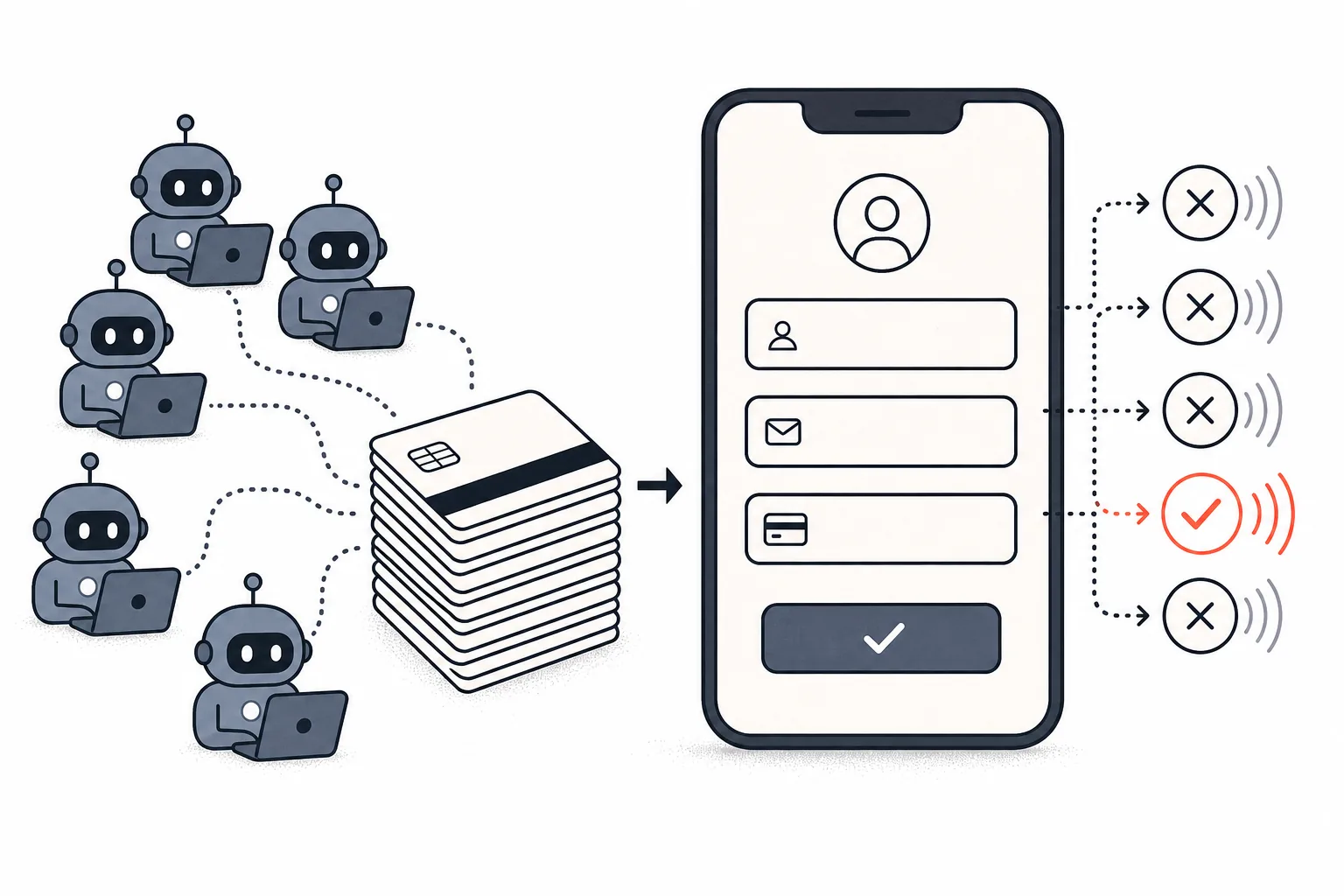
Fraudsters buy lists of stolen card numbers and need to know which ones still work. Your free trial or cheap entry plan is the perfect testing ground: bots run hundreds of cards through it, and a tiny approved charge tells them the card is live. You’ll see a flood of small authorizations, lots of declines, and a chargeback mess later. This is often the very first sign of trouble.
Account takeover (ATO)
Here the fraudster logs into a real customer’s account, one with a saved card on file, using a leaked or reused password. Then they change the shipping address, upgrade the plan, or drain stored value. Because it’s a genuine account, it sails past a lot of basic checks.
Friendly (first-party) fraud
The big one for subscriptions. A customer disputes a rebill they forgot about, didn’t recognize on their statement, or simply wants their money back without cancelling first. Sometimes it’s honest confusion; sometimes it isn’t. Either way, the chargeback hits you, plus a fee. A vague billing descriptor (the name that shows up on the card statement) is a top cause.
Refund and policy abuse
Someone exploits your cancellation or refund terms, claiming non-delivery, over-using a money-back guarantee, or serial-refunding across accounts. Generous policies are good for real customers and a gift to abusers if you don’t set limits.
Stolen-card CNP fraud
The classic: a genuinely stolen card used to open a paid subscription. The real cardholder disputes it, and you refund and lose the product or service you already delivered.
Each of these needs a slightly different response, which is why it helps to understand the common payment fraud schemes that target merchants before you decide which defenses to prioritize.
How fraudsters actually pull it off (so you know what you’re defending against)
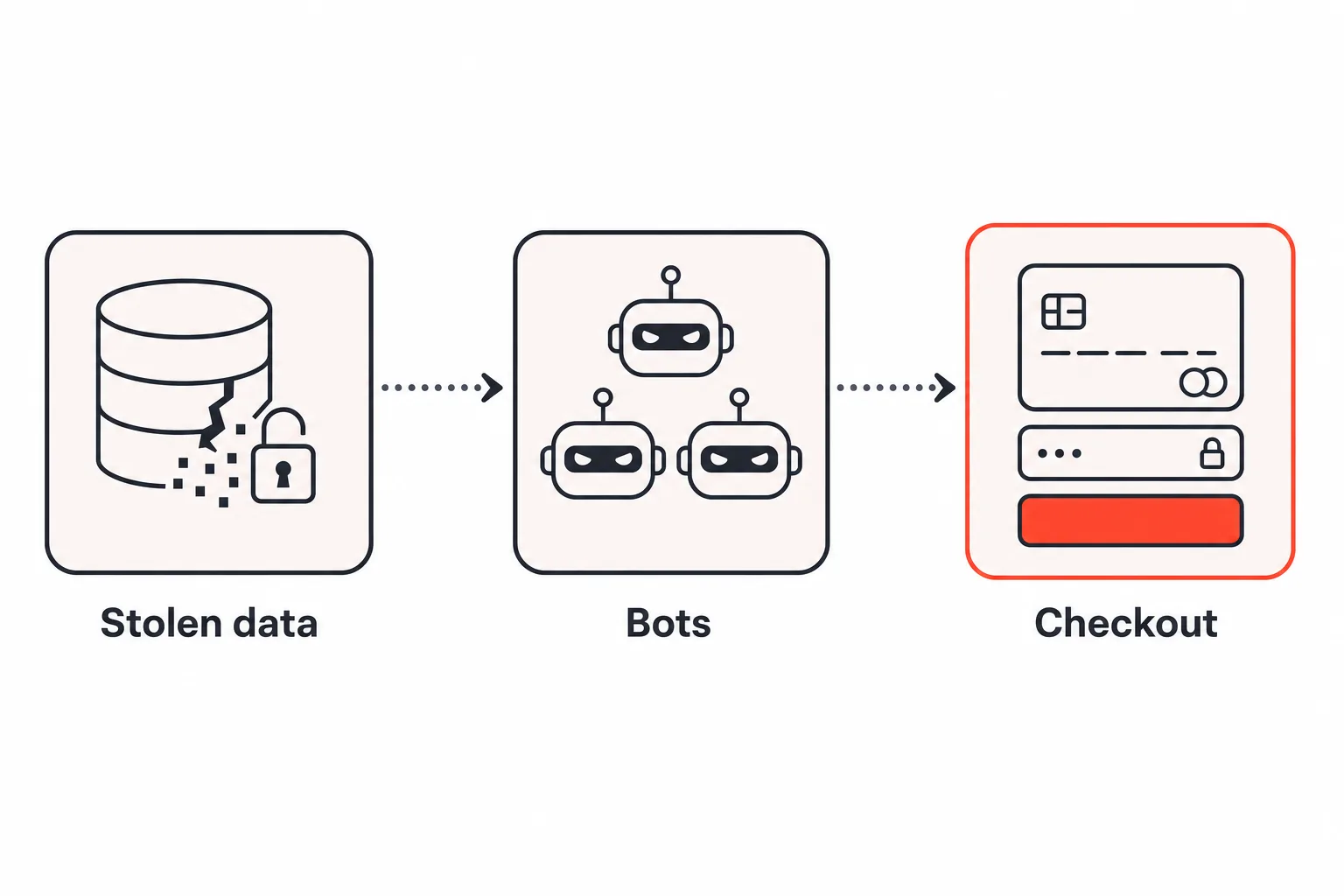
The mechanics are less mysterious than they sound. Card data comes from breaches, phishing, and marketplaces where numbers are sold in bulk for pennies. Automated bots do the heavy lifting, which is why they love free trials and low-dollar recurring plans: cheap to test, easy to script, and rarely watched closely at 3 a.m.
CNP merchants are the softest target simply because there’s no card to inspect and no cashier to notice a nervous buyer. Everything rides on the data submitted, and data can be stolen. Academic work on the problem, including a Walden University dissertation on reducing payment-card fraud, points to the same theme: layered, consistent controls beat any single magic filter. Knowing this shifts your mindset from “how do I block one bad guy” to “how do I make my checkout an unattractive, high-friction target for automated abuse.”
The warning signs: how to spot payment fraud early (the 4 P’s)
A handy way to remember what to watch is the 4 P’s of spotting fraud. Think of them as a quick gut-check on any suspicious order or signup:
| The P | What to watch |
|---|---|
| Presentment | How the payment is presented. Does the billing name match the cardholder? Does the pattern look off, like many different cards from one device? |
| Person | Who’s behind it. New account, mismatched email and name, or a shipping address in a different country than the card’s billing address. |
| Place | Where it’s coming from. An IP location that doesn’t match the billing country, anonymizing tools, or a geography you don’t normally sell into. |
| Pattern | How it behaves. Velocity spikes (dozens of attempts in minutes), repeated small charges, or a signup surge at odd hours. |
For a subscription merchant, the everyday translation is simple: a burst of low-dollar trial signups from one device, a customer profile whose details don’t line up, or a rebill that suddenly fails across many accounts at once. When two or more P’s light up on the same transaction, slow down and look closer. Building these checks into your flow is the heart of learning to tighten your transaction verification processes with tools like Address Verification Service (AVS) and CVV checks.
How to stop payment fraud: a step-by-step defense that won’t block real customers
There’s no single silver bullet, and anyone selling you one is overpromising. Good fraud prevention is layered, and the right layers depend on your business model and your processor. Here’s a sensible order to build them in.
1. Turn on the basics. Enable AVS and CVV checks, and add 3-D Secure (the “verified by” step that shifts some liability back to the card issuer). These are free or low-cost and stop a surprising amount of casual fraud. 2. Kill card testing at the door. Add velocity limits (cap how many attempts one card, email, or IP can make) and a CAPTCHA or bot check on your signup and trial forms. This alone shuts down most automated testing. 3. Use fraud scoring sized to your volume. A detection tool that scores each transaction for risk lets you auto-approve the obvious-good, auto-block the obvious-bad, and flag the gray zone. Match the tool to your volume so you’re not paying for enterprise features you won’t use. 4. Tighten recurring-billing hygiene. This is where subscriptions win or lose. Use a clear, recognizable billing descriptor so customers know it’s you. Send a short pre-rebill email before each charge. Make cancellation genuinely easy. Every one of these cuts friendly fraud, because most disputes start with confusion, not malice. 5. Set manual-review thresholds. For higher-dollar or higher-risk orders, route them to a quick human look before fulfilling. A two-minute review beats a chargeback. 6. Watch your chargeback ratio and respond fast. Know your numbers, fight illegitimate disputes with evidence, and act before the ratio climbs into territory that threatens your account.
When fraud and chargebacks start outrunning what you can handle in-house, it’s worth adding a dedicated fraud and chargeback management layer, and in some cases a second merchant account for redundancy and smarter routing. That’s a conversation, not a hard sell, and the right move depends entirely on your situation.
The 10/80/10 rule: why most of your customers aren’t the problem
The 10/80/10 rule is a simple lens on human behavior that fraud teams borrow often.
That middle 80% is where you have the most leverage, and the good news is you don’t fight them with suspicion. You design for them. Clear billing descriptors, obvious receipts, easy cancellation, and honest renewal reminders remove the confusion and the easy excuses that turn a well-meaning customer into a chargeback. Shrink the temptation, and you shrink the bulk of your dispute volume without treating loyal buyers like suspects.
The hidden cost of fraud: chargebacks, fees, and your real cost of processing
Fraud isn’t just the lost sale. A chargeback comes with its own fee on top of the refunded amount, and if your chargeback ratio climbs too high, your processor can put you on a monitoring program or, worst case, close your account. That’s the real reason fraud inflates your cost of credit card processing: it stacks penalties and risk on top of your base rate.
On that base rate: credit card processing fees for merchants are driven by things like your industry’s risk level, your card mix, your average ticket size, and whether sales are card-present or card-not-present. Higher-risk and CNP businesses (most subscriptions) generally sit at the higher end, and heavy chargebacks push costs up further. We won’t quote a magic percentage here, because anyone who does without seeing your business is guessing. The honest framing: fraud and chargebacks are a line item riding on top of your processing rate, and controlling them is one of the most direct ways to lower your true cost.
A quick word on ACH, since it’s part of many subscription payment stacks. ACH bank transfers aren’t instant. Most ACH payments settle within one business day, standard transfers typically clear in one to three business days, and Same Day ACH is available when you need money to move faster. Why does timing matter for fraud? Because that settlement window is an exposure gap. An unauthorized debit or a return can surface after you’ve already delivered the product, so treat early ACH activity with the same caution you’d give a new card.
Frequently asked questions
What is merchant payment fraud?
What are the 4 P’s of spotting fraud?
What is the 10/80/10 rule for fraud?
What’s the best anti-fraud solution for payment processing?
How long does an ACH transfer take?
What are average credit card processing fees for merchants?
Let’s keep your account healthy, not just your sales
Fraud rules, chargeback thresholds, and processing costs can feel like a maze, and plenty of providers just decline you and move on. That’s not how we work. We’d rather explain the “why” behind a rule and help you build defenses that keep good customers happy and bad actors out, so you stay out of trouble in the first place.
If you’re getting set up to accept card and ACH payments, working to improve your approval odds, fine-tuning recurring billing, or trying to get chargebacks back under control, let’s talk it through. Premier Payments Online specializes in high-risk industries, payment optimization, and chargeback management, and a straightforward conversation about your situation costs you nothing. No guarantees, no pressure, just a clear read on your options and a plan to protect your revenue.