Here’s what this guide covers:
Run a CBD shop, a vape brand, a telemed or peptide clinic, an adult or dating platform, or any recurring-billing app, and you’ve probably been told your business is “high-risk”, usually before anyone explained what that means. Let’s fix that.
What is a merchant category code?
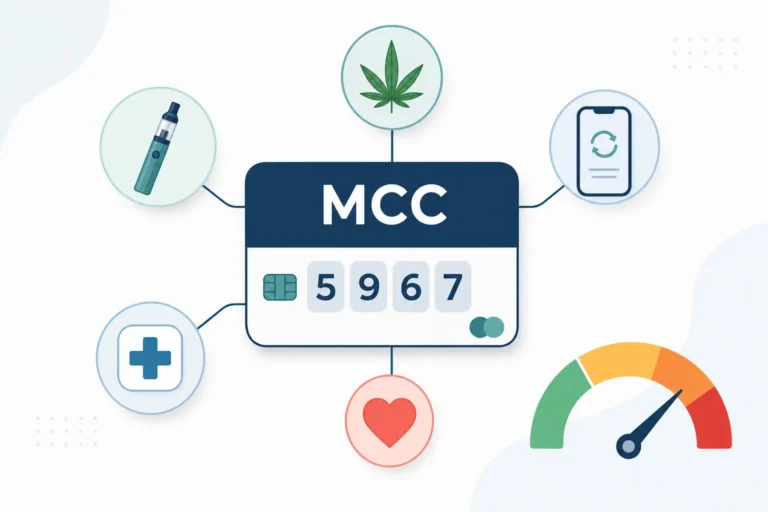
A merchant category code is a four-digit number that tells banks and card networks what your business sells. When you sign up to accept cards, your acquirer assigns a code based on your main line of business, a coffee shop, a clothing store, and a supplement company each get a different one.
These codes follow an international standard, ISO 18245, so the same four digits mean the same thing across Visa, Mastercard, and the banks that connect to them. Your MCC also does double duty at tax time: it helps route the payment data that lands on the Form 1099-K the IRS uses to track card and third-party network payments. The code isn’t just a payments detail, it follows your business around.
Why some MCCs get labeled high-risk
High-risk doesn’t mean bad business. It’s a processing classification, not a judgment on you or your product. A code gets flagged when the businesses inside it tend to create more headaches for the banks, usually some mix of these:
- More chargebacks and customer disputes
- Heavy refunds, or recurring billing customers forget they signed up for
- Products tied to regulation, age limits, or health claims
- Lots of card-not-present sales, where the buyer isn’t standing at a terminal
Chargebacks sit at the center of most of it. Federal rules give cardholders the right to dispute charges, and the Federal Trade Commission lays out how those disputes work, so industries that attract more of them draw more scrutiny from acquirers. If disputes are why your code is flagged, tightening up your chargeback and dispute management is one of the most direct ways to improve how underwriters see you.
Here’s how codes tend to get grouped:
| Risk tier | What it usually means | Example verticals |
|---|---|---|
| Tier 1 (elevated) | Legit but dispute-prone or subscription-heavy | Nutraceuticals, fitness, wellness, subscription apps |
| Tier 2 (higher) | Age-restricted or health-adjacent, tighter rules | CBD, vape, telemed, peptides |
| Tier 3 (highest) | Regulated, quasi-cash, or reputation-sensitive | Adult and dating, money services, crypto-adjacent |
High-risk doesn’t mean bad business. It’s a processing classification, not a judgment on you or your product.
Is your MCC high-risk? Three codes people ask about
These three come up constantly, so let’s answer them head-on.
| MCC | Business type | High-risk? | Why |
|---|---|---|---|
| 7994 | Video game arcades and establishments | Yes, commonly | Grouped with gaming and amusement, which carry dispute and age-related concerns |
| 6211 | Securities brokers and dealers | Yes | Investment activity brings heavy regulation and refund exposure |
| 6051 | Quasi-cash: money orders, foreign currency, some crypto | Yes, among the highest | Cash-like transactions are hard to trace and easy to abuse |
Here’s the catch: you don’t always pick your own code, and the wrong one can quietly cost you money or get you declined. Miscoding is a real problem, and a fixable one. A quick review often catches it before it turns into a bigger headache.
How your MCC affects credit card processing fees
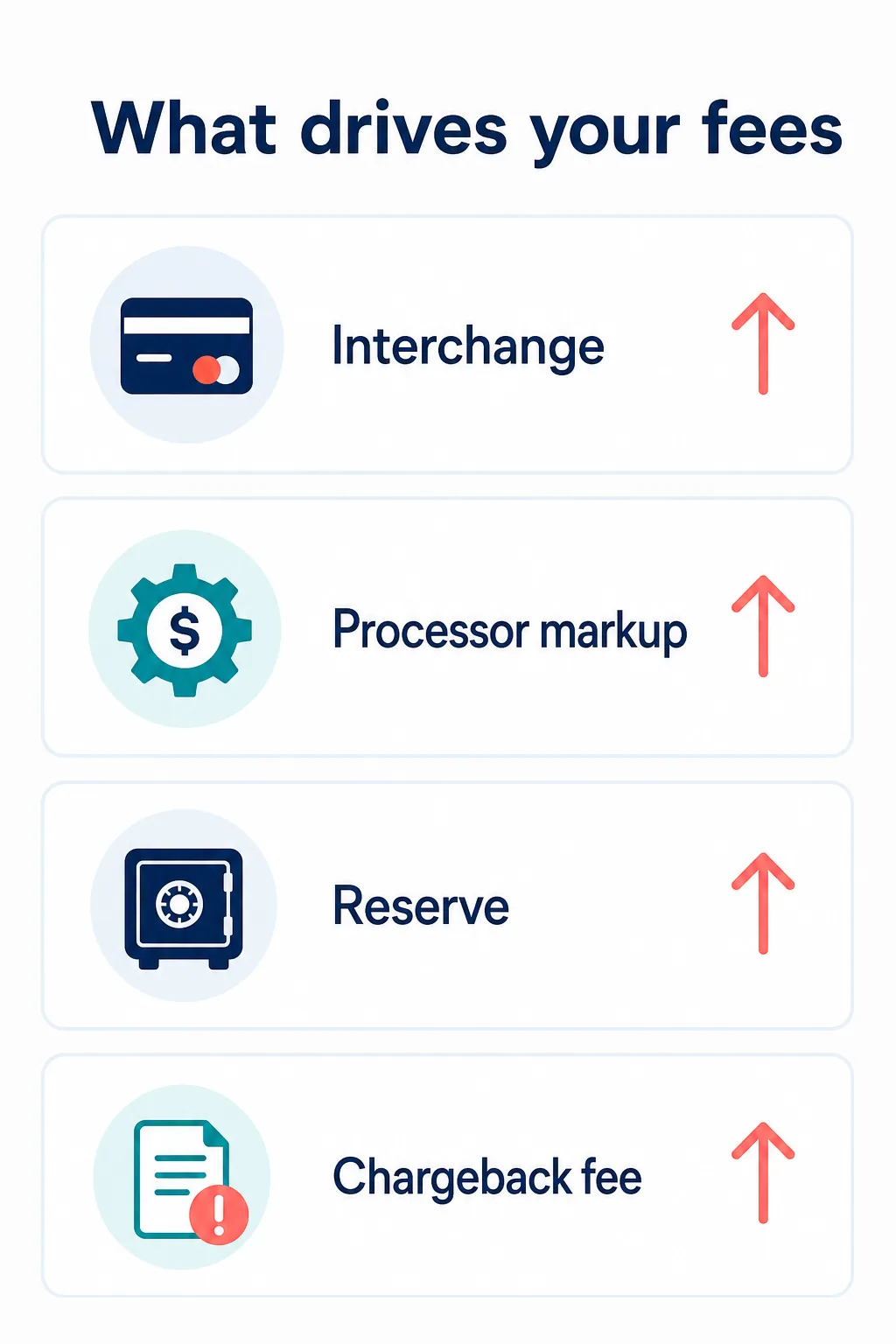
Your code and its risk tier feed straight into what you pay. Higher-risk categories generally see higher interchange (the base fee the networks set), bigger processor markups, rolling reserves, and steeper chargeback fees. That’s why a flagged vertical rarely pays what a standard retail shop pays, and why processing costs can swing so much from one business to the next.
So when someone asks how much card fees run, the honest answer is: it depends on your MCC, your dispute history, and your sales mix. Rather than quote a number that won’t fit your situation, here’s what actually drives the difference:
| Fee type | What it is | Why high-risk pays more |
|---|---|---|
| Interchange | The base fee the card networks set | Riskier categories sit in higher interchange bands |
| Processor markup | What your provider adds on top | Reflects the extra underwriting and monitoring you need |
| Reserve | A portion of funds held back | Cushions the bank against future chargebacks |
| Chargeback fee | Charged per dispute | Flagged verticals see more disputes, so it adds up faster |
Because your rates hinge on these pieces, small changes matter. One move that helps is adding a second merchant account or backup MID for redundancy, so a single processing hiccup doesn’t freeze your revenue. Pairing this with enterprise payment services can further improve payment routing and optimization, helping steer transactions toward the lowest-cost path while maintaining strong approval rates. And if you sell online, your platform matters too—we help high-risk merchants get set up to accept cards on BigCommerce.
High-risk MCCs and ACH: how long do transfers take?
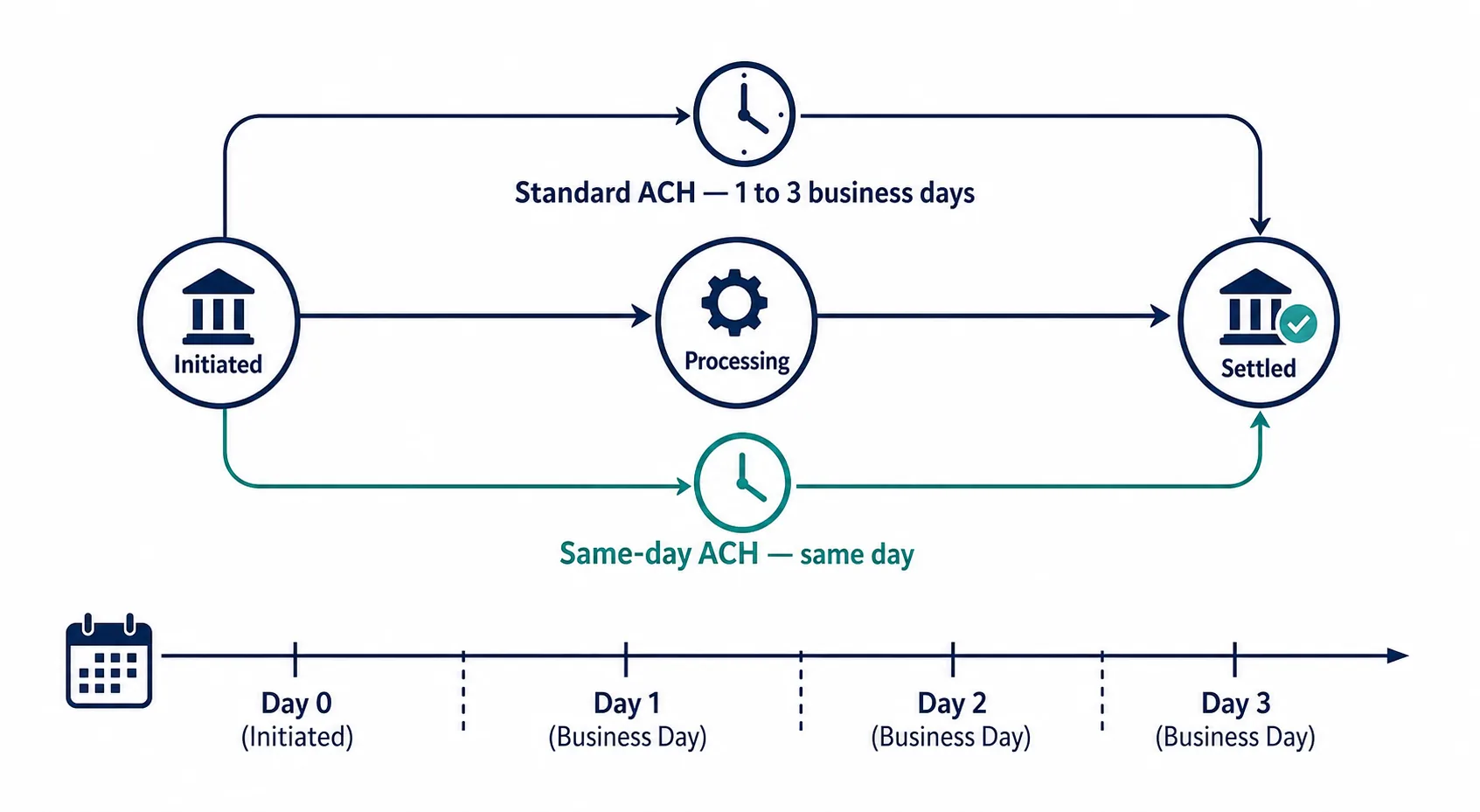
Plenty of high-risk and subscription merchants lean on ACH to trim some card costs, and most guides skip it entirely. So how long does an ACH transfer take? A standard ACH transfer usually settles in one to three business days, while same-day ACH can clear the same day when it qualifies. Those timelines come from the rules set by Nacha, the association that governs the ACH network.
For recurring-billing businesses, that timing changes how you plan cash flow and refunds. Adding an ACH and check acceptance option alongside cards gives customers another way to pay and gives you a lower-cost rail for repeat charges.
What to do if your business is in a high-risk category
Getting flagged isn’t the end of the road. It’s the start of a checklist.
| Step | What it means | Why it helps |
|---|---|---|
| Confirm your code | Make sure your MCC actually matches what you sell | Wrong codes cause needless declines and overcharges |
| Prep your documents | Gather bank statements, processing history, and site policies | Underwriters approve faster with a complete file |
| Watch your chargebacks | Keep disputes under the card-brand thresholds | Staying under the line protects your account |
| Add a backup MID | Set up a second account for redundancy | Keeps you running if one processor pauses you |
This is where a good partner earns their keep. At Premier Payments Online, we answer the phone and reply to emails, and we don’t just say no, we explain what’s happening and work to find a path forward when one exists.
Key takeaways
| Point | The short version |
|---|---|
| What an MCC is | A four-digit code that tells banks what you sell |
| High-risk meaning | A processing classification, not a verdict on your business |
| Common flagged codes | 6051, 6211, and 7994 are frequently high-risk |
| Fee impact | Your MCC drives interchange, reserves, and chargeback costs |
| The fix | Correct coding plus the right partner changes your outcome |
Ready to get your code reviewed?
If your business is stuck in a high-risk bucket, CBD, vape, telemed, peptides, adult, dating, or subscription billing, you don’t have to figure it out alone. We specialize in high-risk merchant accounts, and we’ll look at how you’re coded, where your fees are leaking, and how to keep chargebacks under control. Reach out and talk to a real person who explains the situation and helps you find a solution.
Frequently asked questions
Is MCC 7994 high-risk?
Is MCC 6211 high-risk?
Is MCC 6051 high-risk?
What makes a merchant account high-risk?
Does a high-risk MCC mean higher fees?