If a mainstream processor already froze your funds or closed your account, you’re not doing anything wrong. Supplement and nutraceutical sellers get treated as high-risk by default, and the fix is a processor built for that reality. Here’s the plain-English version of what that means, what it costs, and how to pick a partner that keeps you running through your busiest months.
Article Summary
- Why banks label supplement and nutra sellers “high-risk,” and what that label means for your account
- What nutraceutical payment processing really costs: fees, reserves, and chargeback charges in plain numbers
- The features that matter most: recurring billing, a stable gateway, fraud and chargeback tools, and backup accounts
- A step-by-step way to choose a processor that won’t drop you mid-season
- How long approval and payouts (including ACH) really take
- Key takeaways plus a quick FAQ
What Makes Nutraceutical Businesses “High-Risk” to Payment Processors?
Nutra sellers get flagged as high-risk because their sales carry a higher-than-average chance of chargebacks, refunds, and regulatory attention. That’s the whole story in one sentence, and the rest is detail.
A few things drive it. Supplements often sell through free trials, auto-ship, and subscription billing, and those models produce more disputes than a one-time purchase. Health claims draw scrutiny, because the U.S. Food and Drug Administration regulates dietary supplements differently from conventional drugs, and underwriters know it. Marketing language matters too, since the Federal Trade Commission expects supplement advertising claims to be backed by real evidence. Add higher refund rates and shifting ingredient rules, and a bank sees a merchant who needs closer handling. It pays to stay current on the latest guidelines and requirements for nutraceutical merchants before you apply, so nothing on your site trips an easy decline.
If you’re selling nutraceuticals, supplements, or wellness products online, you already know that payment processing can make or break your business. …
How Much Does Nutraceutical Payment Processing Cost?
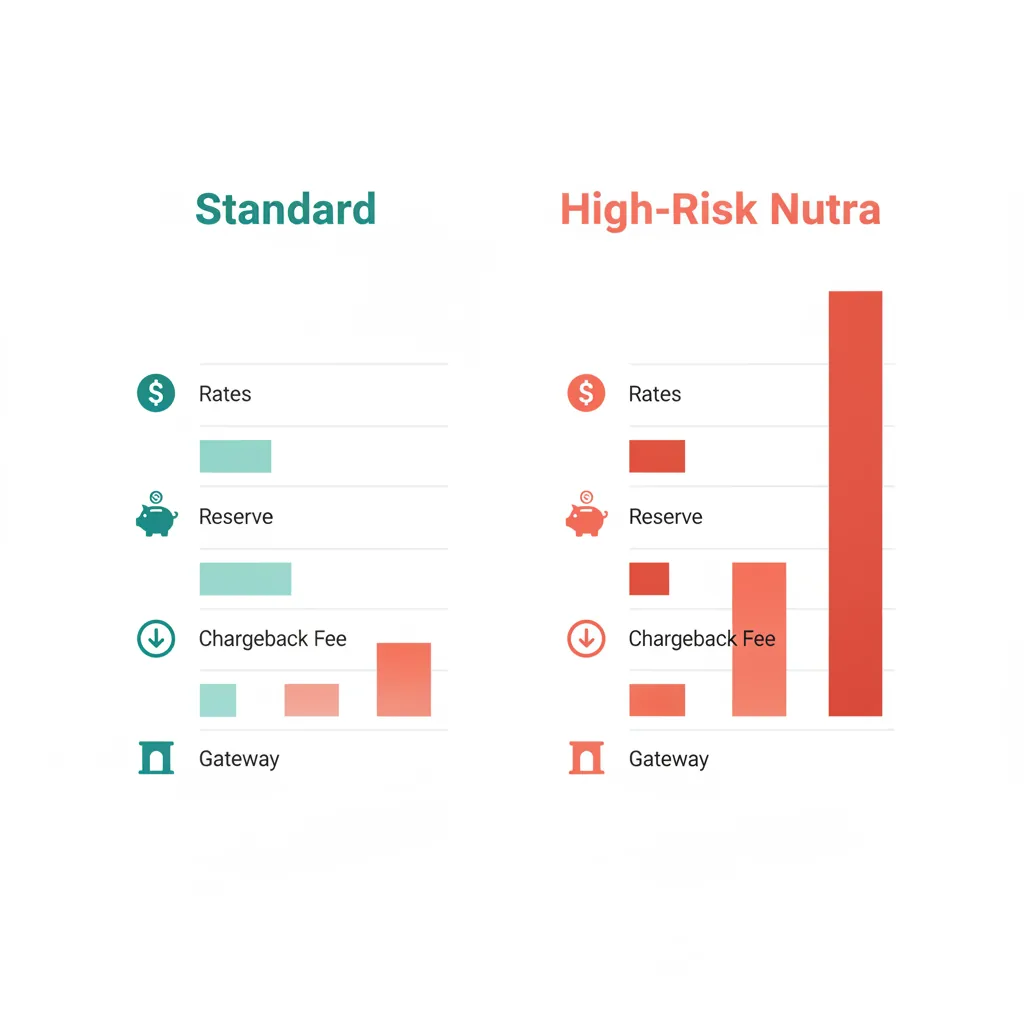
Expect to pay more than a standard retail shop, mostly through higher per-transaction rates, a rolling reserve, and per-dispute fees. Card networks set a baseline cost every merchant pays, and the Federal Reserve publishes data on card interchange that sits underneath those numbers. High-risk pricing stacks a risk premium on top of that baseline.
| Cost component | Typical standard merchant | Typical high-risk nutra merchant | Notes |
|---|---|---|---|
| Per-transaction rate | Lower percentage plus small flat fee | Higher percentage plus flat fee | Reflects added dispute risk |
| Monthly account fee | Modest | Modest to higher | Covers gateway and account support |
| Rolling reserve | Rarely required | Common, a set share of sales held for a period | Released back to you on a schedule |
| Chargeback fee | Per dispute | Per dispute, often higher | Charged whether you win or lose |
| Gateway fee | Per month or per transaction | Per month or per transaction | Depends on volume |
The part competitors gloss over is the reserve. A rolling reserve isn’t a penalty. It’s a cushion the bank holds against future refunds and disputes, and you get it back on a set timeline. Once your history looks clean, that reserve and your rates can often be renegotiated down. Ask any processor to spell these out in writing before you sign, because “typical” ranges vary by volume, product, and processing history.
A rolling reserve isn’t a penalty. It’s a cushion the bank holds against future refunds and disputes, and you get it back on a set timeline.
What Features Should the Best Nutraceutical Payment Processor Have?
The right setup handles subscriptions, screens fraud, fights disputes, and gives you a backup account so one shutdown doesn’t stop your revenue. Match the list below to how you actually sell.
| Feature | Why it matters for supplement sellers |
|---|---|
| Recurring and subscription billing | Auto-ship and memberships are the core of nutra revenue |
| Stable payment gateway | Fewer failed transactions and less downtime at checkout |
| Fraud screening | Filters risky orders before they turn into losses |
| Chargeback management | Responds to disputes and protects your ratio |
| Multiple accounts / load balancing | Redundancy so one account issue doesn’t halt sales |
| ACH acceptance | A lower-cost way to collect recurring payments |
| Secure card handling | Keeps card data protected and your account in good standing |
Strong fraud and chargeback prevention tools do double duty here, since a rising dispute ratio is the fastest way to lose an account. Once you grow, spreading volume across multiple merchant accounts with intelligent payment routing adds real resilience. And because card data security is non-negotiable, work with a processor that helps you stay PCI compliant with the standards set by the PCI Security Standards Council.
How to Choose a Payment Processor for Your Supplement Business (Step by Step)
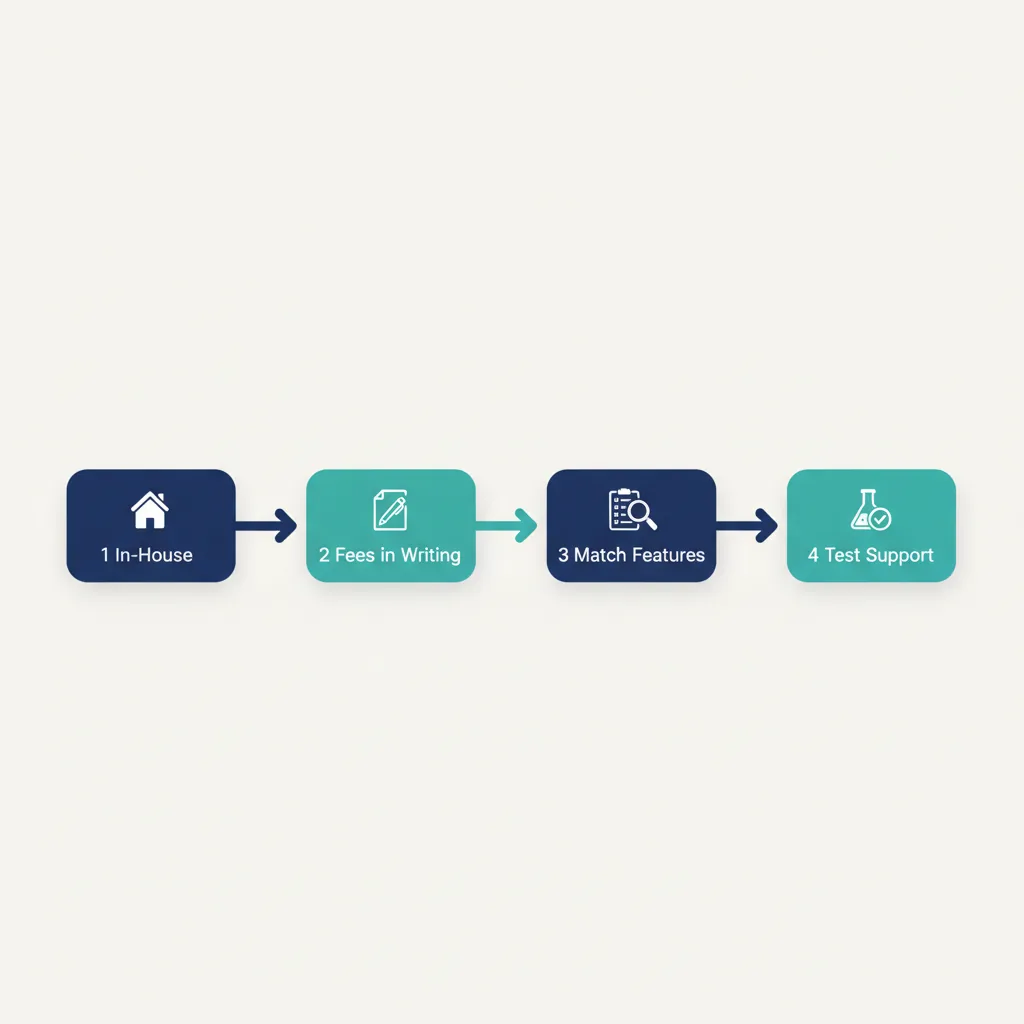
Vet a processor the way you’d vet any long-term partner: confirm they underwrite your product in-house, then test how they treat you before you commit.
Step 1, Confirm they place nutra in-house. If they route you to a third party, approvals get slower and support gets thinner.
Step 2, Get fees and reserves in writing. Rates, reserve percentage, release schedule, and chargeback fees, all before you sign.
Step 3, Match features to your billing model. Subscription-heavy sellers need airtight recurring billing and dispute tools.
Step 4, Check the onboarding documents. Business details, product pages, and processing history are standard requests, so have them ready.
Step 5, Test the support. Call and email before you sign. The best partner for a supplement business answers the phone and explains the “why” instead of handing you a flat “no.” We work to find a solution rather than shut the door, and you should demand that from anyone you consider. If you also sell CBD, the rules shift again, so review our payment processing guide for CBD businesses before you apply.
Most Payment Processors do not have the Merchant’s best interest at heart. a number of huge volume nutra processors need new payment rails for …
How Long Does Approval, and Getting Paid, Take?
Most nutra merchant accounts approve within a few business days once your paperwork is complete, and payouts follow standard card and ACH timelines after that. Same-day options exist too, and the rules that govern ACH network settlement timing are set by Nacha, not by any single bank.
| Milestone | Typical timeframe |
|---|---|
| Application review and underwriting | A few business days with complete documents |
| Account and gateway setup | Around the same time as approval |
| First card settlement | A short standard funding window after a sale |
| Standard ACH transfer | Usually one to a few business days |
| Same-day ACH | Same business day when submitted inside the cutoff window |
Adding ACH and check acceptance alongside cards gives your subscribers a cheaper way to pay and gives you another rail if a card account has a hiccup.
How Do the Payment Options for Nutra Businesses Compare?
The short version: an all-purpose aggregator is easy to start and easy to lose, while a dedicated high-risk account is built to keep you approved.
| Option | Approval odds for nutra | Shutdown risk | Best for |
|---|---|---|---|
| All-purpose aggregator | Fast to start, but not built for nutra | High, sudden freezes are common | Testing an idea, not scaling |
| Dedicated high-risk merchant account | Underwritten for supplements | Low, priced for the risk | Established sellers who need stability |
| Multi-account setup | Underwritten across several accounts | Lowest, volume is spread out | High-volume and subscription brands |
That middle-to-bottom row answers the real question: “why did I get dropped, and what do I use instead?” A processor that expects supplement risk from day one has no reason to panic when your volume climbs.
Get a Nutraceutical Merchant Account That Sticks
Premier Payments Online places merchants that other processors won’t touch. We underwrite high-risk accounts, build in the redundancy and fraud tools that keep you live, and we answer the phone. If there’s a hurdle, we explain it and work toward a fix. Start with our high-risk merchant account solutions, or talk to our team about your product and volume.
Key Takeaways
| Question | Short answer |
|---|---|
| Why high-risk? | Chargebacks, subscriptions, refunds, and health-claim scrutiny |
| What does it cost? | Higher rates plus a rolling reserve and per-dispute fees |
| What features matter? | Recurring billing, fraud and chargeback tools, backup accounts |
| How fast is approval? | A few business days with complete documents |
| How do I stay approved? | A dedicated high-risk processor built for nutra |