Across the United States, Automated Clearing House (ACH) transactions exceed 30 billion payments per year, moving more than $80 trillion through the national ACH network. Yet even within this reliable system, payment failures occur.
One of the most common problems merchants face today is a returned mobile ACH payment, a transaction initiated from a mobile device that fails during processing and is sent back by the bank.
This article explains exactly what a returned mobile ACH payment means, how the return process unfolds, why returns occur, and what impact they have on business cash flow and compliance. It also breaks down ACH return time frames, fees, and code categories used by banks to communicate return reasons.
Finally, it outlines proven risk-reduction and recovery methods that companies like Premier Payments Online (PPO) employ to protect merchants, lower return ratios, and maintain smooth payment operations across online, in-store, and omnichannel environments.
What a Returned Mobile ACH Payment Means
A returned mobile ACH payment occurs when an ACH transaction initiated through a mobile platform fails to settle successfully. The Receiving Depository Financial Institution (RDFI) sends a notice to the Originating Depository Financial Institution (ODFI) stating that the payment cannot be completed. Each return carries an ACH return code indicating the reason, ranging from insufficient funds to invalid account details or unauthorized debit.
In essence, it mirrors a bounced check. The merchant does not receive the expected funds, and the payer’s bank reverses or rejects the entry. PPO handles thousands of ACH transactions each month for businesses operating domestically and internationally, and returned items form a measurable percentage of total network volume, typically less than 1% of ACH transactions but still significant for merchants relying on predictable cash flow.
How the Return Process Works
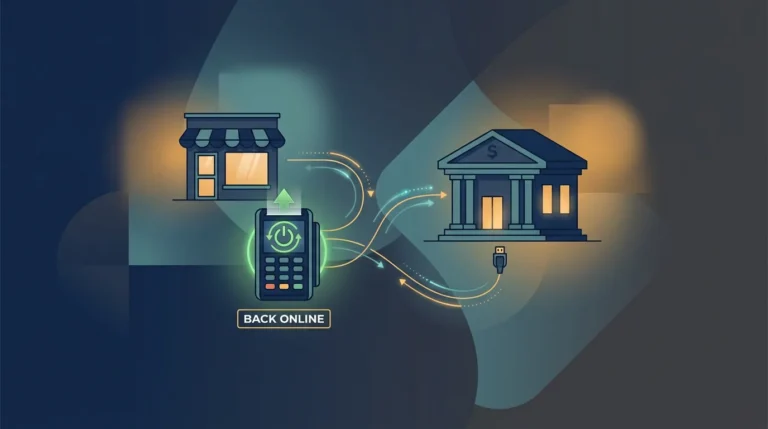
When an ACH payment is initiated via mobile banking, the information travels through several controlled stages within the national ACH network before settlement. A return occurs when one or more validation points fail.
| Step | Entity Involved | Description |
| 1 | Originator / Merchant | Initiates a debit or credit through a mobile platform using the customer’s bank account and routing number. |
| 2 | ODFI (Originating Bank) | Sends the transaction to the ACH Operator, either the Federal Reserve or The Clearing House. |
| 3 | ACH Operator | Routes the entry to the recipient bank (RDFI) for posting. |
| 4 | RDFI (Receiving Bank) | Reviews the transaction; if data or funds are invalid, it creates a return entry with an official ACH return code. |
| 5 | Return Notification | The ODFI receives the returned entry and informs the originator or merchant that the payment failed. |
This entire cycle usually completes within two to five business days, depending on the type of return code issued. After receiving the return, merchants can correct the issue, contact the customer, or, in some cases, re-present the transaction following ACH retry payment rules.
To reduce manual follow-ups, PPO’s systems automatically capture return codes and classify them, streamlining reconciliation across mobile, online, and in-store payment channels.
Why a Returned Mobile ACH Payment Happens
A returned mobile ACH payment does not occur randomly; it typically follows a consistent set of failure patterns across the banking network. Analysis across leading banks and processors indicates that about 80% of ACH returns are linked to five common payment errors seen in daily business transactions, listed below.
| Cause | Common ACH Return Codes | Explanation |
| Insufficient funds | R01 | The payer’s account does not hold enough balance to cover the debit. |
| Closed or frozen account | R02 | The account has been closed or restricted by the bank. |
| Invalid or incorrect account details | R03, R04 | The routing number or account number entered is invalid or mismatched. |
| Unauthorized transaction | R05, R07, R10 | The payer disputes or revokes authorization for the debit. |
| Corporate payment mismatch | R29 | An entry is sent to a corporate account without proper authorization. |
In practice, returned mobile ACH payments are often triggered by human error (wrong digits entered through mobile forms), insufficient funds at the time of debit, or expired authorization on recurring payments.
To limit these events, PPO employs intelligent payment routing through its integrated platform, automatically verifying account credentials before submission and rerouting high-risk transactions through alternate acquirers.

How Long Does an ACH Return Take?
Most ACH returns appear within two business days after the original debit or credit. Certain return codes related to unauthorized transactions allow up to 60 days for the consumer’s bank to issue the return. During this window, funds are frozen or reversed, and merchants receive a notification through their payment gateway.
When an ACH payment is returned, the transaction amount is debited from the merchant’s settlement account along with any associated ACH return fee. The payer’s account remains unaffected except for any overdraft charges imposed by their bank. Merchants must then decide whether to correct and resubmit the transaction or contact the customer for alternative payment options.
PPO’s ACH and Check Acceptance Program includes automatic alerts for returned entries and compliance-based retry schedules that meet timing limits, minimizing settlement risk for participating merchants.
What Is an ACH Return Fee? And ACH Return Codes List
An ACH return fee is a charge assessed by banks or payment processors when an ACH transaction is returned. Fees vary from $2 to $5 per return, depending on the acquirer and risk profile of the merchant. High return rates can also trigger additional compliance costs or temporary account reviews.
The table below highlights the most frequent return codes merchants encounter across the ACH network:
| Return Code | Category | Meaning |
| R01 | Insufficient Funds | Customer lacks available funds. |
| R02 | Account Closed | Account terminated before settlement. |
| R03 | No Account / Unable to Locate | Account number invalid. |
| R04 | Invalid Account Number | Formatting error or wrong number length. |
| R05 | Unauthorized Debit to Consumer | Lacks authorization or has been revoked. |
| R07 | Authorization Revoked by Customer | Recurring payment canceled. |
| R08 | Payment Stopped | Stop-payment order on file. |
| R09 | Uncollected Funds | Funds pending but not cleared. |
| R10 | Customer Advises Unauthorized | Fraud or dispute raised. |
| R29 | Corporate Account Unauthorized | Business accounts are not permitted for debit. |
| R31 | Permissible Return by ODFI | Return initiated due to processing error. |
Each return code requires a specific corrective response. PPO’s internal monitoring system categorizes these codes and automatically alerts merchants whenever return patterns exceed the 0.5% threshold for unauthorized debits, maintaining compliance and preserving network integrity.
Impact of a Returned Mobile ACH Payment for Businesses
The effect of a returned mobile ACH payment reaches beyond a single failed transaction. It can slow daily operations, strain customer relationships, and distort financial forecasts. When a payment bounces, a merchant’s cash flow projection changes immediately. Payroll deposits, supplier settlements, or subscription renewals may require adjustment.
A high concentration of returned transactions also affects the merchant’s reputation within the banking network. Acquirers track return ratios carefully; exceeding acceptable limits can result in higher processing rates or, in severe cases, account termination. Additionally, return fees, administrative labor, and reconciliation overhead reduce profit margins.
Industry research shows that businesses encountering repetitive returned ACH payments lose up to 12 hours of staff time per month handling disputes and reversals. These hidden costs often exceed the direct bank fees. PPO’s technology alleviates this by centralizing transaction data from multiple channels into one consolidated dashboard, reducing manual intervention and maintaining consistent reporting standards.

How PPO Helps Mitigate Returned Mobile ACH Payment Risk
Premier Payments Online specializes in multi-acquirer payment processing and risk management across mobile, online, and in-store channels. The company’s experience spanning more than 15 years in merchant services allows it to deploy safeguards that minimize ACH return exposure while keeping transactions compliant with PCI-DSS standards.
First, PPO validates each mobile ACH payment through real-time account-status verification before submission. This pre-screening identifies closed or invalid accounts that typically generate R02 or R04 codes.
Second, PPO integrates behavioral risk modeling to flag suspicious or high-frequency transactions and route them through alternate clearing partners using intelligent routing technology.
The firm also assists clients with PCI compliance assessments, guiding them through the Attestation of Compliance process to protect stored account data and minimize fraud triggers that often result in unauthorized ACH returns.
Its Risk and Fraud Management Suite pairs automated monitoring with manual review from analysts who interpret return patterns and help merchants reduce exposure before violations occur.
For merchants operating internationally or in regulated sectors, PPO provides tailored settlement frameworks that meet both domestic and cross-border banking requirements, preventing duplicate debits and routing conflicts that could cause a return mobile ACH payment across jurisdictions.
Best Practices to Handle and Prevent a Returned Mobile ACH Payment
Managing ACH returns effectively requires structured internal controls rather than ad-hoc fixes. Merchants should start by confirming that customer data is captured accurately through secure interfaces and stored under PCI guidelines. Validating routing numbers and account numbers at the time of entry reduces most input-related errors.
Authorization remains another pillar. For recurring mobile ACH debits, keeping written or digital proof of customer consent is essential. Merchants must also provide clear cancellation procedures to avoid disputes classified as unauthorized.
PPO’s omni-channel platform automatically stores electronic consent records, satisfying network audit requirements.
Monitoring return patterns allows early detection of systemic issues such as failed batch uploads or third-party gateway mismatches. Businesses can then segment recurring payers with high failure rates and contact them before reattempting payment.
If returns occur due to insufficient funds, applying ACH retry payment rules, typically limited to two re-presentments within 180 days, can recover a portion of lost revenue while remaining compliant.
For advanced optimization, integrating an electronic invoice solution helps synchronize payment authorization and reduces late returns caused by mismatched invoice identifiers. Businesses using PPO’s unified ACH and card platform record as much as a 25% reduction in failed settlements, reflecting the stability of diversified payment routing.
Key Take-aways
| Topic | Essential Insight |
| Definition | A returned mobile ACH payment is an ACH debit or credit initiated via mobile device that fails and is returned by the RDFI with a specific code. |
| Return Timeline | Most returns post within 2–5 business days; unauthorized debits allow up to 60 days. |
| Primary Causes | Insufficient funds, invalid or closed accounts, or unauthorized transactions. |
| Return Fees | Typically range from $2 to $25, depending on the acquirer policy. |
| ACH Codes to Know | R01, R02, R03, R04, R05, R07, R10, R29 and R31. |
| Business Impact | Disrupted cash flow, administrative costs, and potential compliance issues. |
| Mitigation Through PPO | Account verification, risk analytics, intelligent routing, and PCI-DSS compliance tools. |
| Recommended Action | Validate data, maintain authorization, track return ratios, and adopt automated risk-management systems. |

Keeping ACH Payments Reliable and Predictable
The ACH network remains one of the safest, most efficient mechanisms for electronic payments, but a single returned mobile ACH payment can still ripple across a merchant’s operations. By adopting verified account entry, strong authorization protocols, and automated monitoring, businesses protect revenue and maintain customer confidence.
Premier Payments Online delivers this security through unified solutions covering mobile, online, and in-store environments. Its advanced verification engines, compliance support, and high-risk merchant expertise make it an ideal partner for organizations seeking lower return ratios and faster settlements. To explore custom tools for ACH processing, reconciliation, and fraud prevention, visit the ACH & Check Acceptance Program page and connect with a PPO advisor today.