Payment orchestration vs payment gateway is no longer a technical debate; it directly impacts revenue, approval rates, and customer experience. One manages the connection between customer and processor, while the other controls how payments flow across multiple providers. Understanding the distinction helps businesses avoid failed transactions, reduce costs, and scale globally without friction.
This article explores the key differences between payment orchestration vs payment gateway, helping businesses understand how each impacts payment performance, cost, and scalability. It aims to guide decision-makers in choosing the right payment infrastructure based on their growth stage and operational needs.
The Hidden Impact of Payment Infrastructure on Your Business Growth
Five years ago, payment orchestration vs payment gateway wasn’t a conversation most merchants were having. You picked a gateway, plugged it into your checkout, and moved on. That worked for a while. Now it doesn’t. Not cleanly, anyway.
The businesses that are actually scaling today, the ones processing serious transaction volumes, serving customers across borders, operating in complicated verticals, have had to confront a harder question: Is your payment infrastructure actually built for what your business is doing right now, or is it just holding together?
For a lot of companies, the honest answer is the second one. And that gap, between payment infrastructure that merely functions and infrastructure that’s actually optimized, is exactly what this conversation is about.
This isn’t a technical explainer for engineers. It’s a practical breakdown for business owners, operators, and finance teams who want to understand what these two things actually do, where the real difference lies, and how to figure out which one their operation needs.
Payment Orchestration vs Payment Gateway
Before diving into comparisons, it helps to be direct about what these two technologies are without the marketing language.
A payment gateway is a conduit. Its job is to take payment data from a customer’s checkout, encrypt it, and pass it securely to a payment processor for authorization. When the processor responds, approved or declined, the gateway delivers that response back to the merchant and customer. That’s the job. It does it well. It does exactly one thing.
A payment orchestration platform is a decision-making layer that sits above your gateways and processors. It doesn’t just move data; it evaluates each transaction and determines how that transaction should be handled. Which provider should process it? What fraud checks should apply? If the first attempt fails, where should it go next? What’s the cheapest path that still has a high likelihood of approval?
The simplest version: a gateway enables the payment. Orchestration decides how the payment should happen.
That distinction sounds subtle. In practice, it creates enormous differences in approval rates, costs, fraud exposure, and your ability to grow into new markets without rebuilding your payment stack every time.
Why Your Current Gateway Setup May Be Quietly Costing You
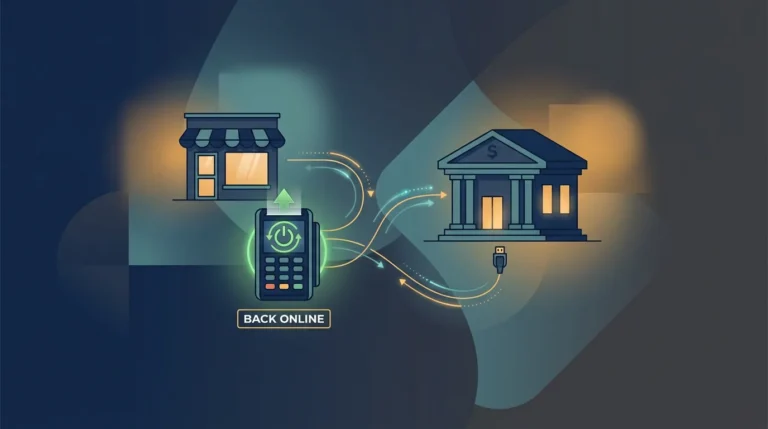
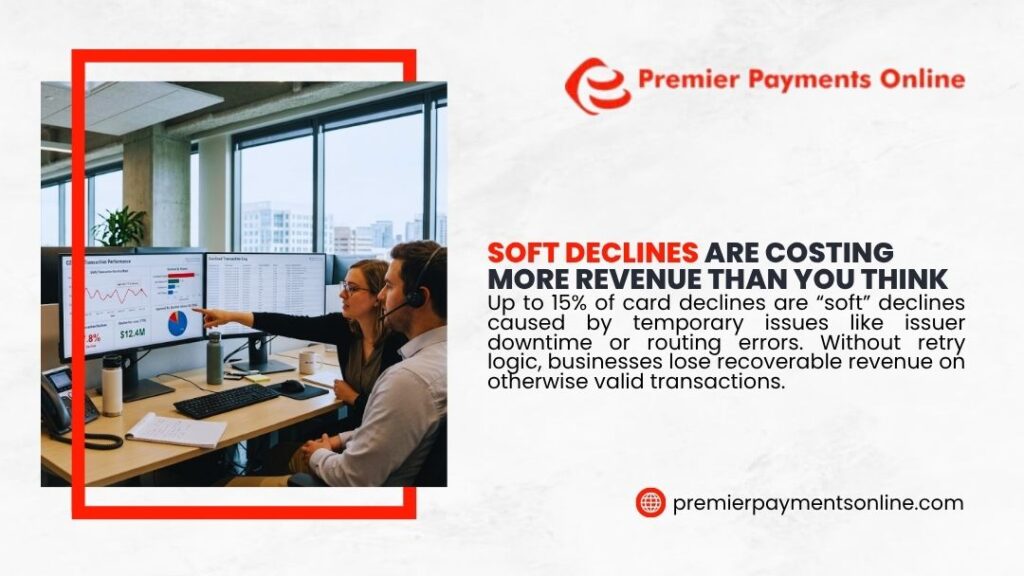
Here’s a scenario that plays out across thousands of businesses every month. A customer goes through checkout. The card is valid, there’s no fraud, and the purchase is legitimate. The gateway sends the transaction to the processor. The processor declines it for a technical reason. Network timeout. Issuer routing issue. Something the customer didn’t cause, and your team didn’t cause.
With a standalone gateway? That transaction is gone. The customer sees a decline, gets frustrated, and may or may not try again. No fallback. No retry. No second chance.
Now multiply that by transaction volume. Even if it only happens on 2–3% of your transactions, at a meaningful scale, that’s a significant chunk of revenue disappearing for reasons that have nothing to do with your product, your pricing, or your customers.
That’s not the only cost, either. Single-gateway setups also mean you’re locked into whatever fee structure that one provider offers. You have no leverage, no comparison point, and no routing logic to find cheaper processing paths when they’re available. You pay what you pay.
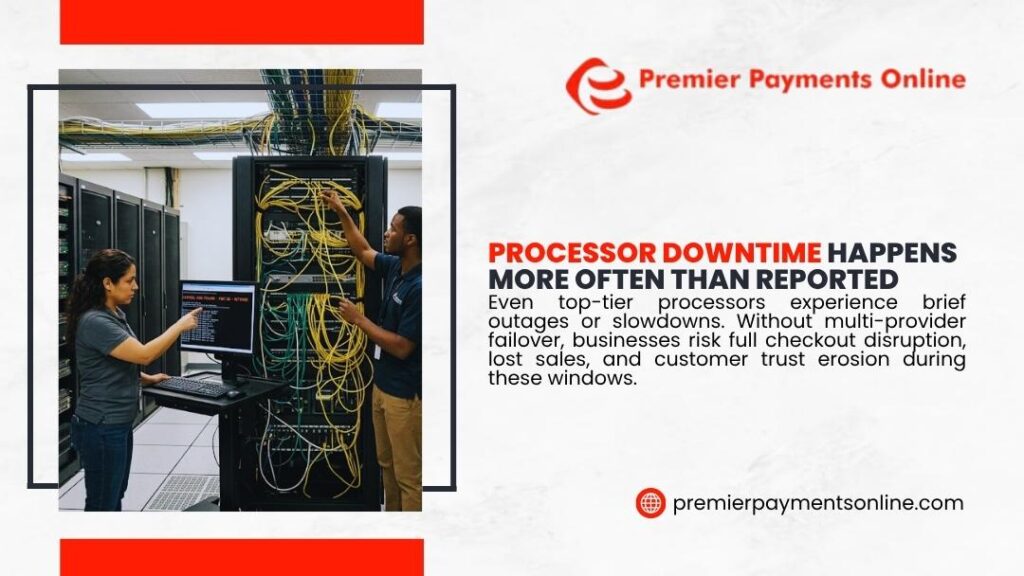
And if that processor has an outage? Every transaction fails until it’s resolved. There’s no redundancy built in.
None of this is catastrophic at small volume. But it compounds fast as businesses grow, and it hits high-risk merchants especially hard, because they’re already operating with thinner margins for error with acquirers.
Payment Gateway: What It Does Well (And Where It Stops)
To be fair to gateways, they’re not bad tools. For a lot of businesses, especially early-stage ones, a well-implemented payment gateway is the right starting point.
A solid gateway provides:
- Secure, encrypted transmission of payment data between the customer and the processor.
- PCI-compliant handling of card information.
- Real-time authorization responses.
- Basic fraud screening at the transaction level.
- A familiar, well-documented integration path for developers.
For a business that processes domestically, handles one currency, has a single acquiring relationship that’s working well, and isn’t experiencing meaningful decline rates, a gateway does the job. The setup is simpler, the costs are predictable, and there’s no unnecessary complexity.
The limitations show up when the business environment changes. And business environments do change.
Add a second country. Add multiple payment methods. Add a recurring billing component. Start seeing higher-than-expected decline rates. Have one processor impose a volume cap. Any of these pushes a gateway-only setup toward its ceiling, and that’s when the gap between gateways and orchestration starts to feel very real.
What Payment Orchestration Actually Controls
Orchestration is often described as routing transactions intelligently, which is true, but it undersells how much is actually happening. A payments orchestration platform manages the entire lifecycle of a transaction across multiple providers. That includes:
Pre-transaction logic: Before the transaction is even sent to a processor, the orchestration layer has already evaluated it. Geography, currency, transaction size, payment method, customer risk profile, time of day, issuer patterns, these factors feed into a routing decision in real time.
Provider selection: Based on that evaluation, the system selects the processor or acquirer most likely to approve the transaction at the lowest cost. This isn’t a static rule; it’s dynamic, updated continuously based on real performance data from across the network.
Fraud screening integration: Risk tools aren’t a separate layer sitting outside the payment flow. They’re embedded in it. Device fingerprinting, IP verification, velocity checks, behavioral analysis, and 3D Secure authentication all happen within the orchestration flow, not as an afterthought.
Cascading and retry logic: If a transaction is declined for technical reasons, not fraud, just a processor hiccup, the orchestration system automatically retries through another provider in the same transaction attempt, before the customer ever sees a decline message. This alone recovers a significant percentage of transactions that would otherwise be lost.
Settlement and reconciliation: Across multiple providers, currencies, and payment methods, orchestration platforms consolidate reporting so merchants have a single view of their payment performance, not ten separate dashboards from ten different processors.
The Real-World Difference: A Direct Comparison
| Feature | Payment Gateway | Payment Orchestration Platform |
| Core function | Transfers payment data | Manages entire payment flow |
| Provider connections | One PSP | Multiple PSPs simultaneously |
| Routing logic | Fixed, static | Dynamic, performance-based |
| Failure handling | Transaction fails | Automatic retry via another provider |
| Fraud tools | Basic, gateway-level | Advanced, embedded in routing logic |
| Cost optimization | None — fixed fees | Active routing to lower-cost channels |
| Global payment support | Limited | Multi-currency, local payment methods |
| Reporting visibility | Per-gateway only | Unified across all providers |
| Chargeback management | Manual | Automated with dispute system integration |
| PCI scope management | Standard | Reduced via tokenization across providers |
The further right your business sits on the complexity spectrum, the more every one of those differences matters.
Payment Aggregator vs Payment Gateway vs Orchestration: Clearing Up the Confusion
These three terms get tangled together, and it’s worth separating them clearly because they serve fundamentally different purposes.
A payment aggregator, think of platforms that bundle merchants under a master merchant account, is primarily about simplifying onboarding. You don’t need your own merchant account. You get set up quickly, and the aggregator handles the acquiring relationship.
The tradeoff is control. You’re operating within their structure, their risk policies, their fee schedules, and their dispute handling. When something goes wrong with your account, you’re often dealing with layers of intermediaries.
A payment gateway gives you your own merchant account and a direct connection to a processor. More control than an aggregator, but still a single-provider model.
Payment orchestration doesn’t replace either of these at the infrastructure level; it sits above them. You might have your own merchant accounts with multiple acquirers, and the orchestration layer determines which one gets each transaction. It’s the strategic layer over the transactional infrastructure.
So the hierarchy is roughly: aggregator handles the acquiring relationship → gateway handles the data transmission → orchestration handles the decision-making across all of it.
Businesses that need real control over their payment outcomes, especially in high-risk verticals, eventually graduate from aggregator or single-gateway setups toward orchestration because that’s where the actual leverage is.
How High-Risk Merchants Use Orchestration Differently
High-risk merchants have a set of payment problems that standard businesses simply don’t face at the same intensity. And orchestration addresses several of them directly.
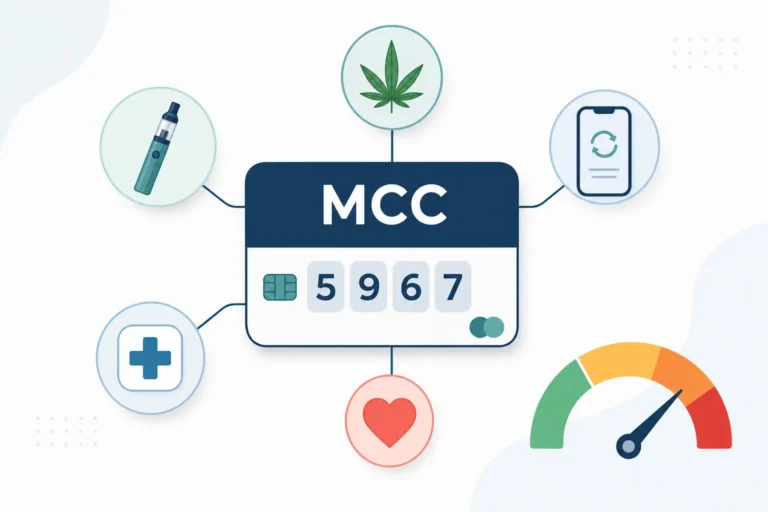
The most acute problem is acquirer dependency. When you’re classified as high-risk, whether that’s due to your industry category, your chargeback history, your transaction patterns, or your product type, acquirers have significant discretionary power over your account. They can impose volume caps, increase reserve requirements, raise fees, or close your account entirely if metrics move outside their tolerance. Supplement sellers feel this acutely, and our guide to nutraceutical payment processing and account stability explains how to keep underwriting on your side. Much of that discretion traces back to the MCC behind your risk classification, which acquirers use as a first-pass filter before they ever look at your actual performance. Because those metrics hinge heavily on disputes, our guide on lowering your chargeback ratio for high risk businesses explains how to stay inside acquirer tolerances.
Operating with one acquiring relationship in that environment isn’t just inefficient. It’s genuinely risky. One bad month, one policy change, one chargeback spike, and your processing can stop.
Orchestration allows high-risk merchants to distribute volume across multiple acquiring relationships. If one acquirer tightens up, traffic shifts. If chargeback rates climb in one processing channel, fraud tools embedded in the orchestration layer can intervene automatically, adjusting routing, triggering additional verification, or blocking specific transaction patterns, before the situation escalates to account-level consequences.
The verticals where this matters most are the ones that tend to get turned away elsewhere: nutraceuticals, CBD and hemp, online gaming and fantasy sports, recurring subscription billing, adult entertainment, travel, credit repair, money services, and international merchants who need to process and settle in local currencies. For those businesses, orchestration isn’t an upgrade. It’s infrastructure.
Security, Compliance, and Why They’re Built Into Orchestration (Not Bolted On)
Security in a single-gateway setup is straightforward: the gateway handles PCI-compliant data transmission. That’s the standard. Orchestration takes that foundation and builds substantially on it.
Tokenization is one of the clearest examples. In an orchestrated environment, a customer’s card data is replaced with a unique token at the point of capture. That token, not the real card number, is what travels across the payment network, what gets stored in your system, and what’s used for subsequent transactions like subscription renewals. The actual card number never sits in a system that could be compromised. This reduces PCI DSS scope significantly and eliminates a category of breach risk almost entirely.
Layered fraud prevention is another area where orchestration outperforms gateway-only setups. Tools like device fingerprinting, IP-to-address matching, behavioral velocity analysis, and real-time anomaly detection are embedded in the routing logic, meaning fraud screening isn’t an extra step that adds latency. It happens within the same flow that’s determining where the transaction goes.
Integration with dispute management networks like Ethoca and Verifi allows merchants to receive alerts about potential chargebacks before they’re formally filed, creating a window to issue refunds proactively, avoid dispute fees, and keep chargeback ratios below the thresholds that card network monitoring programs like VISA’s VCMP or Mastercard’s ECP track month over month.
For merchants who have ever been flagged by those programs, or who are trying to avoid being flagged, that early warning capability is worth more than most other features combined.
Cost Structure: What You’re Actually Paying in Each Model
The cost comparison between gateway-only and orchestrated payment setups is more nuanced than it looks.
| Cost Factor | Payment Gateway | Payment Orchestration Stack |
| Setup Cost | Lower initial setup | Slightly higher due to integration |
| Transaction Fees | Fixed rates per processor | Optimized through smart routing |
| Failed Transaction Cost | Higher due to no fallback | Reduced via automatic failover |
| Currency Conversion | Limited flexibility | Multiple providers reduce costs |
| Operational Efficiency | Manual monitoring required | Automated performance tracking |
| Long-Term Cost | Can increase with scale | More predictable and optimized |
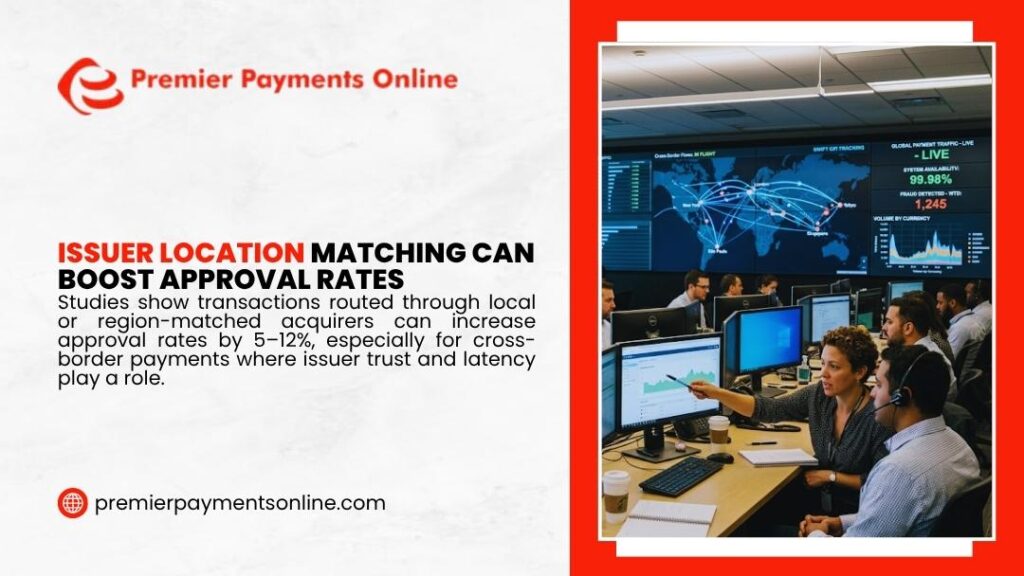
When businesses begin to scale or expand internationally, the ability to route transactions intelligently often offsets the additional cost of orchestration. That’s where many companies see real savings, not just in fees, but in recovered revenue.
Real Use Cases (SMB vs Enterprise vs High-Risk Merchants)
Different businesses face different challenges when it comes to payment processing. That’s why the choice between a gateway and orchestration isn’t one-size-fits-all. Smaller businesses may prioritize simplicity, while larger or more complex operations need flexibility, redundancy, and risk control. Understanding where your business stands helps clarify which approach makes the most sense.
| Business Type | Payment Needs | Best Approach |
| Small & Medium Businesses (SMBs) | Simple setup, predictable costs, basic payment methods | Payment Gateway |
| Enterprise Businesses | High transaction volume, global customers, multiple payment methods | Payment Orchestration |
| High-Risk Merchants | Complex approvals, higher decline rates, strict compliance requirements | Payment Orchestration |
For example, businesses operating in higher-risk categories often benefit from diversified processing options. Solutions tailored for high-risk merchants allow transactions to be routed through multiple providers, improving approval rates and reducing disruptions.
In contrast, a small retail business with steady local transactions may not need that level of complexity. For them, a reliable gateway setup is often enough, at least in the early stages.
Building a Payment Stack That Doesn’t Need to Be Rebuilt Every Two Years
One of the less-discussed costs of reactive payment infrastructure decisions is the cost of rebuilding.
A business that starts with a single gateway, adds a second when the first creates problems, tries to manage both manually, eventually hits complexity limits, and then undertakes a full payment infrastructure overhaul, that’s a pattern that repeats across growing companies. The engineering time, the merchant account applications, the integration work, and the testing it adds up.
Businesses that build toward an orchestrated architecture earlier tend to avoid those cycles. Adding a new acquirer, a new payment method, or a new market becomes a configuration change rather than an integration project. The foundation was built to accommodate expansion rather than resist it.
Combining a well-implemented orchestration layer with a unified omni-channel payment approach, where online and in-store transactions flow through the same system, creates a payment stack that can actually keep pace with business growth rather than creating friction against it.
When to Choose Each One: A Practical Framework
Stick with a payment gateway if your business is early-stage with low transaction volume, operates in one country using one currency, has a stable acquiring relationship with acceptable decline rates, and has no immediate plans for international expansion or additional payment methods. A complex payment infrastructure is unnecessary at this stage.
To consider orchestration, evaluate if you experience significant transaction failures due to technical issues, are expanding into new markets or currencies, face chargeback pressures, operate in a high-risk industry requiring close acquirer management, process substantial volume that could benefit from routing optimization, need to offer diverse payment methods, or have had revenue impacted by processor downtimes.
Most businesses don’t flip from one to the other overnight. The transition is usually incremental: a second acquirer, then a routing layer, then fuller orchestration as complexity justifies it. The key is not waiting until the problems are severe before starting to build the architecture that prevents them.
Common Mistakes That Make This Decision More Expensive
Many businesses don’t realize where their payment system falls short until revenue starts slipping. The issues are often subtle at first, slightly lower approval rates, occasional failures, but they add up quickly. Understanding these common mistakes helps avoid costly missteps and ensures a more stable payment flow.
| Mistake | Impact on Business |
| Relying on a single gateway | Increased failure rates and downtime risk |
| Ignoring transaction routing | Higher costs and lower approval rates |
| Delaying fraud protection setup | Increased exposure to payment fraud |
| Overlooking payment data insights | Missed opportunities for optimization |
| Scaling without infrastructure upgrade | Payment bottlenecks and lost revenue |
Addressing these gaps early can prevent long-term inefficiencies and create a more reliable payment experience for customers.
FAQs About Payment Orchestration vs Payment Gateway
Can a small business use payment orchestration, or is it only for large enterprises?
Payment orchestration isn’t limited to enterprise-level operations anymore. What matters is payment complexity, not company size. A mid-sized e-commerce business operating across regions or managing recurring billing may benefit just as much as a large enterprise. The better question is whether your current setup is causing friction or lost revenue.
What happens when a payment gateway goes down in a gateway-only setup?
In a standalone setup, transactions fail without fallback. There’s no rerouting or backup path. Payment orchestration solves this by introducing automatic failover, ensuring transactions are redirected to another provider without disruption.
How does intelligent payment routing decide where to send a transaction?
Routing decisions rely on real-time data. Factors include customer location, card issuer, currency, approval rates, and transaction value. Systems such as intelligent payment routing continuously adjust decisions based on performance data, improving success rates over time.
Does payment orchestration replace fraud prevention tools?
Not entirely, but it reduces reliance on separate systems. Modern orchestration platforms integrate fraud detection directly into the payment flow. For many businesses, this built-in capability is sufficient, while higher-risk operations may still layer additional tools.
How do payment aggregators compare as businesses scale?
Aggregators offer convenience at the start but limit control as volume grows. Businesses often transition from aggregators to dedicated merchant accounts, then to orchestration as complexity increases. Each step adds flexibility and control over payment processing.
Can payment orchestration support international expansion?
Yes, and it’s one of its strongest advantages. Orchestration connects to local acquirers, supports regional payment methods, and reduces cross-border fees. It also improves approval rates by processing transactions closer to the customer’s issuing bank.
What’s the first step toward adopting payment orchestration?
Start with data. Review decline rates, processing costs, and failure points. Identify where revenue is lost. This analysis provides a clear foundation for deciding whether orchestration is the right move and how it should be implemented.
What This Means for Your Payment Strategy
The comparison between payment orchestration vs payment gateway isn’t about choosing one over the other; it’s about knowing when each makes sense. A gateway provides the foundation, while orchestration adds the flexibility needed for growth, optimization, and control.
Businesses that take a structured approach to payments tend to see better approval rates, fewer disruptions, and more predictable costs. That’s where having the right partner matters.
If your business is ready to improve payment performance, reduce friction, and scale with confidence, explore tailored solutions from Premier Payments Online and build a payment strategy designed around your needs.