Payment orchestration has quietly become the backbone of modern payment infrastructure. Most merchants don’t realize they have a payment problem until it’s already costing them money. A transaction fails. A customer abandons checkout. An acquirer suddenly limits processing volume. These aren’t random inconveniences; they’re symptoms of a bigger structural issue: depending on a single payment gateway to carry the full weight of your business. That worked fine ten years ago. It doesn’t work anymore.
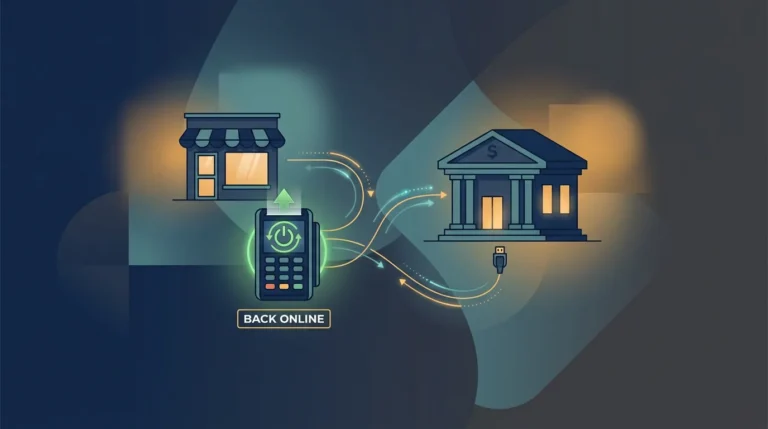
The businesses pulling ahead today, in e-commerce, high-risk sectors, internatiBy distributing transaction volume across multiple acquiring relationships, merchants reduce exposure to any single provider’s decisions. That resilience matters most in verticals with elevated chargeback exposure, such as nutraceutical merchants managing acquirer risk alongside subscription and free-trial billing models.
This guide breaks down exactly what it is, how it works, who needs it, and why companies that haven’t looked into it yet are likely leaving real money on the table.
What Is Payment Orchestration?
Here’s a simple way to think about it. Imagine your business has three different courier options to ship a package. One is the cheapest on weekdays. One is the fastest for international. One has the best reliability record for fragile items. A smart shipping manager picks the right courier for each package based on those factors automatically, in real time.
Payment orchestration does the same thing, but for transactions. A payment orchestration layer sits between your business and all your payment service providers. When a customer pays, the system doesn’t just push the transaction to a single processor and hope for the best. It evaluates the transaction, checks which provider is most likely to approve it successfully, considers the cost of routing it there, and makes a decision in milliseconds. No manual intervention. No guesswork. No single point of failure.
The technical definition: payment orchestration is a centralized system that manages, routes, and optimizes transactions across multiple payment service providers (PSPs), acquirers, fraud tools, and currencies, all through one integration layer.
But the business definition is simpler: it’s how you stop losing money to preventable payment failures.
Why This Matters More Than It Did Five Years Ago
The payment landscape changed dramatically, and quietly. Five years ago, a mid-size e-commerce business could sign up with one gateway, configure a few settings, and process smoothly.
Today, that same business might need to support ten payment methods, process in four currencies, serve customers across multiple continents, manage fraud rules that change monthly, and stay compliant with evolving card network regulations. A single gateway cannot handle all of that elegantly. It wasn’t built to.
When merchants try to force a single-provider setup to do too much, things break, declined transactions that should have gone through, checkout experiences that frustrate customers, higher fees because there’s no leverage to route smarter, and zero visibility into which provider is actually performing well.
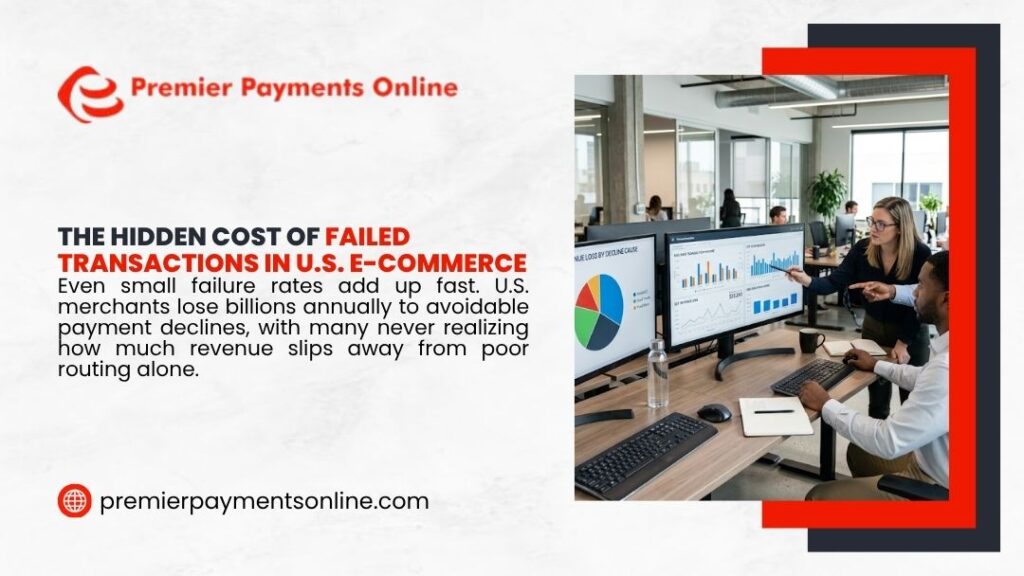
The stakes are high. Even a 1% drop in your authorization rate, at meaningful transaction volume, can mean hundreds of thousands of dollars in lost revenue annually. Not because of fraud. Not because of bad products. Simply because your payment infrastructure wasn’t built for the complexity your business now operates in. Payment orchestration was built for exactly that complexity.
How Payment Orchestration Actually Works: Step by Step
The process is worth walking through because the mechanics explain the value.
Step 1: A customer initiates a transaction: They enter card details, choose buy-now-pay-later, or select a local payment method. The data hits your payment stack.
Step 2: The orchestration layer activates: Instead of forwarding the transaction directly, the system reads it first. It checks geography, currency, transaction size, risk signals, and the merchant’s configured routing rules.
Step 3: Intelligent routing happens. The system selects the best-suited PSP for that specific transaction at that specific moment. Best could mean highest expected approval rate, lowest processing fee, fastest settlement, or whatever priority the merchant has configured.
Step 4: Fraud and compliance screening: Built-in tools verify the transaction against fraud models, card network rules, and compliance requirements before authorization is requested.
Step 5: Authorization: The selected PSP processes the payment. If it’s declined for technical reasons, not fraud, the orchestration layer can automatically retry through another provider in the same transaction attempt.
Step 6: Settlement. Funds are processed and move according to the rules set up within the platform.
The whole sequence happens in real time. From a customer’s perspective, they clicked pay, and it worked. Behind the scenes, a fairly sophisticated decision process just ran on their behalf.
Payment Orchestration vs. Payment Gateway: The Real Difference
This is where a lot of businesses get confused, and it’s worth being direct about. A payment gateway is a tool. It connects your checkout to a processor and passes transaction data back and forth. It does one job, and it does it with one provider at a time.
A payment orchestration platform is a system. It connects to multiple gateways and processors simultaneously, manages the logic of which one to use, and provides visibility across all of them.
Think of a gateway like a single lane on a highway. Think of orchestration like the traffic management system that monitors all lanes, reroutes around congestion, and keeps everything moving.
| Feature | Payment Gateway | Payment Orchestration Platform |
| Provider connections | Single PSP | Multiple PSPs simultaneously |
| Transaction routing | Fixed | Dynamic, rule-based, and intelligent |
| Cost optimization | Limited | Active fee management across providers |
| Retry logic | Manual or none | Automated cascading fallback |
| Fraud tools | Basic | Advanced, layered, real-time |
| Reporting | Per-provider | Unified across all providers |
| Scalability | Moderate | Built for global, high-volume operations |
Businesses that stay with a gateway-only setup often don’t realize how much they’re overpaying in credit card processing fees until they compare it to what’s possible with smarter routing in place.
Core Features That Define a Strong Payment Orchestration Platform
Not all orchestration platforms are equal. When evaluating options, these are the capabilities that actually move the needle for merchants:
Intelligent Payment Routing: This is the engine. The system analyzes each transaction and assigns it to the provider most likely to approve it at the lowest cost. Rules can be configured based on geography, payment method, transaction value, or customer profile.
Multi-PSP Integration: True orchestration requires deep, stable connections to multiple acquirers and payment service providers, not just a list of logos on a website. The breadth and quality of those integrations determine how much flexibility you actually have.
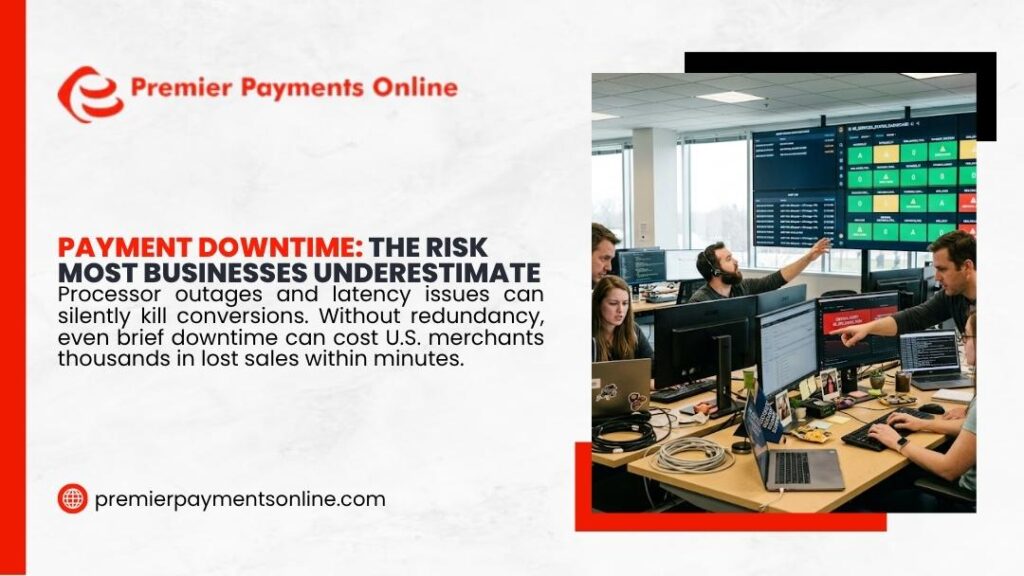
Automated Cascading / Retry Logic: When a transaction is declined for a technical reason (network timeout, processor outage), the system automatically attempts another provider. This alone recovers a meaningful percentage of transactions that would otherwise become lost revenue.
Advanced Fraud Prevention: Modern orchestration layers incorporate behavioral analysis, device fingerprinting, velocity checks, IP-to-address verification, and 3D Secure with frictionless authentication. Fraud tools are no longer a separate layer; they’re embedded in the routing logic.
Payment Tokenization: Sensitive card data is replaced with tokens, reducing PCI scope and protecting customers without disrupting checkout flow. This is foundational for any business handling recurring billing.
Unified Reporting and Analytics: One dashboard. All providers. Full visibility into approval rates, decline reasons, fee breakdowns, and fraud metrics across every PSP you’re connected to. Without this, you’re flying blind on your own payment performance.
Global Payment Method Support: Cards are not the whole picture. Across different regions, customers expect wallets, bank transfers, BNPL, and local schemes. A real orchestration platform supports the full range.
Benefits of Payment Orchestration for Businesses
Payment orchestration isn’t a theoretical improvement. The outcomes show up in specific, trackable metrics.
Higher authorization rates: Routing transactions to the provider best suited to approve them, based on real performance data, not guesswork, reduces unnecessary declines. Merchants consistently report measurable lifts in approval rates after moving to orchestration.
Lower processing costs: Intelligent routing finds cheaper processing paths where available. Over time, even small per-transaction savings compound significantly at volume.
Reduced checkout abandonment: Faster, cleaner checkout experiences with fewer technical failures keep customers from leaving mid-purchase. Every recovered checkout is a customer who didn’t go buy from a competitor instead.
Stronger fraud control without friction: Layered fraud tools that live inside the orchestration flow catch suspicious patterns without throwing extra verification steps at legitimate customers. The balance between security and conversion is one of the hardest things in payments to get right. Good orchestration helps.
Easier international expansion: Adding a new market doesn’t mean rebuilding your payment stack. With orchestration, adding local acquirers, currencies, and payment methods is a configuration change, not an engineering project.
| Benefit | Business Impact |
| Higher Conversion Rates | Fewer declined transactions |
| Cost Efficiency | Reduced processing fees |
| Better Customer Experience | Faster, smoother checkout |
| Fraud Control | Improved detection and prevention |
| Global Expansion | Easier support for international payments |
Why High-Risk Merchants Benefit Disproportionately
High-risk merchants operate under different rules. Acquirers impose volume caps, chargeback thresholds, and reserve requirements that standard merchants never encounter. One acquirer pulling back or closing an account can create an immediate processing crisis. Payment orchestration directly addresses these vulnerabilities.
By distributing transaction volume across multiple acquiring relationships, merchants reduce exposure to any single provider’s decisions. If one acquirer applies a volume cap or increases fees, traffic can be rerouted without disruption. If chargeback levels climb in one processing channel, automated tools can intervene before the account is flagged.
For industries like nutraceuticals, CBD, travel, recurring billing, online gaming, credit repair, and similar categories, where the margin for error with processors is thin, this kind of redundancy and control isn’t a nice-to-have. It’s a survival mechanism.
The same orchestration logic that protects a high-volume e-commerce site also protects a high-risk merchant that can’t afford to lose its processing relationship over a bad month.
Use Cases of Payment Orchestration
Payment orchestration adapts to different business models without requiring major infrastructure changes.
| Use Case | Application |
| eCommerce | Supports multiple payment methods and global customers |
| Subscription Services | Enables recurring billing and payment retries |
| Marketplaces | Handles split payments and multi-party transactions |
| Enterprise Billing | Streamlines invoice and bill payments |
| Global Businesses | Manages currency and regional payment rules |
Companies that rely on structured billing systems often integrate orchestration with electronic invoice solutions to simplify payment collection and reconciliation.
Top Payment Orchestration Platforms and Providers
Several payment orchestration providers operate globally, each with a different focus.
| Provider | Strength |
| Primer.io | Flexible, developer-friendly orchestration |
| Spreedly | Strong tokenization capabilities |
| Adyen | Enterprise-level infrastructure |
| Checkout.com | Global payment coverage |
| Emerging Providers | Specialized regional solutions |
These payment orchestration companies continue to evolve as demand grows for unified payment systems.
How to Choose the Right Payment Orchestration Provider
The list of features on any provider’s website will look impressive. The real evaluation happens against your specific business requirements. Start with your actual pain points. Are you losing transactions due to declines? Paying too much in fees? Struggling to add new payment methods? Trying to expand internationally? Each of those problems leads to a different prioritization of features.
Check the PSP network depth. The value of orchestration comes from the connections behind it. A platform with ten well-integrated acquirers is more valuable than one with fifty shallow integrations.
Understand the routing logic. Is it rule-based only, or does it incorporate real performance data? Can you customize rules by merchant category, geography, or transaction type? Evaluate fraud tool quality, not just existence. “Fraud prevention included” is common. The quality of device fingerprinting, behavioral analysis, and 3D Secure implementation varies enormously between providers.
Confirm compliance capabilities. PCI DSS certification, data residency controls, and card network compliance support matter, especially for merchants handling sensitive customer data or operating in regulated markets.
Look for providers with high-risk experience. Standard orchestration platforms aren’t always equipped to handle the nuances of high-risk merchant accounts, acquirer relationships, chargeback management, and reserve structures that require specialists.
Payment Orchestration and Fraud Prevention: Two Systems, One Goal
Fraud prevention and payment routing are increasingly inseparable. Merchants tuning their routing rules can also read our guide to spot and stop payment fraud, which focuses on the manual checks that back up automated risk scoring. The best orchestration platforms don’t treat fraud tools as an add-on; they integrate risk signals directly into routing decisions.
Here’s what that looks like in practice: a transaction from an unfamiliar device, with a billing address that doesn’t match the shipping address, processed late at night from an unusual location, doesn’t just trigger a fraud flag. It might be routed to a different provider with stronger authentication capabilities, or subjected to additional 3D Secure verification, or declined automatically based on merchant-configured rules.
The tools involved include velocity checks, device fingerprinting, IP-to-address matching, behavioral analysis, and integration with alert networks like Ethoca and Verifi to catch chargebacks before they’re filed. Used together, they allow businesses to catch fraud earlier, dispute chargebacks more effectively, and keep legitimate customers moving through checkout without unnecessary friction.
For businesses that manage high chargeback volumes or operate in fraud-prone verticals, this embedded approach to risk management is far more effective than layering separate fraud tools onto a basic gateway.
The Future Direction of Payment Orchestration
The industry is moving fast, and a few clear directions are emerging. Predictive routing is the next evolution. Rather than routing based on historical performance data, systems will anticipate the best path for a transaction before it happens, incorporating real-time signals from acquirer networks, fraud models, and market conditions.
AI-driven optimization is becoming more embedded. Machine learning models that continuously improve routing decisions based on outcome data are already in use at the enterprise level and will become accessible to a broader range of merchants.
Real-time payment integration is accelerating. As instant payment rails expand globally, orchestration platforms will need to manage routing logic that includes real-time settlement options alongside traditional card networks, with different cost, speed, and risk profiles.
Open banking connectivity is adding new dimensions. Account-to-account payments routed through open banking frameworks reduce card network fees entirely in certain contexts. Orchestration platforms that can intelligently include these rails in routing decisions will give merchants another lever to pull.
The businesses investing in orchestration infrastructure now are building payment stacks that can adapt to these changes without rebuilding from scratch.
Is Payment Orchestration the Right Move for Your Business Right Now?
It depends on where you are. If your business processes significant transaction volume across multiple payment methods, serves customers in more than one country, operates in a high-risk vertical, or has run into problems with authorization rates or processor relationships, payment orchestration almost certainly makes sense. The ROI tends to be clear and relatively quick to demonstrate.
If you’re a smaller business with straightforward, domestic-only payments and a single acquiring relationship that’s working well, you may not need full orchestration immediately. Starting with a scalable, well-integrated payment setup that can grow into orchestration is a sensible path.
The honest middle ground: many businesses benefit from working with a payment specialist who understands both the technology and the acquiring landscape before committing to a specific platform. The right setup is rarely one-size-fits-all.
FAQs About Payment Orchestration
How much can payment orchestration actually improve my approval rates?
It varies by business type, but the improvements are real and documented across the industry. Merchants who add intelligent routing to their stack, especially those who were relying on a single acquirer, often see authorization rate improvements in the range of 2–8%, depending on transaction mix and previous setup.
For businesses processing millions of dollars monthly, that percentage represents a significant revenue recovery. High-risk merchants, who tend to start with lower baseline approval rates, often see even larger gains.
Is payment orchestration only for large enterprise businesses?
It started there, but it’s no longer limited to enterprises. Mid-market merchants, growing e-commerce brands, and high-risk businesses of various sizes are now using orchestration. The key threshold isn’t size, it’s complexity.
If you’re managing multiple payment methods, serving international customers, or dealing with frequent declines or chargeback pressure, you’re a candidate regardless of company size.
How does payment orchestration handle chargebacks and disputes?
Orchestration platforms don’t just prevent fraud; they help manage chargebacks after they occur. Many platforms integrate with dispute management networks, which allow merchants to receive early notification of chargebacks and resolve disputes before they’re formally filed. Automated chargeback response tools can pull transaction data and build dispute documentation without manual effort.
For high-risk merchants who are monitored under VISA’s VCMP or Mastercard’s ECP programs, this kind of proactive management is the difference between staying compliant and losing a merchant account.
How long does it take to integrate a payment orchestration platform?
Integration timelines vary depending on the platform, the complexity of your existing tech stack, and how many PSPs you’re connecting. Developer-friendly platforms with solid documentation can be integrated in a matter of weeks.
More complex enterprise setups with custom routing logic, multiple geographies, and numerous acquirer relationships may take longer. The key variable is whether the platform offers genuine technical support during integration, not just documentation.
For merchants who aren’t large enough to have in-house payment engineering resources, working with a payment specialist to manage the integration process makes a significant difference in both timeline and outcome.
Final Thought: Payments Are Infrastructure, Not an Afterthought
Payment orchestration shifts payments from a basic function to a controlled system that improves outcomes across approval rates, cost efficiency, and customer experience. Businesses that treat payments as infrastructure rather than an afterthought tend to outperform those that don’t.If you’re looking to simplify payments while gaining more control over performance, explore tailored solutions through Premier Payments Online and see how a smarter payment strategy can support long-term growth.