International payment processing sits at the center of modern commerce, allowing businesses to accept payments from customers across borders in different currencies. Whether it’s converting USD to EURO, handling euro to dollar transactions, or managing global invoices, companies today rely on secure, flexible systems to keep money moving without friction. This guide explains how it works, what it costs, and how businesses can build a reliable payment strategy that supports long-term growth.
International Payment Processing: What It Is and Why It Matters
International payment processing refers to the systems and technologies that allow businesses to accept payments from customers in different countries, currencies, and payment environments. It connects banks, payment gateways, and financial networks to ensure transactions move securely across borders.
For a business selling internationally, this isn’t optional anymore. Customers expect to pay in their local currency, whether that’s USD to PKR, yen to USD, or USD to CAD conversions. When a checkout fails to support local payment methods or shows unfamiliar currency formats, conversion rates drop almost instantly.
That’s why international payment processing matters. It directly affects revenue, customer trust, and operational efficiency. With global eCommerce projected to exceed $8 trillion by 2027, companies that fail to adapt risk losing access to international customers entirely.
How International Payment Processing Works Behind the Scenes
At first glance, an international payment looks no different from a local one. A customer clicks pay, enters details, and expects confirmation within seconds. But behind that simple action, a chain of systems kicks in, each responsible for a different part of the transaction.
When a payment is initiated, the gateway acts as the first checkpoint. It captures the customer’s data and encrypts it before sending it forward. From there, the processor steps in. This is where things start to branch out, depending on the payment type. Card payments, for instance, move through card networks, while bank-based transactions might route through ACH systems or international frameworks like SWIFT.
What makes cross-border payments more complex isn’t just distance, it’s the number of variables involved. Different countries have different issuing banks, fraud rules, and authentication standards. A transaction coming from Japan, for example, may follow a completely different verification path compared to one from Canada or the UK.
There’s also a timing layer that often goes unnoticed. Authorization can happen in seconds, but settlement takes longer. Funds may sit temporarily while currency conversion, compliance checks, and interbank transfers are completed. This gap is where many businesses run into confusion, especially when reconciling payments across multiple regions.
Another piece that rarely gets attention is routing logic. Not all transactions follow the same path. Advanced systems can redirect payments through alternative acquiring banks if the first attempt fails. This improves approval rates without the customer ever realizing something changed in the background.
And then there’s risk control. Before a transaction gets approved, it’s scanned against fraud models, location signals, and behavioral data. If something feels off, say, a mismatch between location and card origin, the system may trigger additional checks or decline the payment altogether.
So while the front-end experience feels instant, the back-end is layered, adaptive, and constantly adjusting to ensure the payment actually goes through.
Key Payment Methods Used in Cross-Border Transactions
International payments rely on a mix of traditional and digital methods. Each option comes with trade-offs in speed, cost, and reliability.
| Payment Method | Speed | Cost | Use Case |
| Credit Card | Instant | High | eCommerce, subscriptions |
| ACH Payment | 1–3 Days | Low | B2B payments, invoices |
| Wire Transfer | 2–5 Days | High | Large transactions |
| Digital Wallets | Instant | Medium | Mobile and online shopping |
Credit cards remain dominant, especially for online purchases. However, ACH payment systems are gaining traction for recurring billing and invoice settlements due to lower fees. Digital wallets such as Apple Pay and platforms like Stripe or Wise simplify checkout experiences, especially for international customers unfamiliar with card-based payments.
Local payment methods are equally important. In some regions, customers prefer bank transfers or mobile wallets over cards, making it essential to support multiple payment options.

Currency Conversion and Exchange Rates
Currency conversion often gets treated as a simple math step, but in reality, it’s one of the most sensitive parts of international payment processing. Small differences in exchange rates can quietly eat into margins, especially when transaction volumes increase.
When a payment crosses borders, the system must decide how and when to convert the currency. That decision alone can affect the final amount. Some processors convert instantly at the point of authorization, while others wait until settlement. The timing matters because exchange rates fluctuate throughout the day.
Let’s say a business processes a payment where the customer pays in euros and the business settles in dollars. The visible rate might suggest a clean euro-to-dollar conversion, but behind the scenes, there’s often a spread added by the processor or acquiring bank. That spread isn’t always obvious to merchants, yet it can significantly impact revenue over time.
Another factor is whether the customer pays in their local currency or the merchant’s currency. Offering local currency, like showing USD to INR today for Indian customers, usually increases conversion rates. People tend to trust prices they recognize. But it also shifts the responsibility of conversion to the business, which means absorbing or managing FX risk.
There’s also the question of consistency. Businesses operating across multiple regions often deal with varying rates depending on payment methods, banks, or even time zones. Without proper tracking, it becomes difficult to predict actual earnings from international sales.
Some companies try to manage this by monitoring rates through tools like XE or internal dashboards. Others rely on processors that offer more stable or transparent pricing models. Either way, ignoring currency dynamics isn’t really an option. Over time, even small discrepancies add up.
Fees Involved in International Payment Processing
Costs in international payment processing vary depending on the provider, transaction type, and region. Many businesses underestimate these expenses until they scale globally.
| Fee Type | Description | Typical Cost |
| Transaction Fees | Per payment processing cost | 2%–4% |
| FX Fees | Currency conversion markup | 1%–3% |
| Chargeback Fees | Dispute handling cost | $15–$50 |
| Gateway Fees | Monthly or per-transaction cost | Variable |
Credit card processing fees tend to be the highest, especially for international transactions. Businesses often analyze pricing structures to identify cost-saving opportunities. Lower-cost methods such as ACH or bank transfers reduce expenses but may increase settlement times.
Security, Compliance, and Fraud Prevention in Global Payments
Security plays a critical role in international payment processing. Cross-border transactions are more vulnerable to fraud due to varying regulations and verification standards across regions. The same risk exists on domestic sales too, so our guide to protect revenue from payment fraud covers the warning signs that surface on every channel.
PCI DSS compliance ensures that sensitive card data remains protected. Businesses often assess their readiness before expanding internationally. Fraud detection systems analyze transaction behavior in real time, flagging suspicious activity before authorization. Advanced tools for payment fraud detection rely on machine learning to identify patterns that traditional systems miss.
Tokenization adds another layer of protection by replacing sensitive data with secure tokens. Understanding how payment tokenization works helps businesses reduce risk while maintaining a smooth checkout experience.
According to Juniper Research, global online payment fraud losses are expected to exceed $48 billion annually, highlighting the importance of a strong security infrastructure.
Challenges Businesses Face with International Payments
Handling international payments isn’t just about accepting money from different countries. It comes with a set of operational and financial hurdles that tend to surface once a business starts scaling globally.
Before diving into specifics, it’s worth noting that most of these challenges don’t appear immediately. They build gradually, often unnoticed at first, until they start affecting revenue, approval rates, or customer satisfaction.
| Challenge | What It Looks Like in Practice | Business Impact |
| Currency Fluctuation | Exchange rates shift between authorization and settlement | Revenue unpredictability |
| Payment Failures | Transactions decline due to regional banking rules | Lost sales and lower conversion |
| Settlement Delays | Funds take days to reach the merchant account | Cash flow disruption |
| Compliance Complexity | Different countries require different documentation and standards | Increased operational burden |
| Fraud Exposure | Cross-border payments trigger higher fraud risk signals | Chargebacks and penalties |
| Limited Payment Methods | Customers can’t use preferred local options | Checkout abandonment |
These challenges don’t exist in isolation. They often overlap, making it harder to identify the root cause of performance issues. That’s why having a structured payment strategy becomes essential as operations expand internationally.

Choosing the Right International Payment Processor
Selecting the right payment processor can determine whether a business scales globally or struggles with inefficiencies.
A strong provider should support multiple currencies, local payment methods, and real-time fraud detection. Integration capabilities also matter, especially for businesses that rely on eCommerce platforms or accounting software.
Transparent pricing is equally important. Hidden FX fees and unclear transaction costs can erode margins over time. Platforms like Stripe, Wise, and Skrill offer global capabilities, but businesses with complex needs often require a more tailored approach.
International Payment Processing for High-Risk Businesses
Not every business fits neatly into the standard payment ecosystem. Some operate in industries that carry higher regulatory scrutiny, higher chargeback rates, or simply more uncertainty from a risk perspective.
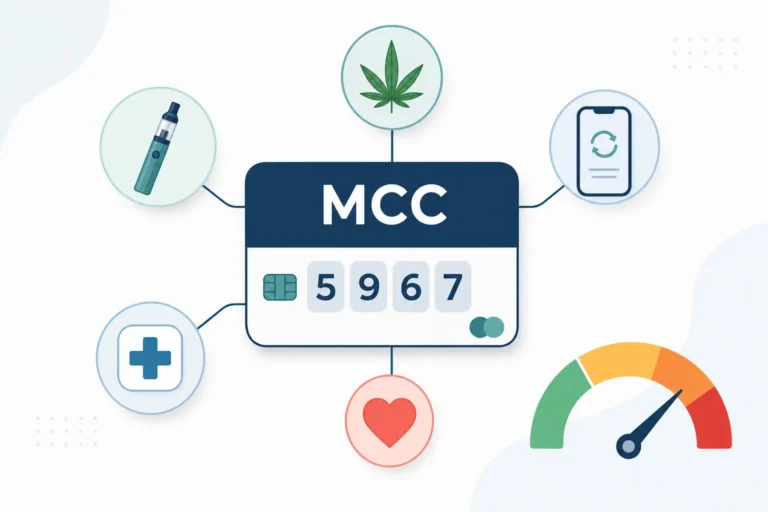
For these businesses, international payment processing isn’t just about access; it’s about stability. Getting approved for a merchant account is often the first hurdle. Many traditional providers apply strict filters and decline applications that fall outside their comfort zone. Supplement brands run into this constantly, and our guide to payment processing for supplement and nutraceutical sellers covers how to get approved and stay approved. Those filters usually start with high-risk merchant category codes, so it is worth confirming which code your business carries before you apply with an international acquirer. CBD sellers run into this filter more than almost anyone, which is why we mapped out the payment processing options for CBD businesses and the documentation that gets applications approved. Even after approval, the challenges don’t stop. High-risk merchants typically deal with stricter monitoring, rolling reserves, and higher processing fees. Transactions are more likely to be flagged, and approval rates can fluctuate depending on customer location or behavior patterns.
This is where specialization starts to matter. Instead of treating all merchants the same, experienced providers take a more tailored approach. They assess the business model, transaction patterns, and geographic exposure before structuring a solution.
For example, a subscription-based business might need stronger recurring billing controls to reduce disputes. A travel company might require flexible routing options to handle international bookings. Each scenario calls for a slightly different setup.
Risk management also becomes more proactive in this space. Rather than reacting to chargebacks after they occur, systems are designed to detect early warning signs, unusual transaction volumes, mismatched customer data, or repeated declines from specific regions.
What makes the difference isn’t just technology. It’s the ability to combine that technology with practical insight. Businesses operating in high-risk environments need more than access to payment processing; they need guidance that helps them stay operational over the long term.
Role of Invoicing and Recurring Billing in Global Payments
International payment processing extends beyond one-time transactions. Many businesses rely on invoicing and recurring billing to maintain consistent revenue streams.
Digital invoicing systems allow businesses to send payments in multiple currencies while automating reconciliation. Tools like electronic invoice systems simplify this process by reducing manual work and improving accuracy.
Recurring payment models are particularly valuable for subscription-based businesses. Implementing strategies ensures predictable cash flow while minimizing missed payments. These systems also improve customer experience by offering flexible payment options and automated reminders.
Future Trends in International Payment Processing
The landscape of international payments continues to evolve as technology advances. Real-time payment systems are gradually replacing traditional methods, reducing settlement times and improving transparency.
Payment orchestration platforms are also gaining traction. These systems route transactions dynamically based on cost, location, and success rates, improving efficiency across multiple payment gateways.
Mobile payment adoption continues to rise, particularly in emerging markets. As more consumers rely on smartphones for financial transactions, businesses must adapt to new payment behaviors.
At the same time, artificial intelligence plays a growing role in fraud detection and risk management, allowing businesses to respond faster to emerging threats.
Practical Ways to Reduce Costs and Improve Approval Rates
Reducing costs in international payment processing isn’t about cutting corners. It’s about understanding where inefficiencies exist and adjusting the setup accordingly.
One of the most overlooked areas is transaction routing. Not all payment paths are equal. Some routes are faster, cheaper, or more reliable than others, depending on the region. Businesses that implement intelligent routing strategies often see immediate improvements in approval rates.
Another factor is currency handling. Accepting payments in a customer’s local currency can reduce friction during checkout. People are more likely to complete a purchase when they don’t have to mentally convert prices. At the same time, businesses need to manage how those funds are converted and settled to avoid unnecessary FX losses.
Payment method diversity also plays a role. Relying solely on the credit card limits reach, especially in regions where alternative payment methods dominate. Adding options like bank transfers or digital wallets increases flexibility and captures a wider audience.
Then there’s fraud control. It’s a balancing act. Overly strict filters can block legitimate transactions, while loose controls invite risk. The goal is to fine-tune detection systems so they recognize genuine customer behavior without creating unnecessary friction.
Operational visibility matters too. Businesses that track payment performance, approval rates, decline reasons, and settlement timelines are better positioned to make adjustments. Without that data, it’s difficult to know where losses are happening.
Cost reduction, in this sense, isn’t a one-time fix. It’s an ongoing process of refining how payments are handled across different regions and scenarios.

Bringing It All Together
International payment processing isn’t just a technical requirement; it shapes how a business grows beyond its local market. From handling currency shifts to managing risk and improving approval rates, every detail plays a role in the bigger picture.
Businesses that approach payments as a strategic function, not just a backend necessity, tend to scale more smoothly. They reduce friction for customers, gain better control over costs, and stay ahead of compliance challenges.
For companies looking to simplify global payments while maintaining flexibility, working with a provider that understands both technology and real-world merchant needs can make a meaningful difference.
If your business is expanding internationally or struggling with payment complexity, Premier Payments Online offers tailored solutions designed around your specific model, helping you process smarter, reduce risk, and grow with confidence.