Article Summary:
This comprehensive guide examines the real costs behind credit card processing and provides actionable strategies to secure the lowest credit card processing fees available in today’s market. We’ll break down the fee structures that processors use, reveal hidden charges most merchants overlook, and compare pricing models to help you make informed decisions. You’ll learn how to negotiate better rates, identify red flags in contracts, and implement cost-reduction strategies that can save your business thousands annually. By the end of this article, you’ll possess the knowledge to evaluate processors objectively and select a solution that aligns with your transaction volume, business model, and growth objectives.
The True Cost of Payment Processing
Credit card processing fees represent one of the most significant operational expenses for modern businesses. According to recent industry data, U.S. merchants collectively pay over $130 billion annually in processing costs. The average small business pays between 2.87% and 4.35% per transaction when all fees are combined, though many merchants remain unaware of the exact breakdown.
The quest for the lowest credit card processing fees starts with transparency. Most processors bundle multiple charges into a single rate, which obscures the actual cost structure. Interchange fees—set by card networks like Visa and Mastercard—account for the largest portion, typically 1.5% to 3.5% of each transaction. These rates remain consistent across all processors since they flow directly to card-issuing banks.
Assessment fees add another layer, ranging from 0.13% to 0.15% per transaction. Card networks collect these charges to maintain their infrastructure and fraud prevention systems. While non-negotiable, these fees vary slightly between card types and transaction methods.
The processor’s markup constitutes the only negotiable component. This is where businesses can secure the lowest credit card processing fees by comparing offers and leveraging competition. Markups range from 0.10% to 1.50% or more, depending on the pricing model and your negotiation skills.
| Fee Component | Typical Range | Who Sets It | Negotiable? |
| Interchange | 1.5% – 3.5% | Card Networks | No |
| Assessment | 0.13% – 0.15% | Card Networks | No |
| Processor Markup | 0.10% – 1.50%+ | Payment Processor | Yes |
| Monthly Fees | $0 – $50 | Payment Processor | Yes |
| Transaction Fees | $0.10 – $0.30 | Payment Processor | Yes |
Three Pricing Models Decoded
Payment processors structure their fees through three primary models, each with distinct advantages and potential pitfalls. Your choice directly impacts whether you achieve the lowest credit card processing fees for your specific situation.
- Flat-Rate Processing
This model charges a fixed percentage plus a flat fee per transaction, regardless of card type. Square and PayPal popularized this approach with rates around 2.6% + $0.10 for card-present transactions and 2.9% + $0.30 for online payments. While simplicity appeals to new businesses, flat-rate processing rarely delivers the lowest credit card processing fees for established merchants with consistent volume.
The advantage lies in predictability. You never encounter surprise charges or complex statements. However, high-volume merchants subsidize low-volume users in this model. If you process over $10,000 monthly, flat-rate pricing costs substantially more than alternatives.
- Tiered Processing
Processors using tiered models classify transactions into qualified, mid-qualified, and non-qualified categories. Qualified rates (the advertised low rate) apply only to basic debit cards swiped in person. Mid-qualified transactions include standard credit cards, while non-qualified rates hit rewards cards and manually entered transactions.
This structure creates confusion intentionally. The advertised 1.69% rate sounds competitive, but most transactions fall into higher tiers. Your effective rate might reach 3.5% or more. Tiered processing almost never provides the lowest credit card processing fees because the markup remains hidden within the tier structure.
- Interchange-Plus Processing
This transparent model separates the non-negotiable interchange and assessment fees from the processor’s markup. You might see pricing like “Interchange + 0.25% + $0.10.” The processor passes through the exact costs and adds a consistent markup to every transaction.
For merchants seeking the lowest credit card processing fees, interchange-plus offers the best value. The transparent structure allows easy comparison between processors. If one quotes interchange + 0.30% and another offers interchange + 0.20%, you instantly know the second saves money on every transaction.
Premier Payments Online’s omnichannel solutions support interchange-plus pricing, which gives merchants full visibility into their processing costs across all sales channels.
Hidden Charges That Inflate Your Costs
Even with competitive base rates, hidden fees can destroy your efforts to secure the lowest credit card processing fees. Industry data shows these additional charges add 0.5% to 2% to your effective rate.
- Monthly Account Fees
Many processors charge $10 to $50 monthly for account maintenance, statement generation, or access to reporting tools. Some waive these fees for high-volume merchants, while others apply them universally. When calculating your effective rate, divide these monthly charges by your transaction volume and add the percentage to your advertised rate.
- PCI Compliance Fees
Payment Card Industry Data Security Standard (PCI DSS) compliance protects cardholder data, but processors often charge $5 to $30 monthly for compliance programs. While PCI compliance remains mandatory, the fee itself is often negotiable or included in competitive offers. Merchants who fail annual validation face PCI DSS non-compliance charges that can reach $50 to $100 monthly until remediated.
- Batch Fees and Gateway Charges
Processors charge $0.10 to $0.35 each time you close a batch and settle transactions. High-frequency businesses that batch multiple times daily accumulate significant costs. Payment gateway access for online merchants adds $10 to $25 monthly, though some processors include this in their base pricing.
- Chargeback Fees
When customers dispute transactions, processors charge $15 to $50 per chargeback regardless of the outcome. Merchants with high chargeback ratios face additional penalties or program enrollment. Advanced risk and fraud management systems help minimize these occurrences and protect your bottom line.
- Early Termination Fees
Contracts with cancellation penalties ranging from $250 to $500 lock merchants into unfavorable arrangements. The lowest credit card processing fees mean nothing if you cannot switch to a better offer when one emerges. Always negotiate contract terms that allow cancellation with 30 to 60 days’ notice without penalties.
| Hidden Fee Type | Typical Cost | Avoidability |
| Monthly Account | $10 – $50 | Often negotiable |
| PCI Compliance | $5 – $30 | Required, fee negotiable |
| Batch Closure | $0.10 – $0.35 | Minimize batches |
| Payment Gateway | $10 – $25 | Shop for inclusion |
| Chargebacks | $15 – $50 | Reduce through prevention |
| Early Termination | $250 – $500 | Negotiate out before signing |

Transaction Method Cost Variations
The lowest credit card processing fees depend significantly on how customers pay. Card-present transactions with chip reads or contactless taps cost less than card-not-present purchases because fraud risk decreases when the physical card appears.
- In-Store Payments
Swiped, dipped, or tapped transactions qualify for the lowest interchange rates, typically 1.5% to 2.5% plus $0.10. The physical card presence and immediate authorization reduce fraud exposure, which card networks reward with better rates. Modern in-store payment systems support multiple acceptance methods while maintaining these favorable rates.
- Online Transactions
E-commerce payments carry higher interchange rates, usually 2.3% to 3.5% plus $0.30, because fraud risk increases without physical card verification. Card-not-present fraud accounted for $5.5 billion in losses in 2023. However, intelligent payment routing technology can optimize transaction paths and reduce processing costs even for online sales.
- Keyed Entry
Manually entered card numbers face the highest rates, often 3.5% plus $0.30 or more. Networks penalize keyed transactions due to elevated fraud risk. Businesses that frequently key entries should investigate alternative solutions like virtual terminals with address verification systems to improve authorization rates while controlling costs.
- ACH and Check Processing
ACH payment methods offer dramatically lower costs than card transactions. ACH transfers typically cost $0.25 to $1.00 per transaction regardless of amount, which makes them ideal for large-ticket items or recurring payments. An ACH check acceptance program can reduce overall payment processing expenses by 70% or more for suitable transaction types.
How Business Type Affects Rate Qualification
Processors assess risk based on your business model, industry, and transaction patterns. These factors determine whether you qualify for the lowest credit card processing fees or face surcharges and higher rates.
- Retail and Restaurants
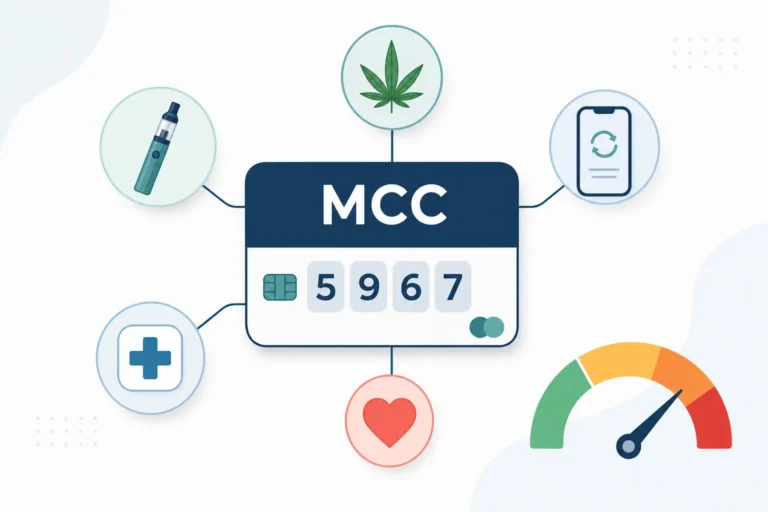
Traditional brick-and-mortar businesses with card-present transactions receive the most favorable rates. Consistent transaction patterns, low chargeback ratios, and physical customer interaction minimize risk. Retail merchants processing $50,000 monthly can often negotiate interchange-plus pricing with markups below 0.20%. Businesses outside that profile should understand how high-risk MCCs are classified, since your assigned code often determines whether those low markups are available to you at all.
- E-Commerce Merchants
Online retailers face slightly higher base rates, but volume can offset this disadvantage. An e-commerce business processing $100,000 monthly has leverage to demand competitive terms. Comprehensive online payment solutions that include fraud screening tools help merchants maintain low chargeback ratios, which supports better rate negotiations.
- High-Risk Merchants
Industries like nutraceuticals, subscription services, travel, and adult entertainment face elevated rates and stricter contract terms. Processors categorize these businesses as high-risk due to increased chargeback frequency or regulatory scrutiny. Specialized high-risk merchant services offer processing solutions with rates typically 0.5% to 2% higher than standard merchants, but comparison shopping remains crucial since rates vary dramatically between specialized processors.
- Professional Services
CPAs, lawyers, consultants, and medical practices process large average tickets with low transaction volume. These businesses benefit from interchange-plus pricing with low monthly minimums. Professional service providers should negotiate the removal of per-transaction fees when average tickets exceed $500.
Negotiation Strategies That Work
Securing the lowest credit card processing fees requires preparation and willingness to leverage competition. Processors expect negotiation, and their initial quotes rarely represent their best offer.
- Prepare Your Data
Gather six months of processing statements before approaching processors. Document your monthly volume, average ticket size, transaction count, card mix (debit versus credit), and current effective rate. This data gives you negotiation power and helps processors provide accurate quotes.
Calculate your current effective rate by dividing total monthly fees by total monthly volume. If you paid $1,200 in fees on $50,000 in sales, your effective rate is 2.4%. Use this baseline to evaluate new offers.
- Request Multiple Quotes
Contact at least three processors with your documented transaction profile. Require quotes in interchange-plus format for accurate comparison. Be wary of processors who refuse to provide this pricing structure, as they likely embed excessive markups in tiered or bundled rates.
When processors know you’re comparing offers, they sharpen their pencils. Mention that you’ve received competitive quotes without revealing exact numbers initially. This tactic often produces improved terms as processors compete for your business.
- Focus on the Markup
Since interchange and assessment fees remain fixed, concentrate negotiations on the processor’s markup. A difference of 0.10% might seem insignificant, but it represents $500 annually on $500,000 in transaction volume. Over a three-year contract, that’s $1,500 in savings from a single negotiation point.
Request the removal or reduction of monthly fees, batch charges, and statement fees. Processors often concede these items to win your business, especially when you demonstrate you’ve done your research.
- Eliminate Contract Penalties
Never accept early termination fees or rate increase clauses that allow unilateral changes. The lowest credit card processing fees today mean nothing if your processor raises rates in six months and traps you in a three-year contract. Insist on month-to-month terms or contracts with rate locks and penalty-free cancellation provisions.
Also read: Payment Elections Take How Long to Process? Complete Timeline Guide
Technology That Reduces Processing Costs
Modern payment technology does more than accept transactions—it actively reduces processing costs through optimization and automation.
Tokenization and Network Tokens
Tokenization replaces sensitive card data with unique identifiers, which reduces PCI DSS compliance costs and data breach liability. Network tokens, issued directly by card networks, can lower interchange rates by 0.10% to 0.20% while improving authorization rates. This technology benefits both security and cost reduction simultaneously.
Level 2 and Level 3 Processing
Corporate and government purchase cards qualify for reduced interchange rates when merchants submit enhanced transaction data. Level 2 processing requires tax amounts and customer codes, while Level 3 adds line-item detail. These additional data points can reduce interchange rates by 0.40% to 1.0% on business card transactions.
For B2B merchants, implementing Level 2/3 processing capabilities directly impacts the achievement of the lowest credit card processing fees. The technology investment pays for itself within months through interchange savings on corporate card volume.
Automated Reconciliation
Electronic invoice systems and automated payment processing reduce manual labor costs associated with transaction management. While not directly reducing processing fees, automation lowers total payment acceptance costs by eliminating hours of administrative work monthly.
Enterprise invoice processing solutions integrate with accounting systems and provide real-time visibility into payment status, which improves cash flow management and reduces payment delays.

Alternative Payment Methods to Consider
The path to the lowest credit card processing fees sometimes involves reducing card volume altogether. Alternative payment methods offer cost advantages for specific transaction types.
Digital Wallets
Apple Pay, Google Pay, and Samsung Pay use tokenized card data, which often qualifies for lower interchange rates than standard card-not-present transactions. Some processors offer reduced markups on digital wallet transactions to encourage adoption. The improved security and customer convenience make digital wallets a triple win.
Bank Transfers
Direct bank transfers through ACH networks cost dramatically less than card processing. A $1,000 invoice paid by credit card at 2.5% costs $25 in fees, while the same payment via ACH costs less than $1.00. Businesses with large average tickets should actively promote ACH options to customers.
Buy Now, Pay Later
While BNPL services charge merchant fees similar to cards (2% to 6%), they can increase average order values by 30% to 50%. The higher transaction amounts may justify the fees through increased revenue, though BNPL shouldn’t replace cards entirely.
Cryptocurrency
For international merchants or businesses serving tech-savvy customers, cryptocurrency payments offer fees around 1% with no chargeback risk. However, volatility concerns and limited adoption restrict crypto’s practicality for most businesses today.
| Payment Method | Typical Cost | Best Use Case |
| Card-Present | 1.5% – 2.5% + $0.10 | Retail, restaurants |
| Card-Not-Present | 2.3% – 3.5% + $0.30 | E-commerce |
| ACH Transfer | $0.25 – $1.00 flat | Large tickets, recurring |
| Digital Wallet | 1.5% – 3.0% + $0.10 | Mobile commerce |
| BNPL | 2% – 6% | High AOV e-commerce |
| Cryptocurrency | ~1% | International tech markets |
Red Flags in Processor Contracts
Contract terms matter as much as advertised rates when pursuing the lowest credit card processing fees. Certain clauses indicate problematic agreements that will cost more than anticipated.
Rate Increase Provisions
Clauses that permit unilateral rate increases without your consent trap merchants in deteriorating deals. Reputable processors provide 90-day advance notice of rate changes and allow penalty-free cancellation if you disagree with modifications.
Automatic Renewal Terms
Three-year contracts that auto-renew for additional three-year periods unless you provide cancellation notice 90 days before expiration create endless traps. Miss the narrow cancellation window, and you’re locked in for another three years regardless of how processing costs evolve.
Equipment Leasing
Four-year terminal leases at $50 monthly cost $2,400 for equipment worth $200 to $400. This represents a 500% markup disguised as a convenience. Always purchase terminals outright or choose processors who provide equipment at cost or free with volume commitments.
Bundled Rates Without Breakdown
Quotes that provide only a single “qualified rate” without detailing non-qualified tiers, monthly fees, or transaction charges obscure true costs. Demand complete fee schedules in writing before committing.
Implementation: Your Action Plan
Armed with comprehensive knowledge, you can now take concrete steps to achieve the lowest credit card processing fees for your specific business.
Step 1: Audit Current Costs
Compile three months of processing statements and calculate your effective rate. List all fees separately—base rates, transaction fees, monthly charges, and incidentals. This baseline reveals exactly how much you’re paying and where negotiations should focus.
Step 2: Define Your Requirements
Document your processing needs: transaction volume, average ticket, card mix, payment channels (in-store, online, mobile), and necessary features. Processors provide more accurate quotes when they understand your complete requirements.
Step 3: Gather Competitive Quotes
Request proposals from at least three processors, providing identical information to each. Require interchange-plus pricing structures for transparency. Schedule calls to discuss each proposal and ask clarifying questions about fees, contract terms, and technology.
Step 4: Negotiate Aggressively
Use competitive quotes as leverage. Ask each processor to match or beat their competitors’ best terms. Focus on reducing markup percentages, eliminating monthly fees, and securing favorable contract terms. Remember that everything is negotiable except interchange and assessment fees.
Step 5: Test Before Full Commitment
If possible, process a small percentage of volume with a new processor before migrating completely. This test period reveals how customer service, technology, and support function in practice rather than theory.
Step 6: Monitor and Optimize Continuously
Review statements monthly for unexpected charges or rate changes. Annually re-negotiate with your current processor or gather new quotes from competitors. Payment processing costs should decrease as your volume grows, not remain static.
Key Takeaways
- The lowest credit card processing fees result from transparent interchange-plus pricing combined with aggressive negotiation of processor markups
- Hidden fees like PCI compliance charges, batch fees, and monthly account fees can add 0.5% to 2% to your effective rate if left unchecked
- Card-present transactions qualify for substantially lower rates than card-not-present or manually keyed entries
- Business type and transaction patterns significantly impact rate qualification, with retail receiving the most favorable terms
- Alternative payment methods like ACH transfers cost 70% to 90% less than card processing for suitable transaction types
- Contract terms matter as much as advertised rates—avoid automatic renewals, rate increase clauses, and early termination penalties
- Technology investments in tokenization and Level 2/3 processing pay for themselves through direct interchange savings
- Annual rate renegotiation should be standard practice as your business grows and processing volumes increase

Take Control of Your Processing Costs Today
Payment processing fees represent a significant expense, but they don’t need to remain a mystery. The strategies outlined in this guide give you the knowledge and tools to secure the lowest credit card processing fees available for your business model and transaction profile.
Premier Payments Online specializes in transparent, competitive payment processing solutions for businesses across all industries. Our interchange-plus pricing model provides complete visibility into your costs, while our experienced team helps optimize your payment acceptance strategy across all channels.
Whether you need comprehensive online payment solutions, advanced in-store systems, or integrated omnichannel capabilities, we deliver technology and service that prioritize your bottom line. Our team works with commercial resellers, brokers, and career sales professionals who value transparent partnerships built on competitive pricing and exceptional support.
Contact us today to receive a customized quote based on your specific transaction profile. Our payment experts will analyze your current costs, identify optimization opportunities, and provide a clear path to reduced processing expenses. Don’t let another month pass while overpaying for payment processing—learn more about how Premier Payments Online can help your business thrive.