The terms payment gateway and payment processor are often used as if they mean the same thing, yet they perform different functions in every digital transaction. Understanding the technical and operational gap between them can help merchants avoid integration issues, compliance problems, and lost revenue.
Today, over 73% of global e-commerce transactions depend on a gateway-processor connection to authorize, encrypt, and settle payments across networks like Visa, Mastercard, and American Express.
This article outlines the key roles of each component, compares their functions, explains how they work together behind the scenes, and helps business owners decide which option, or combination, fits their needs best.
You’ll also discover how Premier Payments Online (PPO) provides both gateway and processing capabilities under one roof, removing the complexity that usually surrounds payment infrastructure.
What Is a Payment Processor?
A payment processor is the financial engine that connects a merchant, a customer, an acquiring bank, and a card network. Its job is to transmit the encrypted data received from the payment gateway, seek authorization from the issuing bank, and complete the fund transfer to the merchant account. Processors handle the heavy lifting of settlements, refunds, and chargebacks.
Most processors, such as PPO, manage high transaction volumes daily through integrations with multiple acquirers. They support both point-of-sale systems (POS) and online payment environments, making them indispensable for omnichannel businesses.
Key Features
| Feature | Description |
| Transaction Routing | Sends encrypted data to issuing and acquiring banks for approval or decline. |
| Settlement Management | Transfers approved funds to merchant accounts within set time frames. |
| Chargeback Handling | Coordinates dispute responses and risk reporting. |
| Reporting Tools | Provides dashboards for tracking transactions and settlements. |
| Card Network Integration | Communicates directly with Visa, Mastercard, Discover, and others. |
Pros and Cons
| Pros | Cons |
| Reliable fund settlement and dispute management. | Requires merchant account setup with fees. |
| Enables physical POS terminals and mobile readers. | Some processors lack built-in fraud prevention. |
| Supports recurring and subscription billing. | Integration with separate gateways can add complexity. |
A payment processor essentially acts as the messenger and enforcer of every transaction, maintaining compliance and performance within the financial ecosystem.
What Is a Payment Gateway?
A payment gateway is the secure bridge between the customer’s checkout experience and the payment processor. It captures cardholder information, encrypts it, and transmits it safely. Without a gateway, online merchants could not accept card payments securely.
A strong gateway must support tokenization, multi-currency conversion, and 3D Secure authentication, ensuring that each transaction meets PCI-DSS requirements. Gateways are also responsible for detecting suspicious patterns before the processor even receives the data.
Key Features
| Feature | Description |
| Data Encryption | Converts customer card details into encrypted tokens. |
| API & Plugin Integration | Connects with e-commerce platforms such as Shopify, WooCommerce, and Magento. |
| 3D Secure & Fraud Filters | Adds authentication steps for high-value or risky transactions. |
| Hosted Checkout Pages | Provides customizable payment forms for websites. |
| Multi-Currency Support | Allows customers to pay in local currency. |
Pros and Cons
| Pros | Cons |
| Protects customer data with advanced encryption. | Monthly or per-transaction gateway fees apply. |
| Enhances checkout experience and security. | May require integration work for compatibility with the processor. |
| Helps merchants stay PCI-DSS compliant. | Slower authorization if paired with outdated processors. |
In short, the gateway manages security and customer experience, while the processor handles communication and settlement.

What’s the Difference Between a Payment Gateway and Payment Processor?
Although both handle payments, their responsibilities differ across the transaction timeline. The payment gateway captures and encrypts data at the point of sale, while the payment processor carries that data through card networks and banks to complete authorization and settlement.
| Function | Payment Gateway | Payment Processor |
| Data Entry & Encryption | Yes | No |
| Authorization Request | Yes (initiates) | Yes (executes) |
| Fund Settlement | No | Yes |
| Chargeback Management | Limited | Comprehensive |
| Integration with POS or website | Yes | Sometimes |
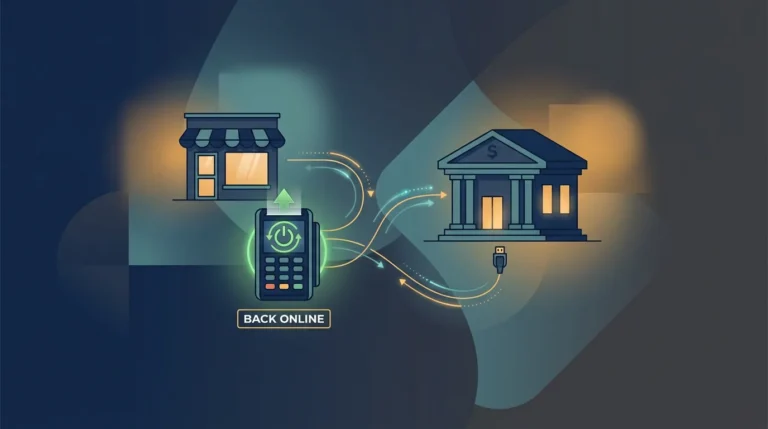
When a customer pays online, the gateway collects card information, encrypts it, and forwards it to the processor. The processor checks with the issuing bank, receives approval or a decline, and relays the result back through the gateway to the website or POS terminal.
How Each Piece Works Behind the Scenes
A transaction passes through multiple stages before a merchant receives funds. The payment gateway vs payment processor distinction becomes clearer when the workflow is examined in sequence.
| Step | Gateway Role | Processor Role |
| Customer inputs payment details. | Captures and encrypts card data. | Waits for an encrypted token. |
| Gateway sends data to the processor. | Forwards an encrypted packet securely. | Receives and routes it to the acquiring bank. |
| The processor contacts the issuing bank. | — | Submits a request for approval or decline. |
| The bank authorizes the transaction. | Receives a decision from the processor. | Transmits the result back through the network. |
| Funds settle. | Displays success to the customer. | Moves funds to the merchant account. |
Each step may take only 1–3 seconds, yet involves encryption, network verification, and risk analysis. A misconfigured connection between the gateway and processor can lead to failed transactions or data exposure.
That is why providers with both systems integrated, like PPO, eliminate most latency and compliance concerns.
Payment Gateway vs Payment Processor: Which Do You Need?
Your decision depends on where and how you sell. Businesses that rely solely on e-commerce cannot function without a gateway, while brick-and-mortar operations may connect directly to a processor through their POS system.
| Business Type | Recommended Setup | Reason |
| Online-only store | Gateway + Processor | Secure online checkout with fraud filters and settlement control. |
| In-store retail | Processor | POS systems connect directly for faster approvals. |
| Hybrid (online + in-store) | Unified Gateway-Processor Solution | Centralized reporting and consistent experience across channels. |
| High-risk or international merchants | Dual system with risk tools | Supports multiple acquirers, currencies, and anti-fraud layers. |
Merchants that combine both systems within a single provider benefit from simplified integration, consistent customer experience, and reduced transaction costs.
Why the Difference Matters for Your Business
Treating these systems as interchangeable can cause serious inefficiencies. Choosing the wrong configuration often leads to lost authorizations, chargeback disputes, and compliance failures.
A payment gateway ensures PCI-DSS compliance, fraud screening, and customer trust at checkout. A processor ensures regulatory alignment with card networks and smooth cash flow through settlements. Missing either component means incomplete protection and possible financial loss.
For example, a U.S. merchant expanding to Europe may need a processor capable of settling in multiple currencies and a gateway that recognizes region-specific authentication such as 3D Secure 2. Failure to pair the right gateway and processor could result in decline rates above 12%, well above the global average of 3.8%.
The difference also matters for reporting. Gateways track transaction attempts and customer activity, while processors record cleared payments and refunds. Together, they provide full visibility into business performance.

How to Choose a Payment Processor and Payment Gateway
Selecting both systems should involve evaluation of compliance, scalability, and integration quality. Look for providers that meet PCI-DSS standards, maintain uptime above 99.9%, and offer transparent fee structures.
Your payment processor should provide direct integration with acquiring banks, real-time reporting, and chargeback support. Your gateway should include tokenization, API flexibility, and support for emerging payment methods such as digital wallets.
Consider long-term growth as well. Businesses that plan to expand globally must verify that their provider can handle multi-currency settlements and cross-border risk. For reference, PPO’s systems are designed for both domestic and international merchants, supported by a network of multiple acquirers and advanced risk management tools.
If you are reviewing your current compliance standing, you can explore PPO’s detailed guide on the benefits of PCI-DSS compliance to understand how certification affects your processing capability.
How Premier Payments Online Gives You an Edge
Premier Payments Online functions as both a registered ISO/MSP and a specialized merchant service provider, combining gateway and processing under one infrastructure. This dual capability gives clients direct access to global acquiring banks and faster settlement paths.
The company supports online, in-store, and omnichannel environments. Merchants can consolidate credit card, debit card, and electronic payments through one dashboard instead of juggling multiple vendors. PPO’s system also includes intelligent payment routing, which directs each transaction through the most reliable acquirer to minimize declines and optimize approval rates.
Beyond technology, PPO offers deep expertise in risk-heavy sectors such as high-volume e-commerce, subscription models, and international sales. The firm’s 15-year record in the payment industry proves its reliability. Paired with personal account management, PPO’s infrastructure reduces operational friction and supports steady business growth.
Merchants exploring omnichannel expansion can review PPO’s online payments service to see how gateway and processing are unified into one platform for both domestic and international operations.

Checklist for Choosing the Right Setup
The choice between gateway, processor, or both requires assessment of performance, integration, and compliance needs.
| Evaluation Factor | Key Question | Ideal Outcome |
| Transaction Volume | Does your provider handle spikes and high concurrency? | Consistent approvals under heavy load. |
| Integration | Does it support your POS or e-commerce platform? | Seamless API or plugin connection. |
| Risk Profile | Do you operate in high-risk or multi-currency markets? | Provider offers risk management and flexible routing. |
| Cost Transparency | Are gateway and processor fees clearly separated? | Predictable monthly and per-transaction pricing. |
| Compliance | Are PCI-DSS and local regulations met? | Provider maintains certifications and reporting. |
A detailed evaluation across these areas helps businesses avoid redundant costs and long integration cycles. After setup, regular audits of system uptime and fraud metrics maintain processing stability.
Building a Future-Proof Payments Setup for Your Business
Every transaction involves more than approval or decline; it represents trust between merchant and customer. Choosing the correct balance of payment gateway vs payment processor ensures that data security, settlement reliability, and customer experience all align with your business goals.
Premier Payments Online delivers both the technical and human support required to maintain that balance. Through its integrated gateway-processor infrastructure, businesses gain faster transaction approvals, global reach, and hands-on guidance from experts who understand real-world payment challenges.
To explore a unified system that simplifies payment acceptance, enhances compliance, and scales with your business, visit our omnichannel payments solution or reach out through our contact page to start a tailored setup consultation.