Article Summary:
This blog will guide you on what makes a Secure Payment Gateway, why security matters for your business survival, and how to select solutions that protect both your revenue and customer trust. We’ll examine the technologies that prevent fraud and data breaches, decode security certifications that actually matter, and reveal red flags that signal vulnerable systems. You’ll learn how hackers target payment systems, discover the true cost of security failures, and gain practical criteria for evaluating gateway providers. The article breaks down complex security concepts into clear language that business owners can understand and apply immediately.
By the end, you’ll possess the knowledge to ask the right questions, avoid costly security mistakes, and implement payment solutions that safeguard your business while delivering seamless customer experiences.
What a Secure Payment Gateway Does
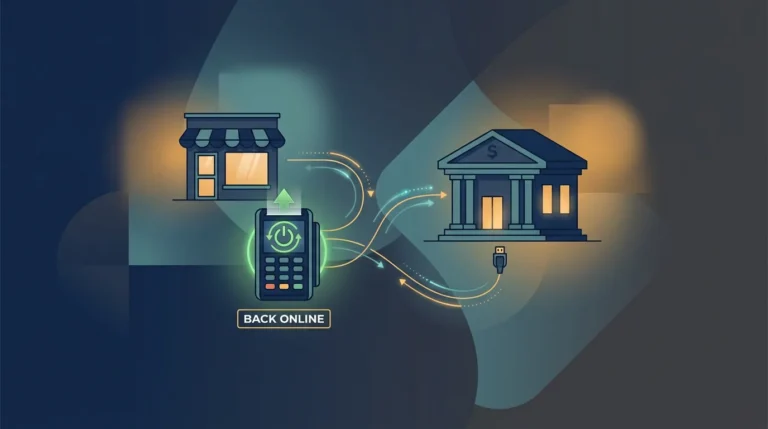
A payment gateway acts as the digital bridge between your business and the banks that process customer payments. When someone enters their card information on your website or hands you their card at checkout, the gateway encrypts that sensitive data and transmits it securely to the appropriate financial institutions for approval. Within seconds, it returns an answer, approved or declined, and completes the transaction.
Security enters this equation at every step. A secure payment gateway protects card numbers, personal information, and transaction details from criminals who constantly attempt to steal this valuable data. Without proper security, your business becomes vulnerable to fraud, data breaches, and the devastating consequences that follow.
A secure payment gateway prevents these outcomes through multiple protective layers. It encrypts data so criminals cannot read it even if intercepted. It validates transactions to detect fraudulent patterns. It complies with industry security standards that minimize vulnerability. Most importantly, it shields your business from the financial and reputational destruction that security failures cause.
Modern payment systems face threats from organized cybercrime rings, individual hackers, and even dishonest employees. The average data breach costs small businesses $149,000 in remediation, legal fees, and lost business. Many companies never recover from major security incidents, 60% of small businesses close within six months of a significant breach.
| Security Component | What It Protects | Why It Matters |
| Data Encryption | Card numbers, personal data | Prevents theft during transmission |
| Fraud Detection | Transaction patterns | Blocks fraudulent purchases |
| Compliance Standards | Overall system security | Meets legal requirements |
| Access Controls | System administration | Prevents internal theft |
| Regular Security Updates | Software vulnerabilities | Closes newly discovered holes |
How Data Encryption Protects Your Transactions
Encryption transforms readable information into scrambled code that only authorized systems can decode. When a customer enters their credit card number, a secure payment gateway immediately encrypts that data using mathematical formulas so complex that modern computers would need thousands of years to crack them.
Think of encryption like a lockbox with a key that only the bank possesses. The card number goes into the lockbox at your checkout page, travels through the internet in this protected state, and only unlocks when it reaches the bank for processing. Even if criminals intercept the data during transmission, they see only meaningless scrambled characters.
TLS and SSL Protection
Transport Layer Security (TLS) represents the current standard for encrypting data as it moves between your website and the payment gateway. You recognize TLS-protected sites by the padlock icon in your browser’s address bar and URLs that start with “https” instead of “http.”
The “s” in “https” stands for secure. Sites without this protection transmit data in plain text that anyone monitoring the connection can read. A secure payment gateway requires TLS protection for all payment pages, no exceptions. Any gateway that allows standard HTTP connections for payment collection fails basic security requirements.
TLS creates an encrypted tunnel between the customer’s device and your payment system. Data passing through this tunnel remains unreadable to anyone monitoring the connection. Banks, internet service providers, and potential hackers see only encrypted gibberish instead of valuable card numbers.
Point-to-Point Encryption
Advanced systems use point-to-point encryption (P2PE) that scrambles card data the instant it enters a payment terminal or checkout form. The information remains encrypted throughout its entire journey and only decrypts when it reaches the bank for processing.
This approach means card numbers never exist in readable form on your servers or systems. Since you never handle unencrypted card data, criminals cannot steal what you don’t possess. P2PE dramatically reduces your security responsibilities and PCI compliance requirements, which simplifies operations while improving protection.
Tokenization Technology
Tokenization replaces sensitive card data with random reference numbers called tokens. After the first transaction, the system stores a token instead of the actual card number. Future purchases use this token, which holds no value to criminals who might steal it.
If hackers breach a system storing tokenized data, they obtain only meaningless reference numbers. The actual card numbers remain secured in the payment gateway’s protected vault, far from vulnerable merchant systems. Tokenization protects both initial transactions and stored payment methods for repeat customers.
Premier Payments Online’s online payment solutions implement industry-leading encryption and tokenization technologies that secure every transaction without adding complexity to your customer checkout experience.
PCI Compliance: The Security Standard You Must Meet
The Payment Card Industry Data Security Standard (PCI DSS) establishes minimum security requirements for any business that accepts card payments. Card networks like Visa and Mastercard created these standards to reduce fraud and protect cardholder data across the entire payment ecosystem.
Compliance isn’t optional. Every business that processes card payments must meet PCI DSS requirements, though the specific obligations vary based on transaction volume. Violations result in fines from $5,000 to $100,000 monthly, plus liability for fraud losses that occur due to non-compliance.
Four Compliance Levels
PCI standards define four merchant levels based on annual transaction volume:
- Level 1: Over 6 million transactions annually, requires an annual onsite security audit
- Level 2: 1 to 6 million transactions, requires an annual security questionnaire
- Level 3: 20,000 to 1 million e-commerce transactions, requires an annual questionnaire
- Level 4: Under 20,000 e-commerce or under 1 million total, requires annual questionnaire
Most small and medium businesses fall into Level 3 or 4, which allows self-assessment through questionnaires instead of expensive external audits. However, even self-assessment requires genuine security measures, not just paperwork.
A secure payment gateway simplifies compliance by handling sensitive data on your behalf. When the gateway manages encryption, tokenization, and secure storage, your systems never touch raw card numbers. This dramatically reduces your compliance scope and the technical security measures you must implement independently.
The Twelve Core Requirements
PCI DSS contains twelve fundamental requirements that secure payment systems must meet:
- Install and maintain firewall protection
- Avoid vendor-supplied default passwords
- Protect stored cardholder data
- Encrypt transmission of cardholder data
- Use and regularly update anti-virus software
- Develop and maintain secure systems
- Restrict access to cardholder data
- Assign unique IDs to system users
- Restrict physical access to cardholder data
- Track and monitor network access
- Regularly test security systems
- Maintain security policies
These requirements might sound technical, but they represent common-sense security practices. Use strong passwords. Keep software updated. Control who accesses sensitive information. Test your security regularly. Document your procedures.
Choosing a PCI-compliant payment gateway transfers much of this burden to your provider. The gateway handles encryption, secure storage, access controls, and regular security testing. You remain responsible for securing your website, using strong passwords, and following basic security procedures, but the gateway manages the most complex technical requirements.
Understanding PCI compliance benefits extends beyond avoiding fines. Compliant businesses suffer fewer breaches, maintain better customer trust, and avoid the catastrophic costs associated with security failures. Compliance represents your baseline protection, not an unnecessary regulatory burden.
Fraud Detection and Prevention Technologies
A secure payment gateway doesn’t just encrypt data, it actively monitors transactions to identify and block fraudulent purchases before they complete. Modern fraud detection combines multiple technologies that analyze hundreds of data points in milliseconds.
Address Verification System
AVS compares the billing address provided during checkout with the address registered to the credit card. Mismatches trigger alerts or automatic declines, depending on your security settings. Criminals using stolen card numbers rarely know the cardholder’s address, which makes AVS effective at catching basic fraud.
However, AVS has limitations. It only works for transactions where customers provide billing addresses, which excludes many mobile and international purchases. Address formats vary globally, creating false positives where legitimate international customers face declined transactions. Still, AVS provides valuable protection for domestic e-commerce at no additional cost.
Card Verification Value
The three or four-digit CVV code printed on cards provides proof that the person making the purchase physically possesses the card. Merchants aren’t allowed to store CVV codes, so criminals who steal old transaction records don’t obtain this information.
Requiring CVV entry blocks many forms of card-not-present fraud. It doesn’t prevent all fraud, physical cards can be stolen, and some data breaches expose CVV codes. But it adds another barrier that eliminates the easiest fraud attempts.
Velocity Checks
Fraudsters often test stolen cards with small purchases before attempting large transactions. They might also make rapid-fire purchases across multiple sites before their cards get reported stolen. Velocity checks monitor transaction patterns and flag suspicious activity.
A secure payment gateway tracks how many times a specific card appears within short timeframes, how many different cards one IP address uses, and whether transaction amounts follow patterns consistent with fraud. When velocity limits trigger, the system can automatically decline transactions, request additional verification, or alert you to review manually.

Machine Learning and AI
Advanced gateways use artificial intelligence that learns normal transaction patterns for your business. The system establishes baselines for typical purchase amounts, times, locations, and customer behaviors. Transactions that deviate significantly from these patterns receive additional scrutiny.
Machine learning improves over time. The more transactions the system processes, the better it becomes at distinguishing legitimate purchases from fraud attempts. This technology catches sophisticated fraud that simpler rule-based systems miss, while reducing false positives that frustrate legitimate customers.
3D Secure Authentication
This protocol adds an extra verification step where customers authenticate directly with their card-issuing bank during checkout. You recognize 3D Secure by names like Visa Secure and Mastercard Identity Check. After entering card information, customers receive a text message code or approve the purchase through their banking app.
3D Secure shifts liability for fraudulent transactions from merchants to card issuers when properly implemented. This protection costs nothing extra but adds friction to checkout that can reduce conversion rates by 10% to 20%. Businesses must balance fraud protection against customer experience impacts.
| Fraud Prevention Tool | What It Catches | Limitations |
| Address Verification | Wrong billing addresses | International transactions |
| CVV Requirements | Card-not-present fraud | Physical card theft |
| Velocity Checks | Rapid-fire testing | Shared networks/IPs |
| Machine Learning | Pattern anomalies | Requires a training period |
| 3D Secure | Stolen card numbers | Reduces checkout conversion |
Why Payment Security Failures Destroy Businesses
Security breaches cause damage far beyond immediate theft. The full cost includes stolen money, regulatory fines, legal expenses, remediation costs, and permanent loss of customer trust. Understanding these consequences explains why secure payment gateway selection deserves serious attention.
Direct Financial Losses
Card fraud losses hit businesses from multiple directions. Criminals make fraudulent purchases that you must refund. Chargebacks from these fraudulent transactions carry fees from $15 to $50 each. High chargeback rates trigger processor penalties or account termination.
The average small business loses $200,000 to fraud annually, according to recent industry surveys. Larger companies face proportionally bigger losses. Many fraudulent charges go undetected for weeks or months, allowing criminals to steal repeatedly before discovery.
Regulatory Fines and Penalties
Data breaches that expose customer information trigger regulatory fines under various state and federal laws. California’s data breach notification law, for example, imposes fines up to $750 per customer record exposed. A breach affecting 10,000 customers could cost $7.5 million in California alone.
PCI DSS non-compliance charges start at $5,000 monthly and increase if violations continue. Card networks can also impose fines from $50,000 to $500,000 for breaches that occur due to non-compliance. Payment processors might terminate your account, leaving you unable to accept cards at all.
Legal Expenses and Settlements
Customers whose data has been stolen file lawsuits against breached businesses. Class action settlements often reach millions of dollars, even for small to medium-sized companies. Legal defense costs hundreds of thousands before reaching settlement negotiations.
The 2023 average cost to defend a data breach lawsuit exceeded $425,000 for small businesses, not including eventual settlements. Most small business insurance policies exclude or severely limit cyber liability coverage, leaving owners personally exposed.
Customer Loss and Reputation Damage
Security breaches make headlines. Local news covers community business breaches. Trade publications report industry-specific incidents. Customers learn that your business failed to protect their sensitive information, and they respond by shopping elsewhere.
Research consistently shows 65% to 75% of consumers stop using businesses that experience data breaches. Many never return. New customer acquisition becomes harder as reputation damage spreads through reviews, social media, and word-of-mouth warnings.
Brand recovery takes years and substantial investment. Companies must rebuild trust through transparent communication, enhanced security measures, and consistent demonstration that they’ve fixed vulnerabilities. Many businesses never successfully recover, their brands remain permanently associated with security failure.
Operational Disruption
Security incidents consume enormous time and attention. You must notify affected customers, coordinate with forensic investigators, implement remediation measures, and manage media inquiries. This crisis management prevents you from focusing on running your business.
System downtime during breach response stops sales entirely. You cannot process payments while investigating the incident and implementing security fixes. Days or weeks of lost revenue compound direct fraud losses and other breach costs.
Red Flags That Signal Insecure Payment Systems
Not all payment gateways provide adequate security. Some cut corners to reduce costs or speed deployment. Others simply lack the technical expertise to implement proper protections. Recognizing warning signs helps you avoid vulnerable systems before they put your business at risk.
Lack of PCI Compliance
Any payment gateway that cannot provide current PCI DSS validation documentation fails the most basic security requirement. Compliance isn’t negotiable, it represents minimum acceptable security standards. Gateways that can’t demonstrate compliance either don’t meet the standards or won’t invest in maintaining certification.
Ask prospective providers for their Attestation of Compliance (AOC) documents. Legitimate providers supply these immediately and proudly display compliance certifications on their websites. Evasive answers or claims that compliance doesn’t apply to them signal major problems.
No Encryption for Payment Pages
Check the URL of payment pages. Secure systems display “https” and show a padlock icon in the browser address bar. Payment forms accessed through standard “http” connections transmit data without encryption, anyone monitoring the connection sees card numbers in plain text.
Some older systems still use non-encrypted payment pages despite TLS being standard for over a decade. This represents inexcusable negligence that exposes every transaction to interception. Never use payment systems that lack HTTPS protection on payment forms.
Storage of Full I Card Numbers
Legitimate payment gateways use tokenization and never store complete card numbers in accessible databases. If a provider discusses storing “encrypted card numbers” in your systems, they’re describing vulnerable architecture. Encryption protects data at rest, but system breaches still expose card numbers when criminals obtain decryption keys.
A properly secure payment gateway architecture stores card data in the gateway’s protected environment, not on merchant servers. You should only store tokens, meaningless reference numbers that cannot be used for fraud if stolen.
Outdated Security Certificates
Security certificates expire and require renewal. Systems displaying certificate warnings or errors indicate poor security management. If a provider can’t maintain current security certificates, they likely neglect other crucial security updates and patches.
Modern browsers prominently display security warnings for sites with expired or invalid certificates. Never ignore these warnings on payment pages. They signal real security problems that put transaction data at risk.
No Fraud Detection Tools
Basic payment gateways that only process transactions without any fraud monitoring leave you completely vulnerable. Secure systems include AVS, CVV verification, velocity monitoring, and suspicious transaction alerts as standard features, not expensive add-ons.
Providers who charge extra for basic fraud detection tools often skimp on security throughout their systems. Fraud prevention should come standard, it protects both merchants and the gateway provider from fraud losses and regulatory consequences.
Unreasonable Security Claims
Be skeptical of providers claiming “100% secure” or “unhackable” systems. No technology is perfectly secure, new vulnerabilities emerge constantly. Responsible providers acknowledge security as an ongoing process requiring continuous updates and monitoring.
Similarly, avoid providers who claim you don’t need to worry about security because they “handle everything.” While a secure payment gateway reduces your responsibilities, you remain accountable for your website security, employee access controls, and PCI compliance within your business.
| Red Flag | What It Means | Your Action |
| No PCI Documentation | Likely non-compliant | Eliminate from consideration |
| Non-HTTPS Payment Pages | Zero encryption | Never use |
| Stores Full Card Numbers | Vulnerable architecture | Reject immediately |
| Expired Certificates | Poor security management | Major concern |
| No Fraud Tools | Minimal security investment | Look elsewhere |
| Unrealistic Claims | Lack of security expertise | Proceed with caution |
How to Evaluate Payment Gateway Security
Selecting a secure payment gateway requires asking specific questions and demanding evidence of security measures. Don’t rely on marketing claims, verify actual security practices through documentation and technical specifications.
Request Security Documentation
Ask every prospective provider for their current PCI DSS Attestation of Compliance. This document, issued annually by qualified security assessors, confirms the gateway meets minimum security standards. Legitimate providers supply this immediately.
Request information about their security infrastructure: data center certifications, redundancy systems, disaster recovery procedures, and incident response plans. Professional providers maintain detailed documentation and share it with prospective customers.
Review their privacy policy and terms of service for security-related provisions. How do they handle data breaches? What security obligations do they impose on merchants? What happens if security incidents occur? Understanding these terms before signing prevents unpleasant surprises later.
Test the Checkout Experience
Create test transactions to evaluate the customer experience and security features. Check that payment pages use https connections. Verify that the system requires CVV codes. Test whether address verification works properly. Ensure error messages don’t reveal sensitive information.
Poor user experience during checkout often correlates with security shortcuts. Systems that feel clunky or outdated typically lack modern security features. While user experience alone doesn’t determine security, it provides useful signals about provider investment in their platform.
Verify Integration Security
Understand how the gateway integrates with your website or point-of-sale system. Hosted payment pages where customers redirect to the gateway’s site for payment entry provide the highest security. You never touch card data, which minimizes compliance requirements.
Direct API integrations where payment forms appear on your site require more robust security on your end. You must secure the payment form, encrypt data during transmission, and ensure your website meets security standards. This approach offers better brand consistency but increases your security responsibilities.
Some gateways offer iframe solutions that embed their secure payment forms on your pages. This provides brand consistency while keeping card data within the gateway’s secure environment, a good compromise for many businesses.

Investigate Breach History
Research whether the gateway has suffered data breaches. Past breaches don’t automatically disqualify providers, how they responded matters more. Did they quickly notify affected customers? Did they improve security afterward? Did they take responsibility?
Providers who experienced breaches but demonstrated strong response and remediation might actually be more secure than those who’ve never been tested. The payment industry faces constant attacks, so response quality matters as much as prevention.
Check industry publications and security forums for discussions about specific gateways. Security researchers often identify and discuss vulnerabilities before they become public breaches. This intelligence helps you avoid providers with known but unresolved security issues.
Compare Fraud Detection Capabilities
Evaluate the fraud prevention tools each gateway includes. At minimum, expect AVS, CVV verification, and basic velocity checks. Better systems add machine learning, customizable fraud rules, and detailed transaction monitoring dashboards.
Ask how the system handles suspected fraud. Can you review transactions before they process? Does it support manual review queues? Can you customize fraud triggers for your specific business needs? Flexibility allows you to balance security against customer experience for your unique situation.
Comprehensive risk and fraud management should integrate seamlessly with your payment processing, not require separate systems and manual coordination.
Mobile Payment Security Considerations
Mobile commerce now represents over 50% of online transactions for many businesses. Secure payment gateway selection must account for mobile-specific security challenges that differ from traditional desktop e-commerce.
App-Based Payment Security
Mobile apps that accept payments must secure data within the app environment, during transmission, and on devices where customers save payment information. Apps provide opportunities for enhanced security through biometric authentication, device fingerprinting, and secure element storage.
However, apps also create risks if poorly designed. Customers download apps to their personal devices, which you don’t control. Compromised devices with malware can capture payment data before encryption occurs. Your gateway must assume potentially hostile device environments and secure accordingly.
Mobile Browser Challenges
Mobile browsers present unique security challenges. Smaller screens make customers less likely to notice security indicators like HTTPS connections and certificate warnings. Responsive design that works across devices sometimes breaks security features that desktop versions implement properly.
Test your payment pages extensively on actual mobile devices, not just desktop browsers resized to phone dimensions. Verify that security features function correctly on iOS and Android across major browser apps. Mobile customers deserve equivalent security to desktop users.
Digital Wallet Integration
Apple Pay, Google Pay, and similar digital wallets provide excellent security through tokenization. These systems never share actual card numbers with merchants. Instead, they use device-specific tokens that become worthless if stolen.
A secure payment gateway should support major digital wallets and leverage the security benefits they provide. These payment methods reduce your liability while offering customers convenient, secure checkout options. The combination of gateway security plus wallet-layer protection creates defense in depth.
Location-Based Fraud Detection
Mobile devices provide location data that enhances fraud detection. The system can compare the device’s physical location with the billing address, previous purchase locations, and expected patterns. Transactions from unusual locations trigger additional verification.
However, VPNs and location-spoofing tools allow criminals to fake location data. Secure payment gateways cross-reference multiple data points rather than relying on location alone. Device fingerprinting, behavioral analysis, and purchase pattern recognition supplement location-based checks.
International Security Standards and Requirements
Businesses that accept international payments face additional security complexity. Different countries impose varying requirements, and cross-border transactions introduce unique vulnerabilities that secure payment gateways must address.
European PSD2 Requirements
The European Union’s Payment Services Directive 2 (PSD2) mandates Strong Customer Authentication (SCA) for many transactions. Customers must verify their identity through at least two of three factors: something they know (password), something they have (phone), or something they are (biometric).
If you sell to European customers, your gateway must support SCA requirements. Non-compliant transactions face high decline rates or outright rejection by European banks. This isn’t optional, it’s a regulatory requirement that affects your ability to sell in the EU market.
Data Residency Requirements
Some countries require that payment data remain within their borders. European GDPR and similar regulations restrict transferring citizen data to countries with weaker privacy protections. Your secure payment gateway must comply with these data residency requirements for international operations.
Gateways with global operations typically maintain data centers in multiple regions and route transaction data appropriately. Ask prospective providers how they handle data residency and whether their architecture supports compliance in your target markets.
Currency and Localization Security
Multi-currency support introduces security complexity. Exchange rate manipulation can occur during payment processing. Currency conversion calculations must remain transparent and tamper-proof. Localized payment methods like SEPA transfers, iDEAL, and Alipay require specific security implementations.
A secure payment gateway that handles international transactions properly supports local payment methods while maintaining consistent security across all options. Security shouldn’t degrade because customers choose their preferred local payment method.
The Real Cost of Security Investment
Business owners sometimes view payment security as expensive overhead rather than an essential investment. Understanding true costs and comparing them to breach consequences reveals that security provides an enormous positive return.
Gateway Costs
Secure payment gateways typically charge monthly fees from $10 to $50 plus transaction fees of 2.5% to 3.5%. Advanced security features like tokenization, extensive fraud detection, and Level 2/3 processing sometimes add $5 to $20 monthly.
These costs seem significant until compared to fraud losses and breach remediation. A business processing $50,000 monthly might pay $1,500 in gateway fees. A single data breach averages $149,000 in remediation costs, equivalent to 100 months of gateway fees.
Fraud Prevention ROI
Effective fraud prevention typically costs 0.1% to 0.3% of transaction volume through gateway fees and declined legitimate transactions. Fraud without prevention averages 1.5% to 3.0% of revenue for most at-risk businesses.
A business processing $500,000 annually might invest $1,500 in enhanced fraud prevention. Without it, they’d likely lose $7,500 to $15,000 to fraud. The prevention investment saves $6,000 to $13,500 annually, 400% to 900% return.
Compliance Costs
PCI DSS compliance costs vary based on validation level and whether you use a secure payment gateway that reduces your scope. Level 4 merchants using hosted payment pages might spend $500 to $1,500 annually on compliance validation.
Non-compliance fines start at $5,000 monthly, $60,000 annually. A single breach during non-compliance can trigger $500,000 in penalties. Compliance costs represent insurance against vastly larger financial destruction.
Opportunity Costs of Security Failure
Beyond direct costs, security failures destroy revenue through customer loss and reputation damage. A business generating $750,000 annually that loses 60% of customers after a breach sees $450,000 in lost annual revenue, often permanent, not temporary.
Rebuilding reputation requires marketing investment, customer acquisition costs, and time. Many businesses never recover their previous revenue levels. The true cost of security failure often exceeds 5 to 10 times the immediate breach remediation expenses.
| Investment Type | Typical Annual Cost | Protection Value |
| Secure Gateway | $500 – $1,200 | Prevents breach liability |
| Fraud Prevention | 0.1% – 0.3% of revenue | Saves 1.5% – 3.0% fraud losses |
| PCI Compliance | $500 – $2,000 | Avoids $60,000+ in fines |
| Enhanced Monitoring | $200 – $800 | Early threat detection |
| Total Security Investment | ~$1,200 – $4,000 | Prevents $100,000+ in losses |

Integration with Your Existing Systems
A secure payment gateway must integrate with your website, e-commerce platform, accounting software, and business operations without creating security gaps or operational complexity.
E-Commerce Platform Compatibility
Major e-commerce platforms like Shopify, WooCommerce, Magento, and BigCommerce offer native integrations with leading payment gateways. These pre-built integrations undergo security testing and maintain compatibility as platforms update.
Custom-built websites require direct API integration. Your development team must implement the gateway according to security specifications. Poor implementation can create vulnerabilities even when using a secure payment gateway, so developer expertise matters significantly.
Accounting System Integration
Payment processing that integrates with accounting systems reduces manual data entry and reconciliation errors. Secure integrations should transfer transaction data without exposing sensitive payment information to accounting software.
Look for gateways that support automated financial reporting and reconciliation through secure APIs. This automation saves administrative time while maintaining security separation between payment data and business systems.
Point of Sale Integration
Businesses that process payments both online and in-store need consistent security across channels. Omnichannel payment solutions from providers like Premier Payments Online provide a unified security architecture, whether customers pay through your website, mobile app, or physical location.
Card-present terminals must support EMV chip cards and contactless payments to qualify for liability shift protections. Integrated systems that share customer data between channels require careful security design to prevent vulnerabilities.
Key Takeaways
- A secure payment gateway protects your business from fraud losses, data breach liability, and regulatory penalties that destroy companies
- Data encryption through TLS, point-to-point encryption, and tokenization prevents criminals from stealing sensitive information during transmission and storage
- PCI DSS compliance represents minimum acceptable security standards, every business must meet these requirements regardless of size
- Fraud detection tools, including AVS, CVV verification, velocity checks, and machine learnin,g block fraudulent transactions before they complete
- Security failures cost an average of $149,000 in remediation for small businesses, with 60% of breached companies closing within six months
- Red flags like missing PCI documentation, non-HTTPS payment pages, and stored card numbers signal dangerously insecure systems to avoid
- Mobile commerce requires additional security considerations, including digital wallet support, device fingerprinting, and location-based fraud detection
- International transactions demand compliance with regional requirements like European SCA and data residency regulations
- Security investment typically costs 0.5% to 1.0% of revenue while preventing fraud losses of 1.5% to 3.0% and breach costs exceeding $100,000
- Integration with existing business systems must maintain security while providing operational efficiency through automated reconciliation and reporting
Choose Security That Protects Without Complexity
Payment security doesn’t require technical expertise or overwhelming complexity when you partner with providers who prioritize protection alongside usability. The right secure payment gateway delivers enterprise-level security through systems designed for straightforward implementation and daily operation.
Modern security happens transparently behind the scenes. Your customers experience fast, convenient checkout while encryption, tokenization, and fraud detection work invisibly to protect every transaction. You gain peace of mind knowing that industry-leading security safeguards your business without requiring constant technical management.
Premier Payments Online delivers comprehensive payment security through solutions designed for businesses that demand protection without operational burden. Our secure payment gateway infrastructure includes advanced encryption, tokenization technology, and intelligent fraud prevention that adapts to your business patterns.
For businesses requiring advanced capabilities, our intelligent payment routing technology optimizes transaction paths while maintaining security across all routing options. The system selects optimal processing paths based on cost and approval rates without compromising encryption or fraud detection.
Contact us today to discuss your security requirements and learn how our secure payment gateway solutions protect your business while enhancing customer experience. Our payment security experts will assess your current systems, identify potential vulnerabilities, and recommend solutions that provide comprehensive protection aligned with your business model and growth plans.Don’t wait for a security incident to reveal payment system vulnerabilities. Proactive security investment costs a fraction of breach remediation while protecting the customer trust that sustains your business.