If you’re asking, “Why is my business considered high risk?” the answer usually comes down to one thing: payment processors see a higher chance of chargebacks, fraud, regulatory trouble, or financial loss. That label can feel personal, but it usually isn’t. It’s a risk classification based on your industry, billing model, transaction history, products or services, customer base, and how your payments behave over time.
A high-risk label does not mean your company is bad, unsafe, or untrustworthy. It means banks, card networks, and payment processors want more proof before they support your credit card, ACH, or online payment activity. And that’s why choosing the right merchant services partner matters.
This article explores why payment processors label certain businesses as high risk, what they review before approving them, and how merchants can reduce declines, manage chargebacks, and build a more stable payment setup.
Why Is My Business Considered High Risk?
Your business may be considered high risk because your industry, sales model, chargeback rate, or payment history creates more exposure for the bank or processor behind your merchant account. In plain terms, they want to know whether your card transaction activity could result in refunds, disputes, fraud claims, compliance issues, or unpaid losses.
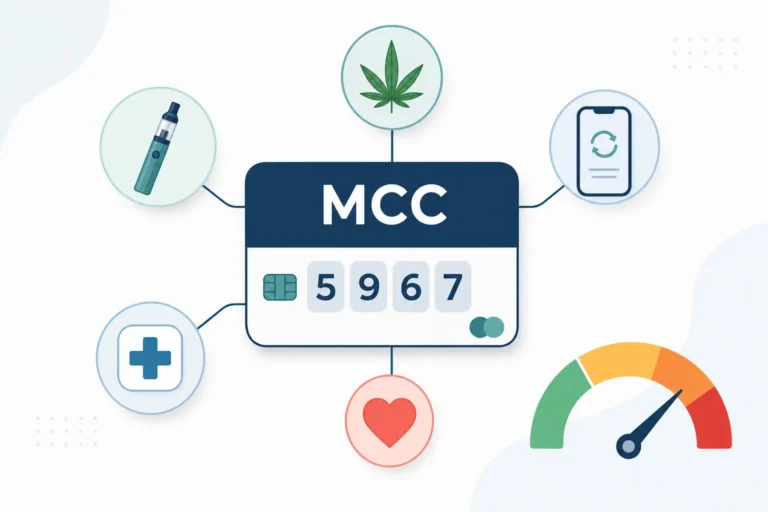
That is the real answer to “why is my business considered high risk.” It often has less to do with your intentions and more to do with patterns across your industry. Those industry patterns get encoded into your four-digit MCC, and we have high-risk merchant category codes explained in detail so you can see exactly which code your business was assigned and what it signals to underwriters. Adult entertainment, CBD, vape, telemedicine, pharmacy, peptides, dating, nutraceuticals, travel, credit repair, subscription apps, online gaming, wellness products, and recurring billing businesses are often placed in a high-risk category because processors have seen more disputes, more regulation, or more customer confusion in those markets.
But here’s the thing: a low-risk business can become a high-risk business too. A clean eCommerce brand may get flagged after a sudden jump in chargebacks. A subscription company may get declined because its cancellation policy is hard to find. A telehealth merchant may run into trouble because product claims, pharmacy rules, or documentation do not match card brand expectations. A startup may be flagged simply because it has no processing history yet.
If the question is “why is my business considered high risk,” the answer is usually one or more of these factors.
| Risk factor | What processors worry about | Common examples |
| Industry classification | The business type has a known record of fraud, disputes, or regulation | CBD, vape, adult, dating, supplements, telehealth, gaming |
| Chargeback rate | Too many customers dispute charges | Subscriptions, free trials, delayed delivery, unclear billing names |
| Recurring billing | Customers forget, cancel late, or dispute repeat charges | Fitness apps, skin care, wellness, SaaS, membership sites |
| High ticket size | One dispute creates a larger loss | Coaching, travel, electronics, and medical services |
| Card-not-present sales | Online payments carry more fraud exposure than dipped or tapped cards | eCommerce, phone orders, online invoices |
| International sales | Cross-border disputes, fraud, and settlement issues are harder to manage | LATAM, EU, offshore, global eCommerce |
| New business history | No prior data makes the risk harder to judge | Startups, new LLCs, new websites |
| Compliance concerns | Products or claims may trigger card brand or legal scrutiny | Peptides, pharmacy, GLP-1, CBD, nutraceuticals |
Online payment fraud is a big part of this scrutiny. Juniper Research forecasts that merchant losses from online payment fraud will exceed $362 billion globally between 2023 and 2028, with $91 billion expected in 2028 alone. That’s why processors look closely at high-risk payments before they approve an account.
What Is a High Risk Merchant Account?
A high-risk merchant account is a payment account built for businesses that standard processors may decline, restrict, or shut down. It lets a high-risk merchant accept credit card and debit card payments while giving the bank or processor extra tools to manage exposure.
A standard merchant account may work fine for a local coffee shop, boutique, or low-dispute retail business. A merchant account for high-risk business is different. It may require more underwriting, clearer policies, stronger fraud tools, a reserve, and a provider that understands the industry before the first transaction goes through.
For merchants that need a deeper introduction, Premier Payments Online covers the basics of what a high-risk merchant account is. That type of education matters because many business owners only learn they are high risk after a Stripe, Square, PayPal, or bank application gets declined.
A high-risk merchant account can support businesses that sell online, bill by invoice, use ACH, take recurring payments, accept alternative payments, or need a high risk payment gateway. The goal is not just approval. The goal is stable payment processing that survives real-world scrutiny.
High Risk Industries and Risk Classification Signals
High-risk industries are not all the same. Some are high risk because of chargebacks. Some are high risk because of regulations. Some are high risk because customers often misunderstand the product, forget a subscription, or dispute charges after buyer’s remorse.
For PPO, the most relevant high risk business industries include CBD, vape, telemedicine, pharmacy, peptides, adult entertainment, dating, nutraceuticals, fitness subscriptions, skin care, wellness apps, online games, and other recurring billing models. These types of businesses often need more than a basic payment gateway for high risk business use. They need a provider that can review the entire payment flow.
A processor may also look at NAICS codes, merchant category codes, website language, refund policy, terms of service, chargeback rate, product claims, fulfillment time, and prior account history. One weak spot may not kill an application. Several weak spots at once can.
That’s why “why is my business considered high risk” is not always a one-line answer. A subscription wellness brand, for example, may be high risk because it sells nutraceutical products, uses recurring billing, has a free trial, ships across state lines, and has a refund policy that customers miss. The issue is not one factor. It is the stack of risk.
Chargeback Rate, Fraud Risk, and Card Network Monitoring
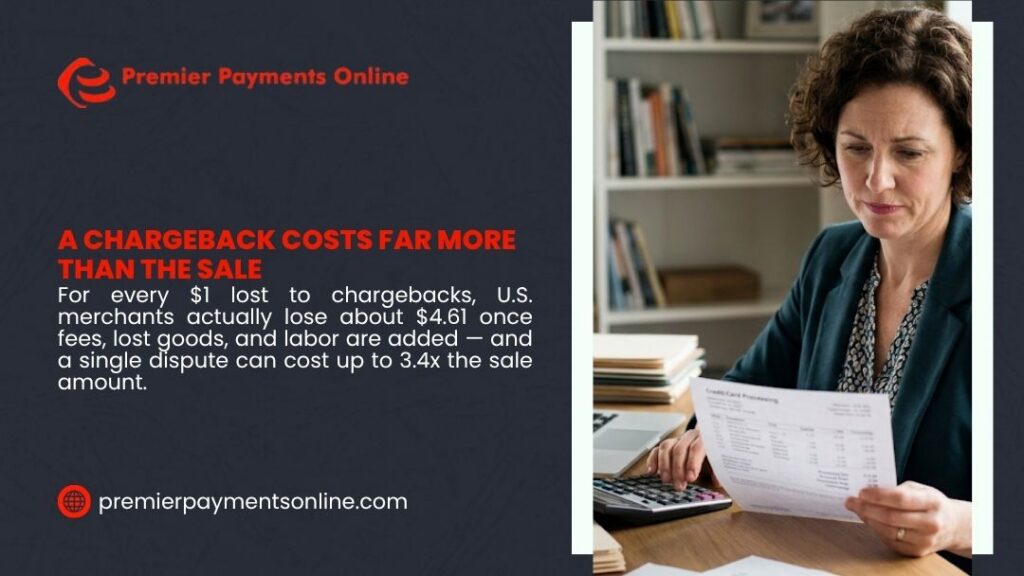
Chargebacks matter because they affect everyone in the payment chain. The customer disputes the card transaction. The issuing bank reviews the claim. The acquiring bank may take the loss if the merchant cannot cover it. The processor may face card network scrutiny if too many merchants in its portfolio cross risk limits.
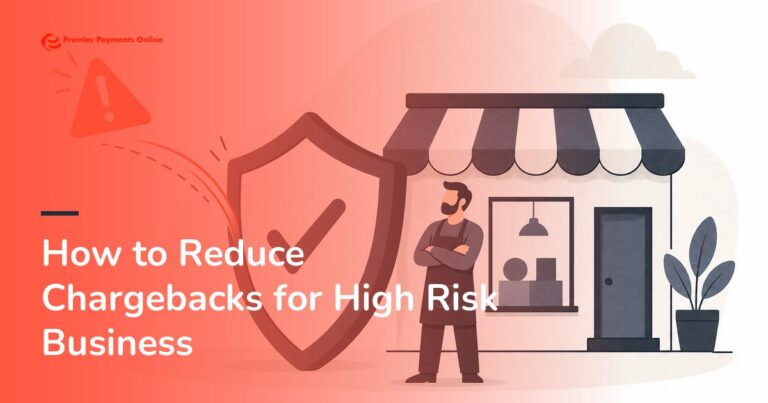
That’s why chargeback management is not optional for high risk merchants. Our detailed walkthrough on how to reduce chargebacks for high risk businesses shows the specific steps that protect approval, pricing, and account stability.
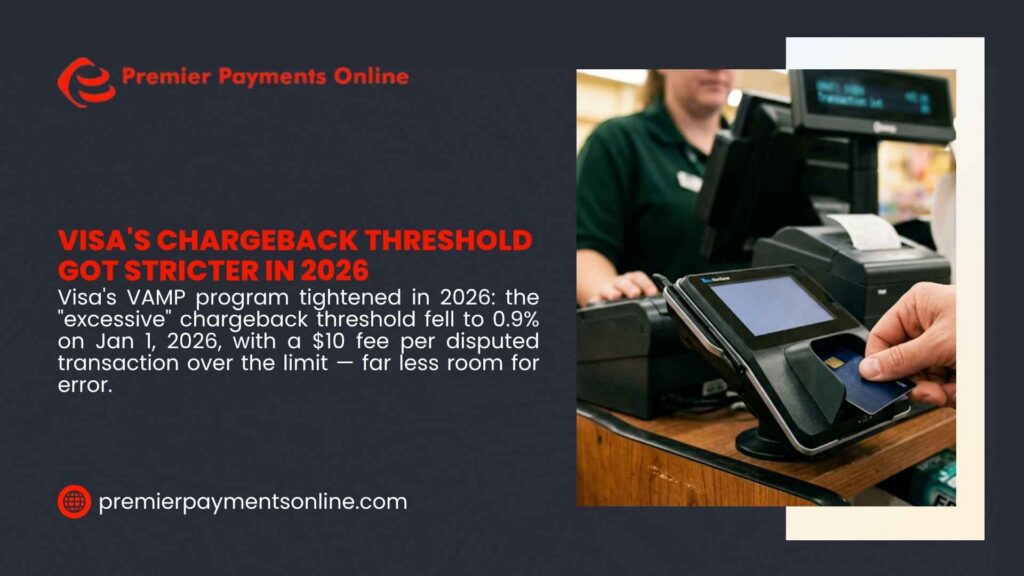
Visa-owned Verifi notes that Visa states, “Merchants should work with their acquirer to develop a detailed chargeback-reduction plan which identifies the root cause of the chargeback issue and an appropriate remediation action(s).” That one sentence explains why a high-risk merchant needs more than a dashboard. It needs a plan, an acquirer relationship, and someone who can help find the root cause before the account is in trouble.
For a deeper support path, PPO offers risk and fraud management solutions for merchants that need help with fraud tools, chargeback prevention, reporting, and dispute control.
Recurring billing merchants need extra care here. The FTC has long warned that negative option and subscription offers require clear terms, clear consent, and cancellation practices that do not mislead customers. In its Federal Register discussion of negative option marketing, the FTC said marketers should disclose material terms such as the offer, total cost, billing transfer details where relevant, and cancellation method before the consumer agrees. For a high-risk merchant, unclear subscription terms can turn into disputes, complaints, and account pressure fast.
High Risk Merchant Account Fees, Reserves, and Approval Delays
High risk merchant account fees are usually higher than standard processing fees because the provider is taking on more risk. That does not mean every high-risk merchant should accept vague pricing. It means pricing should match the risk, the service, the tools, and the support.
A high risk merchant account provider may review your monthly volume, average ticket size, refund ratio, chargeback history, card-not-present share, international exposure, industry type, and prior processor records. Based on that review, the account may include higher transaction fees, monthly fees, chargeback fees, longer approval time, or a rolling reserve.
A rolling reserve is money held back from your settlements for a set period to cover possible disputes or losses. It can be frustrating, especially for small businesses, but it is common in high-risk processing. The right provider should explain the reserve clearly instead of surprising you later.
For merchants that want pricing clarity, PPO’s guidance on high-risk merchant account fees can help set expectations before you apply.
| Account term | What it means | Why it matters |
| Transaction fee | The cost to process each card payment | High-risk credit card processing often costs more than standard processing |
| Rolling reserve | A percentage held for a period of time | Protects against chargebacks, fraud, or sudden account loss |
| Chargeback fee | A fee tied to each dispute | High dispute volume can hurt margin and account health |
| Settlement delay | Time before funds reach your bank | Longer funding may affect cash flow |
| Volume cap | Monthly processing limit | Sudden volume spikes can trigger a review |
| Compliance review | Website, policy, and product review | Weak policies can delay or block approval |
The real problem is not that high risk merchant account fees exist. The problem is when no one explains why they exist or how to improve them.
High Risk Payment Gateway and Credit Card Processing Requirements
A high risk payment gateway is the technology that helps move payment data from your checkout, invoice, or virtual terminal to the processor. A merchant account is the financial account that allows you to accept card payments. A processor moves the transaction through the payment system. Many business owners mix these up, and honestly, who can blame them? Payment terms get messy fast.
If you need a plain comparison, PPO covers payment gateway vs payment processor straightforwardly. For high-risk merchants, that distinction matters because a gateway alone does not guarantee processing approval.
A high risk business payment gateway may need fraud filters, tokenization, recurring billing support, ACH options, account updater tools, chargeback alerts, and clear reporting. A subscription merchant may need card-on-file support. An invoice-based business may need secure electronic billing. A telehealth or pharmacy-related merchant may need policies that match its products, fulfillment, and regulatory profile.
PPO supports merchants that need online payment processing, ACH and eCheck acceptance, and secure payment gateway options that fit more complex payment needs.
Payment Optimization for High Risk Merchants
Getting approved is only the first step. For many high-risk merchants, the bigger issue is getting more legitimate payments accepted without raising red flags. That is where payment optimization comes in.
Payment optimization means reviewing how transactions are submitted, approved, declined, retried, routed, protected, and reported. A merchant may have traffic, customers, and demand, yet still lose revenue because too many good payments fail. That can happen because of fraud rules that are too tight, poor recurring billing setup, weak gateway configuration, confusing billing descriptors, missing card updates, or limited payment options.
The PPO role is not just to help merchants apply for high risk merchant accounts. It is to help them understand why payments fail, what underwriters may question, and what can be adjusted before the problem becomes expensive.
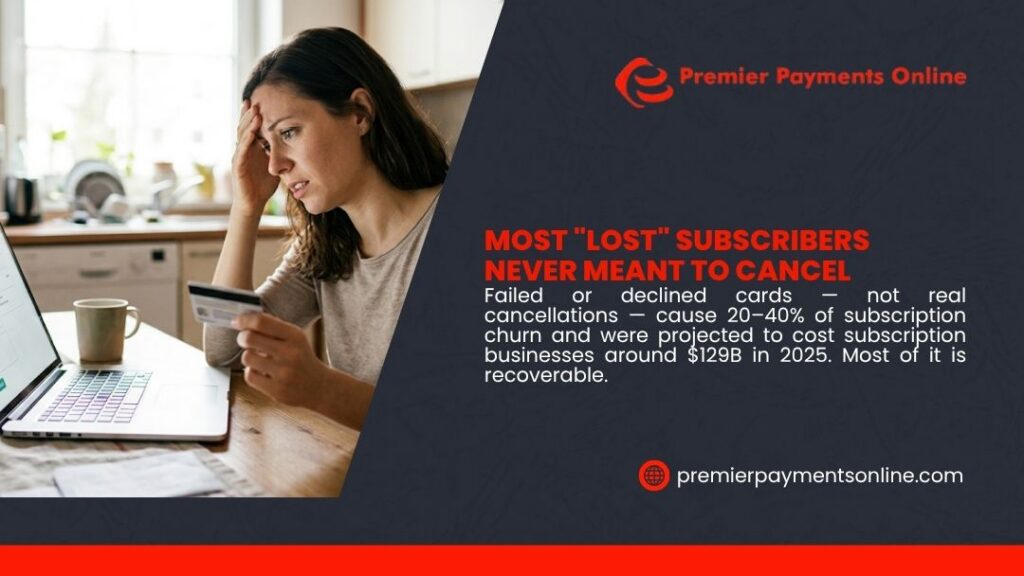
For subscription merchants, failed rebills can quietly drain revenue. A card expires, a bank declines a transaction, a customer forgets the charge, or a billing descriptor looks unfamiliar. One failed payment may be small. Hundreds of failed rebills can hit cash flow hard.
For regulated or high-risk eCommerce merchants, payment optimization may include clearer checkout language, better fraud filters, stronger customer verification, account updater tools, ACH backup, additional merchant accounts for redundancy, and alternative payment methods for international buyers. PPO also supports merchants with broader payment structures, including LATAM and EU alternative payments and direct banking options where appropriate.
If a merchant sells across multiple channels, omni-channel payment solutions can help keep online, invoice, recurring, and other payment activities easier to manage. When recurring payments are central to the business model, a clear understanding of recurring payment processing helps support consistency and organization across transactions.
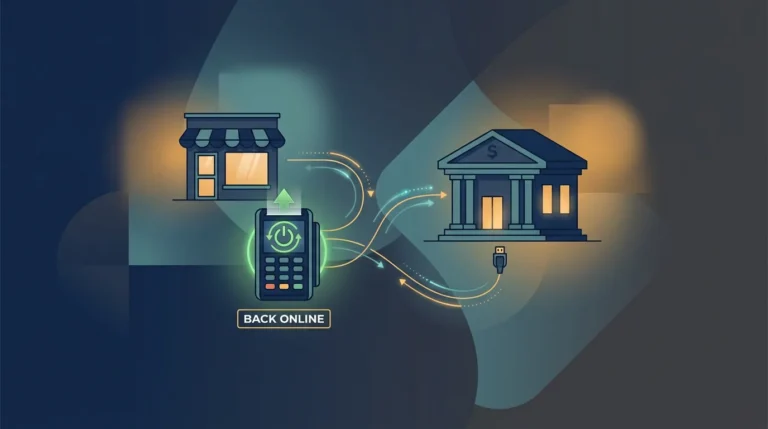
The point is simple: high risk payment processing should not stop at approval. A good setup should reduce unnecessary declines, improve legitimate authorization rates, protect the account, and give the merchant clearer data when something goes wrong.
How to Reduce Your Risk Classification Before You Apply
You may not be able to change your industry, but you can improve how your business looks to underwriters. This can help you get approved, avoid account holds, and move toward better terms over time.
Start with your website. Make sure your legal business name, billing descriptor, refund policy, cancellation terms, shipping policy, privacy policy, contact information, and product descriptions are easy to find. If your billing descriptor does not match what the customer remembers, chargebacks can rise for a silly reason.
Next, review your checkout. Make the total cost clear before payment. If you use recurring billing, tell customers when they will be charged, how often, how much, and how to cancel. If you sell supplements, peptides, skin care, telehealth, or wellness products, be careful with claims. Bold promises may increase sales today and create payment trouble tomorrow.
Then review your payment data. Look at decline rates, chargeback reasons, refund patterns, failed rebills, and high-risk transaction signals. A high risk processor will want to know that you understand your numbers. For fraud concerns, PPO also covers payment fraud prevention in more detail.
Choosing High Risk Merchant Account Providers in the USA
The best high risk merchant account provider is not always the one with the lowest advertised rate. For a high-risk merchant, the better question is whether the provider understands your industry, answers the phone, explains underwriting concerns, and helps you avoid preventable trouble.
That is especially true if you are in telemed, pharmacy, peptides, CBD, vape, adult, dating, nutraceuticals, or subscription billing. Supplement and vitamin sellers face their own underwriting hurdles, which is why we put together a full guide to the best payment processing options for nutraceutical businesses and how to keep an approved account healthy. A provider that handles ordinary retail may not understand card brand registration requirements, chargeback thresholds, recurring billing risk, or alternative payment options.
A good high risk merchant services provider should be able to discuss your business model without panic. They should explain what documentation you need, what risks underwriters may question, what fees may apply, and what you can fix before the application goes in.
PPO’s high-risk merchant services are built around that need: helping merchants that require more review, more support, and a better payment structure than a basic processor can offer.
| What to ask a provider | Why it matters |
| Do you work in my exact industry? | High-risk industries have different rules and approval paths |
| Will you review my website before submission? | A weak website can delay or sink approval |
| Can you support recurring billing? | Subscription disputes are common in high risk processing |
| Do you offer ACH or alternative payments? | Backup payment options can protect revenue |
| How do you handle chargebacks? | Dispute control affects account stability |
| Do you answer phone and email support? | High-risk merchants need real help, not canned replies |
When a High Risk Merchant Needs Human Support
Many high risk merchants do not need another dashboard. They need someone who can explain what is happening.
If an application is declined, the merchant needs to know why. If a reserve is required, the merchant needs to know how long it may last. If chargebacks rise, the merchant needs a plan. If transactions are declined, the merchant needs help with approval rates, billing logic, and payment flow. If an account is in trouble, silence from a processor can make a bad week worse.
This is where PPO answers calls and emails, explains the issue, and works to find a solution when possible. PPO’s value is not just “we process payments.” It is “we help merchants understand the problem and fix what can be fixed.”
That is a stronger message than a generic promise about high risk merchant services. It speaks directly to merchants who have already been ignored, rejected, frozen, or told “no” without a useful explanation.
FAQs About High Risk Businesses
Can a new business be considered high risk?
Yes. A new business can be considered high risk even with no bad history. If there is no processing record, no sales history, or no chargeback data, underwriters have less proof that the account will perform safely. Startups in high risk industries may need stronger documentation, clearer policies, and a better application package.
Is consulting a high risk business?
Consulting is not always high risk, but it can be. A consulting business may be treated as higher risk if it has high-ticket sales, vague deliverables, coaching-style offers, aggressive claims, future delivery, international clients, or a history of refunds and disputes. The details matter more than the label.
What are high-risk NAICS codes?
High-risk NAICS codes are industry classification codes that banks, lenders, and processors may associate with higher risk. A NAICS code alone may not decide your approval, but it can influence how your business is reviewed. Processors may also look at merchant category codes, product type, sales method, refund policy, and transaction history.
Can I lower my high-risk status?
You may not be able to remove the high-risk label completely, especially if your industry is heavily regulated. But you can reduce account risk by lowering chargebacks, improving refund and cancellation policies, using fraud tools, clarifying billing descriptors, keeping customer support responsive, and maintaining clean processing records.
Why did Stripe classify my business as high risk?
Stripe may classify a business as high risk because of industry type, product claims, chargeback exposure, regulatory concerns, prohibited or restricted business categories, subscription billing risk, or transaction behavior. If that happens, a high risk merchant account provider may be a better fit than a mainstream processor.
Do high-risk merchants need ACH?
Not always, but ACH can help. ACH gives some merchants another way to accept payments, especially for invoices, recurring payments, or customers who prefer bank-based payments. PPO offers ACH and eCheck support for merchants that need more payment flexibility.
What is a high-risk payment gateway?
A high-risk payment gateway is a payment technology that supports businesses with more complex processing needs. It may include fraud filters, recurring billing tools, tokenization, reporting, ACH options, chargeback alerts, and gateway settings that work better for high risk merchant payment processing.
A Better Way to Handle High Risk Payments
So, why is my business considered high risk? Because a processor sees a higher chance of disputes, fraud, compliance review, regulatory pressure, financial loss, or unstable payment activity. That label may come from your industry, your billing model, your transaction patterns, your chargeback rate, your products or services, or your lack of processing history.
But being high risk does not mean you are out of options. If a processor has already shut you down, you can often appeal a merchant account termination and make the case for reinstatement with the right documentation. It means your payment setup needs to be built with more care.
A high-risk merchant account, the right high risk payment gateway, clear policies, fraud controls, chargeback management, ACH support, and honest underwriting can help you keep payments stable. And for many high risk businesses, stable payments are not a nice extra. They are the difference between growth and constant payment stress.
If your business has been declined, flagged, frozen, or treated like a problem instead of a real company, it may be time to work with a provider that understands high risk merchant services from the inside. Premier Payments Online helps complex merchants review their options, improve payment stability, and build a setup that fits the way they actually sell. To talk through your situation, reach out to the Premier Payments Online team.