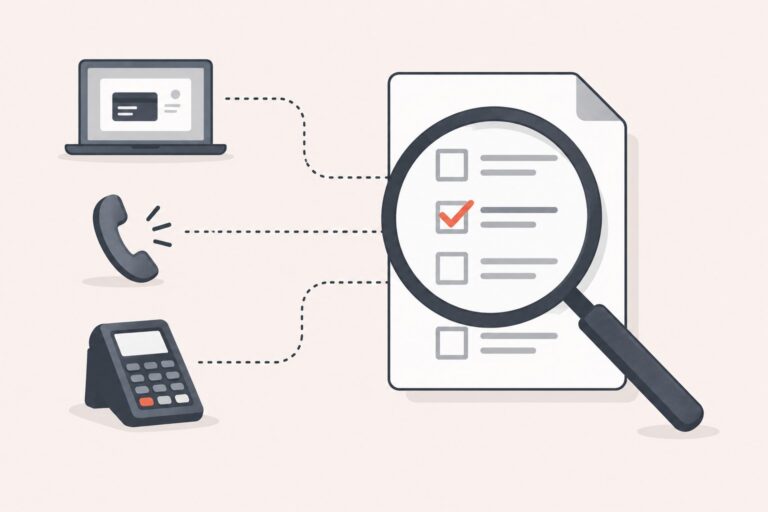
If your business needs working capital, compare more than the amount offered. Look at the net funds you will receive, the total you must repay, the timing of payments, all fees, and any terms that affect your merchant account. An MCA may offer a different repayment structure from a business loan, but costs and eligibility vary by provider and agreement.
Merchant cash advance vs business loan: the short answer
A merchant cash advance (MCA) is commonly structured as a purchase of a specified amount of future business receivables. A business loan provides principal that the business repays under a loan agreement, usually with interest and fees. The exact structure and legal treatment of an MCA depend on its contract and applicable law.
An MCA may be faster to arrange or available to some businesses that do not qualify for a particular loan. A bank or SBA-backed loan may cost less for an eligible borrower, but its requirements, timeline, fees, and repayment terms vary. Compare actual written offers instead of assuming one product is always faster or cheaper.
For a quick decision, compare these five items first: net proceeds, total repayment, payment frequency, extra fees, and whether the agreement restricts your processing setup.
Quick comparison at a glance
| Feature | Merchant cash advance | Business loan |
|---|---|---|
| Pricing | Often uses a factor rate to set a total purchased amount. Separate fees may apply. | Usually quotes interest and fees; compare APR where available and total repayment. |
| Repayment | May collect a share of sales or use scheduled ACH debits. The agreement determines whether payments adjust with revenue. | May use fixed or variable payments on a stated schedule, depending on the loan. |
| Qualification | Funders may review sales, deposits, time in business, credit, existing advances, and other factors. | Lenders may review credit, financial statements, time in business, collateral, and ability to repay. |
| Funding timeline | Can be quick, but timing depends on the funder, application, and verification. | Varies by lender and product; SBA and bank loans may require more documentation. |
| Early repayment | A fixed purchase amount may not fall when you pay faster. Check for an early payoff discount. | Prepayment savings depend on the interest method, fees, and any prepayment terms. |
| Payment flexibility | A true percentage-based remittance may change with sales; fixed ACH debits may not. | Payment amount and frequency depend on the loan terms and whether its rate is fixed or variable. |
Neither product is automatically the better choice. Compare the written terms with the timing and reliability of your business cash flow.
How a merchant cash advance works
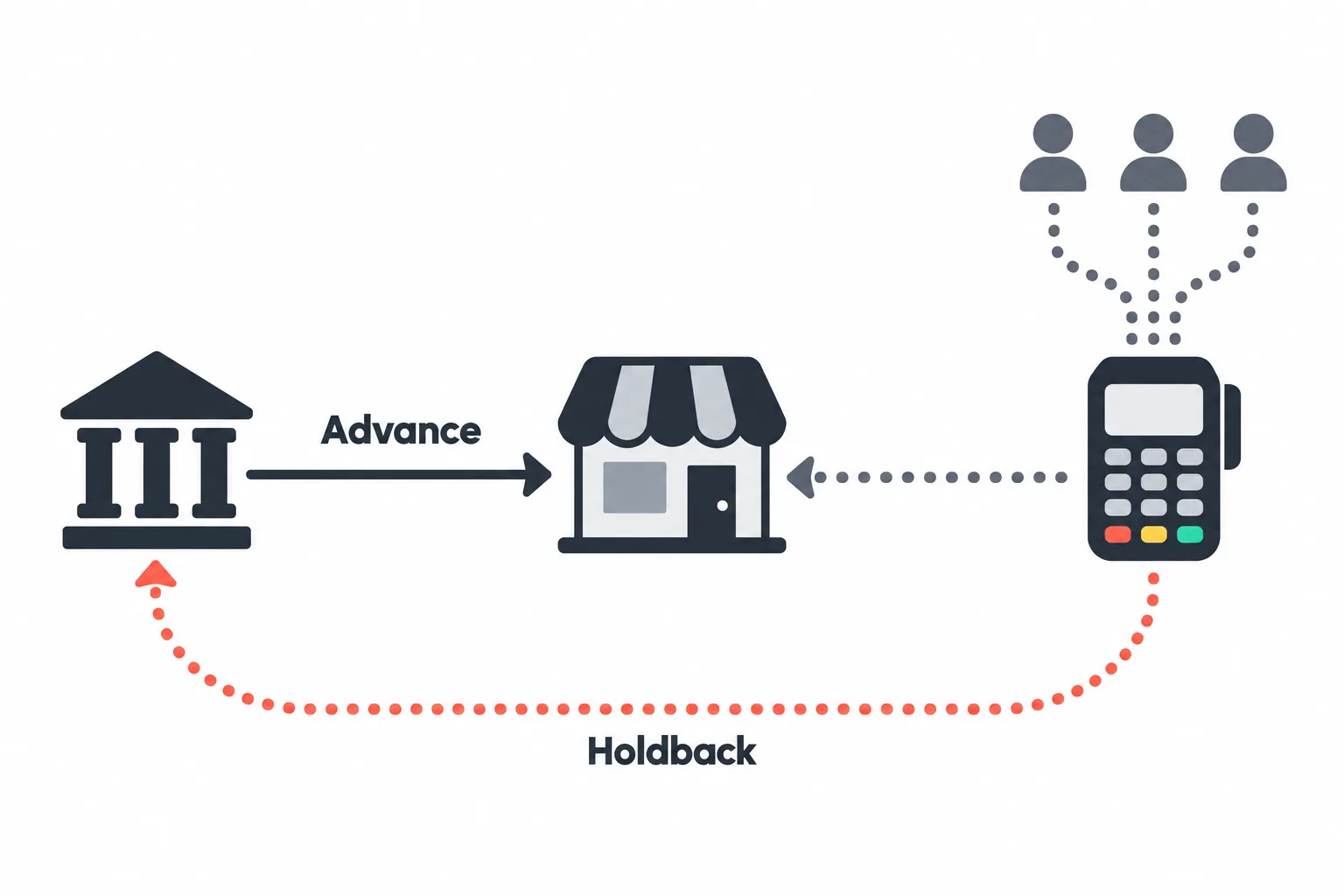
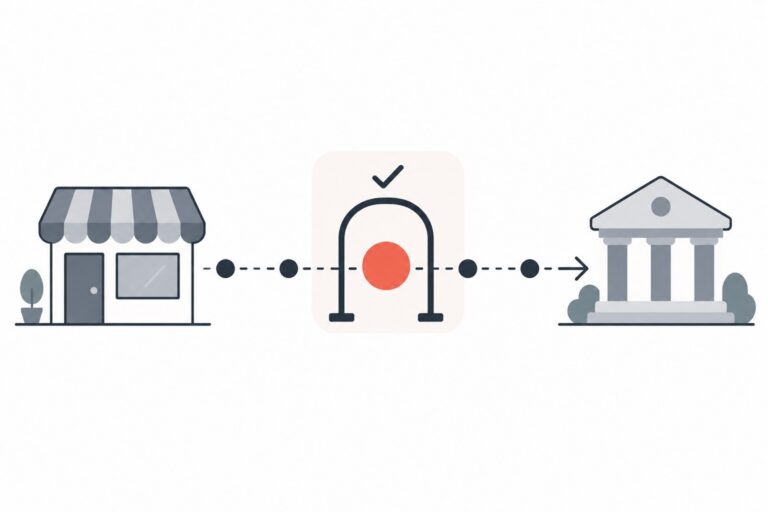
An MCA provider gives the business funds in exchange for a specified amount of future receivables. The agreement explains how the provider collects those receivables. It may use a percentage of card sales, split funding through a processor, a lockbox, or ACH debits. These methods do not all adjust in the same way when sales change.
Funders may review processing statements, bank deposits, credit, time in business, current obligations, and other information. Requirements vary, so do not assume an MCA is based only on sales or that credit history will not matter.
Three numbers help you start comparing an offer:
1. Net proceeds: the amount deposited after any fees or deductions. 2. Factor rate and purchased amount: the factor rate multiplied by the amount used in the agreement’s calculation. Confirm whether that base is the gross advance or net funds received. 3. Remittance or holdback: the sales percentage or scheduled payment used to collect the purchased amount.
A factor rate can make the total repayment easy to calculate, but it does not by itself show the annualized cost. The Federal Reserve discusses how some small-business financing offers use factor rates instead of an interest rate or APR. Read the Federal Reserve’s small-business credit discussion when comparing those different pricing formats.
Factor rate vs APR: how to compare the cost
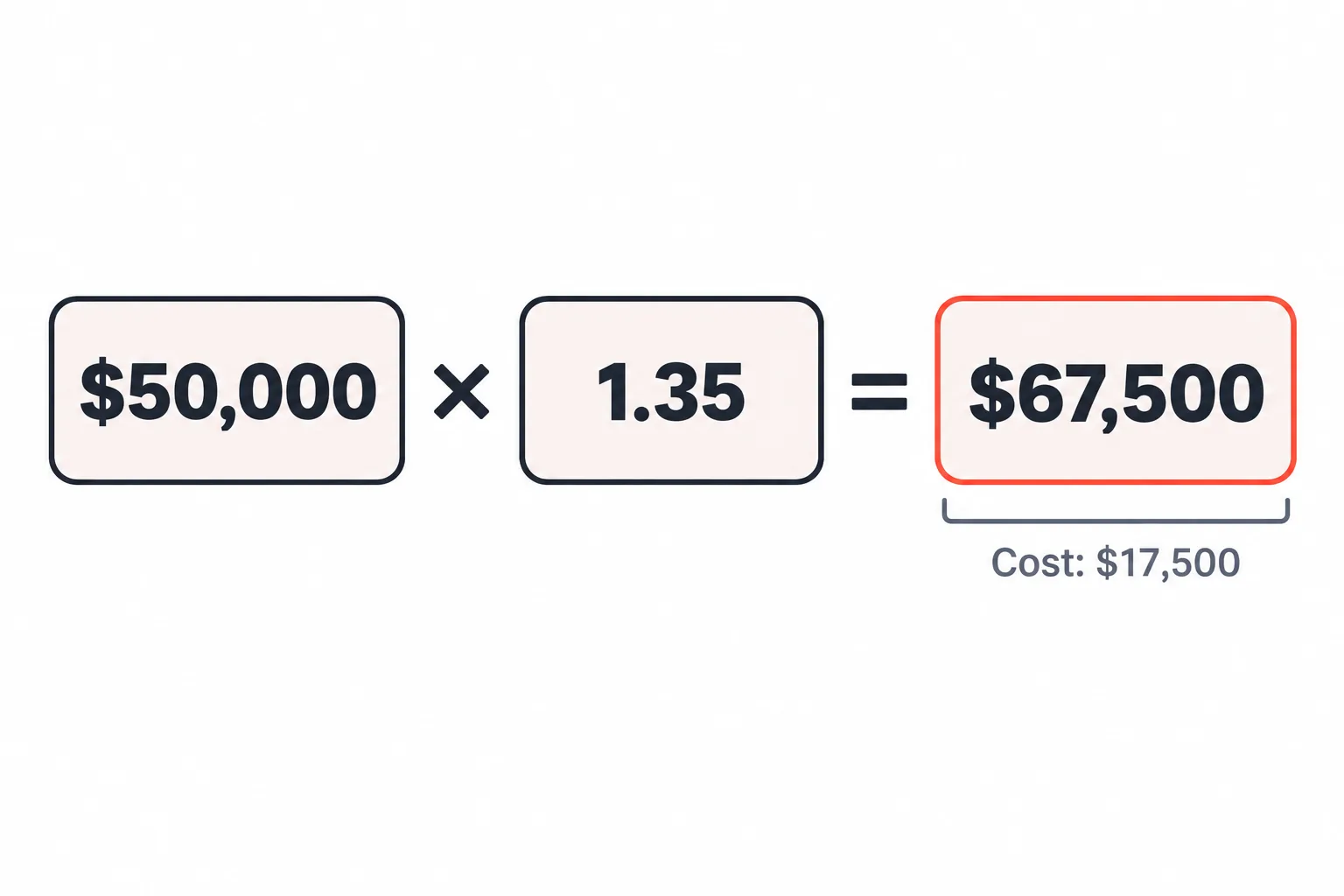
Related readingCash Advance Program – Premier Payments OnlineRead the guide →Suppose an offer advances $50,000 at a factor rate of 1.35, with no fees deducted from the advance. The stated purchase amount would be $ 67,500 (50,000 × 1.35), so the difference is $17,500 before any separate fees. Confirm the contract’s calculation and the net amount that will actually reach your account.
That $17,500 is a dollar cost; it is not automatically a 35% APR. A simple annualized estimate also is not the same as an APR. A fair annualized comparison requires the dates and amounts of the actual payments, plus fees. For a sales-based remittance, the repayment period may change as sales change. Ask for an estimated payment schedule and use the same net amount and time period when comparing it with a loan.
Before signing, ask the provider to show the total repayment in dollars, every fee, the estimated repayment term, and how it calculated any annualized cost. If it will not provide those details in writing, you do not have enough information for a reliable comparison.
Holdback and what repayment may feel like
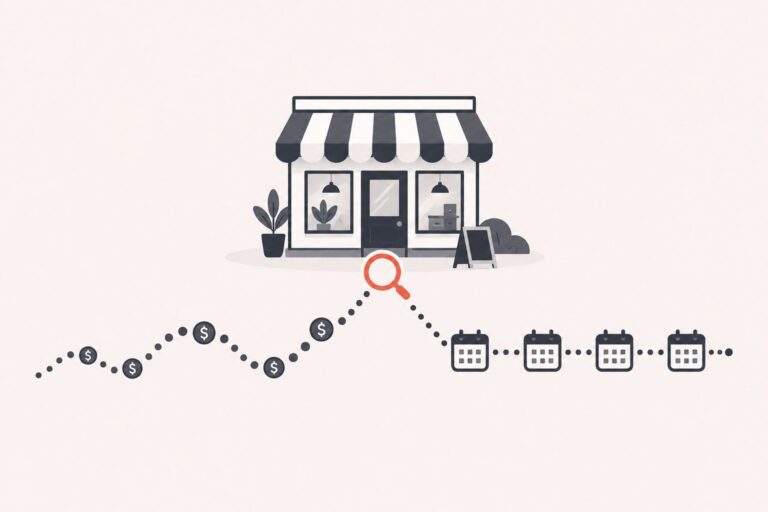
A holdback is the agreed portion of eligible sales used for remittance. Depending on the agreement, collections may be made through split funding, a lockbox, or ACH. A fixed daily ACH debit is not the same as a remittance that changes in proportion to actual sales. Ask whether there is a reconciliation or adjustment process if sales are lower or higher than projected.
Model the payment against a slower period, not only a strong month. Use actual recent statements and check whether payroll, inventory, taxes, refunds, and chargebacks can still be covered. For subscription businesses, consider when customer payments settle and whether refunds or disputes may reduce deposits. The agreement determines whether those events change the amount or schedule owed.
How a traditional business loan works
A business loan provides principal that the business repays under a loan agreement. A term loan may have fixed or variable interest and scheduled installments. Other products, such as a line of credit or equipment financing, have different draw, repayment, collateral, and fee terms.
Common options include:
- Bank term loan: a lump sum repaid over a defined term.
- SBA-backed loan: a loan made by a participating lender under an SBA program. Eligibility and terms depend on the program, lender, and borrower. The SBA 7(a) program explains current eligibility and repayment basics.
- Business line of credit: a credit limit the business can draw against, subject to the line’s terms and fees.
- Equipment financing: financing tied to equipment, with collateral and ownership terms set by the agreement.
Lenders may review the business’s credit, time in operation, financial statements, tax returns, cash flow, collateral, and ability to repay. The factors and thresholds differ by lender. SBA 7(a) eligibility also considers the business’s activity, creditworthiness, and ability to repay; it is not accurate to assume every high-risk category is automatically declined.
Most SBA 7(a) term loans use scheduled principal-and-interest payments, but loan types and terms vary. Check the lender’s payment schedule, rate type, fees, collateral, guarantees, and prepayment language rather than treating all business loans as fixed monthly payments.
Speed: compare the actual timelines
Some MCA providers can review applications quickly, while bank and SBA loans may involve more documentation. Neither timeline is guaranteed. Ask each provider what remains to verify, when funds could be available, and whether timing depends on bank, underwriting, or processor approval.
Fast funding may matter when there is a time-sensitive business need with a clear repayment plan. If the need comes from an ongoing operating shortfall, borrowing may leave the underlying cash-flow problem in place while adding new payments.
Qualification: why businesses may receive different offers
Lenders and advance providers use different eligibility policies. Some may restrict certain business activities; others may consider the application based on financials, deposits, credit, collateral, or other factors. Check the provider’s current eligibility rules rather than assuming an entire category will be declined or approved. PPO’s page describes payment options for high-risk merchants, but an application’s eligibility and terms depend on the funding provider.
For an MCA, a provider may review sales consistency, bank balances, existing advances, refunds, chargebacks, average ticket, and deposit history. For a loan, a lender may review financial statements, tax returns, credit, collateral, and repayment capacity. These are possible review factors, not a universal checklist.
If chargebacks or refunds are rising, address the underlying payment and customer-service issues before taking on another obligation. A processor may review account activity under its own agreement and rules. PPO describes its risk and fraud management services; no service can guarantee a particular underwriting or funding decision.
What an advance may mean for your merchant account
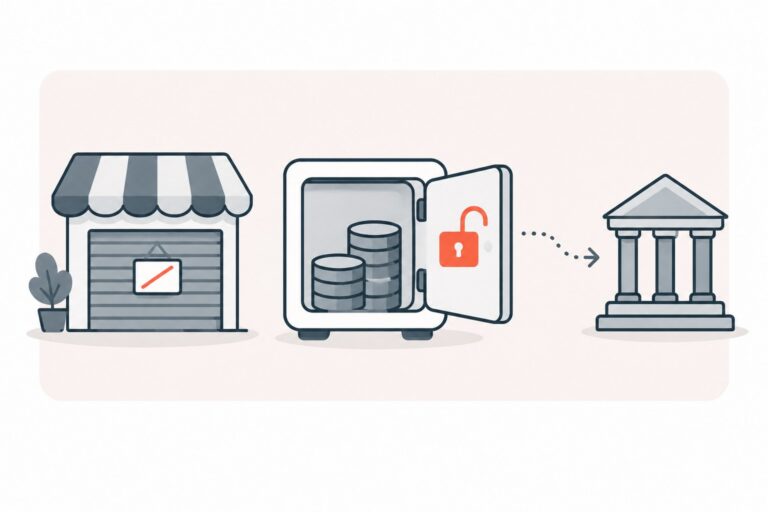
Some MCA agreements connect repayment to card settlements or restrict changes to the processor, gateway, settlement account, or merchant account. Others may use different collection arrangements. Read the agreement before changing providers, opening an additional account, or redirecting sales, and get any required consent in writing. Do not move volume to avoid a contracted remittance.
A reserve, delayed settlement, or account closure can affect how much cash reaches your operating account. What happens to the advance balance depends on the agreement and the facts. Ask the funder and processor how a reserve or processing change would affect remittance, reconciliation, and any default provisions. PPO’s online payment and gateway options may be relevant when you are reviewing a new processing setup, but your existing financing agreement remains between you and its parties.
A traditional loan is generally repaid under its own schedule rather than by splitting card settlements. A secured loan may still include liens, account requirements, guarantees, or other covenants. Read the loan documents before assuming a lender has no connection to your payment accounts.
Review the MCA agreement for the purchased amount, holdback or debit schedule, reconciliation terms, processor-change restrictions, personal or performance guarantees, liens, renewal or stacking terms, and default provisions. If it includes a confession-of-judgment clause or other waiver you do not understand, have a lawyer in the relevant jurisdiction explain it before signing. Legal treatment of receivables-purchase agreements can depend on the contract and applicable law; an FTC small-business financing forum transcript discusses the distinction between a purchase of future receipts and a loan.
Total cost is more than the factor rate or interest rate
For an MCA, include the difference between net proceeds and total repayment, plus origination, underwriting, ACH, servicing, lockbox, or split-funding fees that apply. Ask whether any fee is deducted before funding or added to the repayment amount.
For a loan, include interest, origination and guarantee fees, collateral or filing costs, and any prepayment charge. Compare the total dollar cost over the same planned period, not just the headline rate.
Processing costs are separate from financing costs. Interchange, network assessments, and processor charges may continue under either option. Review actual statements and compare written quotes for the same card mix, volume, and services. Do not assume a processing-cost review will produce savings or that a quoted rate applies to every transaction.
When an MCA may fit
An MCA may be worth comparing when:
- The need is time-sensitive, and the planned use has a clear path to generating cash.
- The business has enough predictable eligible sales to model the remittance.
- Other financing options are unavailable or do not fit the required timing.
- The owner understands the total cost, collection method, and agreement restrictions.
An MCA does not solve structural losses. Avoid taking a new advance to cover another advance without first calculating the total obligations and seeking independent advice.
When a business loan may fit better
A business loan may be worth comparing when:
- The purchase or project has a longer payback period.
- The business can meet the lender’s documentation and eligibility requirements.
- The payment schedule fits cash flow and leaves room for operating expenses.
- The business wants financing that is not collected as a share of card settlements, subject to any loan liens or covenants.
A loan is not automatically cheaper. Compare the actual rate, fees, total repayment, payment schedule, collateral, and guarantees.
Stacking, renewals, and the cycle to avoid
Stacking means taking another advance while an earlier one remains outstanding. Multiple remittances can put pressure on the same cash flow. Before accepting a renewal or additional advance, ask for the current payoff, new gross amount, fees, net new funds, total repayment, and combined payment schedule in writing.
A renewal may roll an unpaid balance into a new agreement. Don’t assume the old cost is simply “paid twice”; calculate the full remaining obligation and how much new cash you will actually receive.
Pause if you are pressured to sign immediately, cannot get total repayment and fees in writing, or do not understand processor-change, reconciliation, guarantee, or default terms. If you already have an advance, review the agreement and cash flow before taking on another one.
Review cash flow before borrowing more
Before choosing financing, review whether operational changes could improve cash flow. Depending on your provider and setup, options may include improving failed-payment recovery, updating expired card details, sending clearer billing reminders, reviewing chargeback alerts, or offering ACH where customers will use it. Availability, fees, and results vary.
- Review failed payments and recurring billing: ask your provider which retry, account-update, or customer-notification features are available and what they cost.
- Review refunds and chargebacks: identify common causes and make sure customers can recognize the billing descriptor and reach support.
- Compare processing costs: use recent statements and comparable written quotes; include any transition, gateway, or service fees.
- Check settlement timing: confirm when funds are available and whether any reserve or hold affects the balance you can use.
PPO offers an ACH check acceptance program. Compare its availability, pricing, and return terms with your current payment methods before treating ACH as a lower-cost alternative.
How to compare a real offer against a real loan quote
Use this checklist for both written offers:
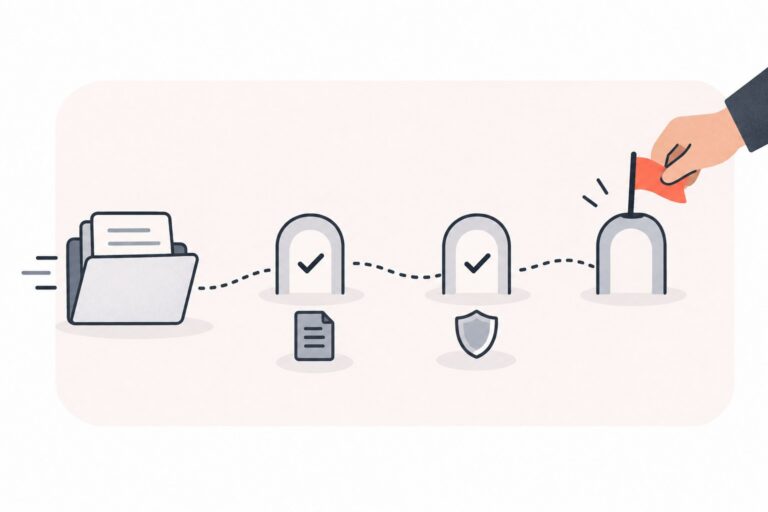
1. Record net proceeds: how much will actually reach the business account? 2. Record total repayment: include every stated fee and any amount deducted before funding. 3. Write out the payment schedule: amount, frequency, estimated term, and whether payments change with sales. 4. Stress-test cash flow: use a slower recent period and include payroll, inventory, taxes, refunds, and chargebacks. 5. Check account and security terms: processor or gateway restrictions, reconciliation, liens, guarantees, collateral, and default provisions. 6. Compare early payoff and renewal terms: ask how payoff is calculated and how much new money remains after an existing balance is cleared. 7. Get answers in writing: ask what happens if sales fall, settlements are delayed, or the processor imposes a reserve.
Frequently asked questions
Is a merchant cash advance a loan?
How much do you repay on a $50,000 advance at a 1.35 factor rate?
Does paying an MCA early save money?
Can I switch processors while an MCA is open?
Do refunds and chargebacks reduce what I owe?
What if sales fall and I cannot make the payment?
Can a high-risk or subscription business get a business loan?
Talk through your payment-processing setup
If you are comparing funding options and need to understand how a repayment method may interact with your payment processing, contact PPO to discuss your processing setup. Confirm funding eligibility, pricing, and contract terms with the funding provider. PPO cannot guarantee an approval or funding decision, and legal or financial advice should come from a qualified professional who has reviewed your situation.
Author: Written by Irini Tomei, Principal CEO at Premier Payments Online.