The short answer
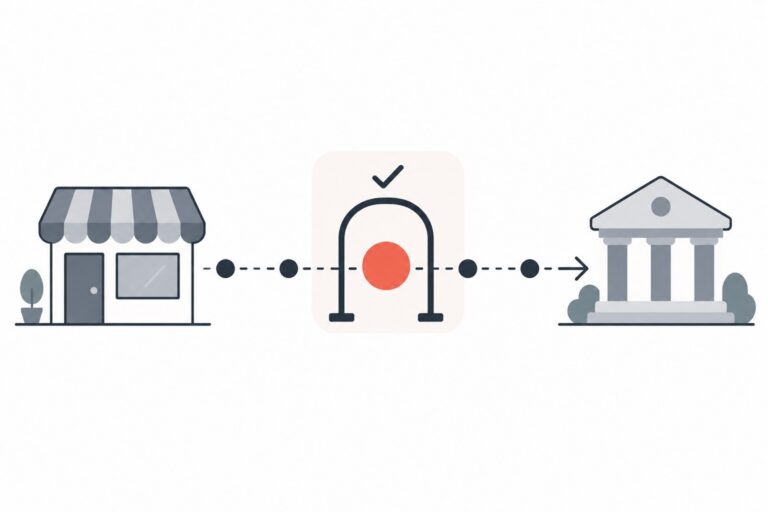
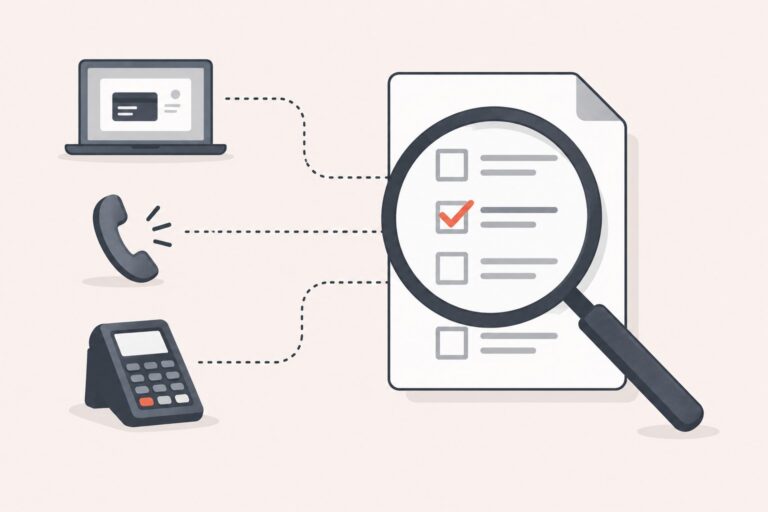
No single release timeline applies to every closed merchant account. Your merchant agreement or reserve notice should state the reserve terms, release conditions, and the date used to calculate the hold. Some providers use a period such as 90–180 days, but the trigger may be the last transaction or another account-specific date. Ask the processor or acquiring bank to confirm your expected release date and any remaining conditions in writing.
You may not be able to change the contractual hold period, but you can confirm the terms, respond to document requests, resolve outstanding liabilities, and prevent avoidable payout delays. Start by requesting the closure notice, the current reserve balance, and a written explanation of what must happen before they can release the remaining funds.
What a reserve actually is
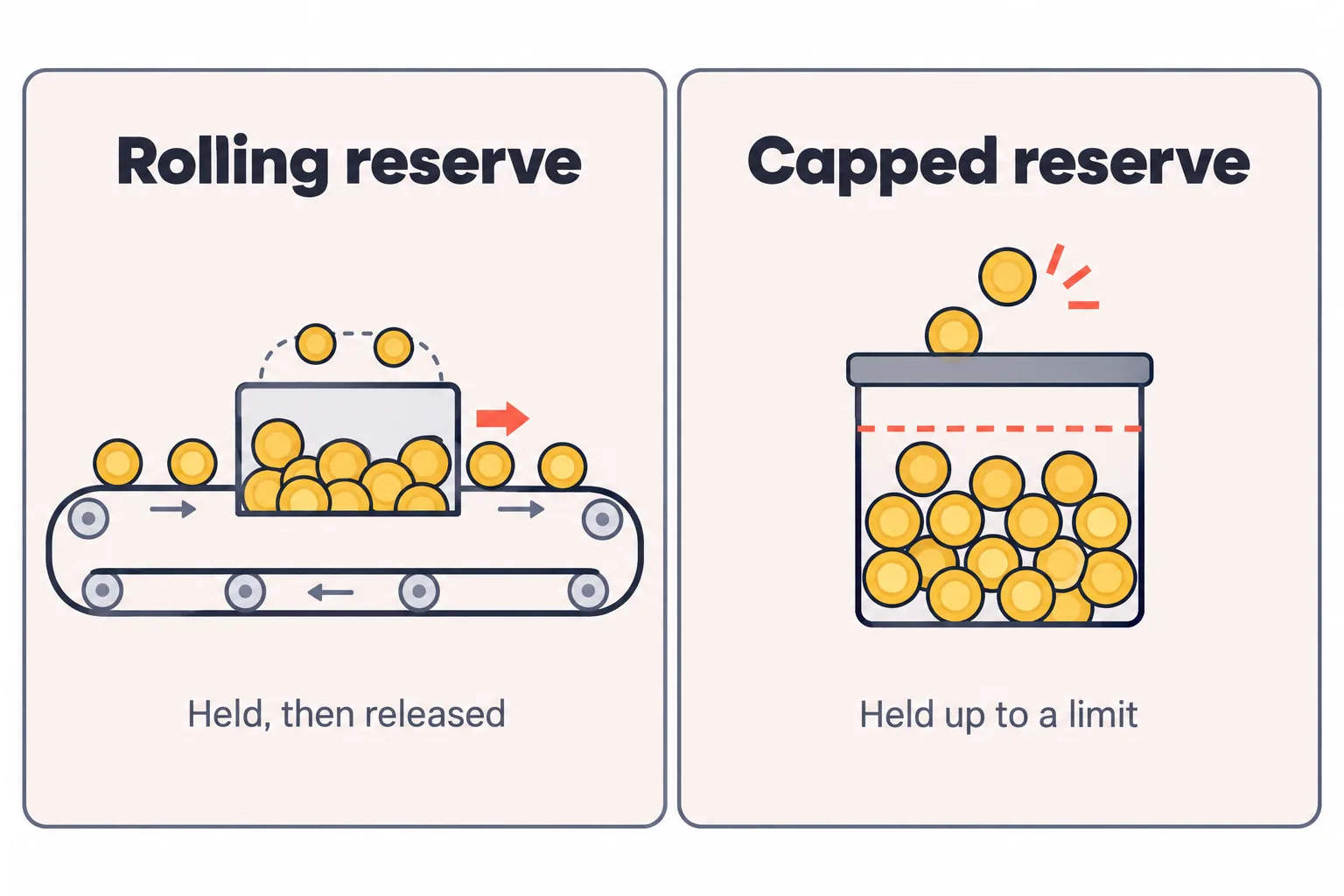
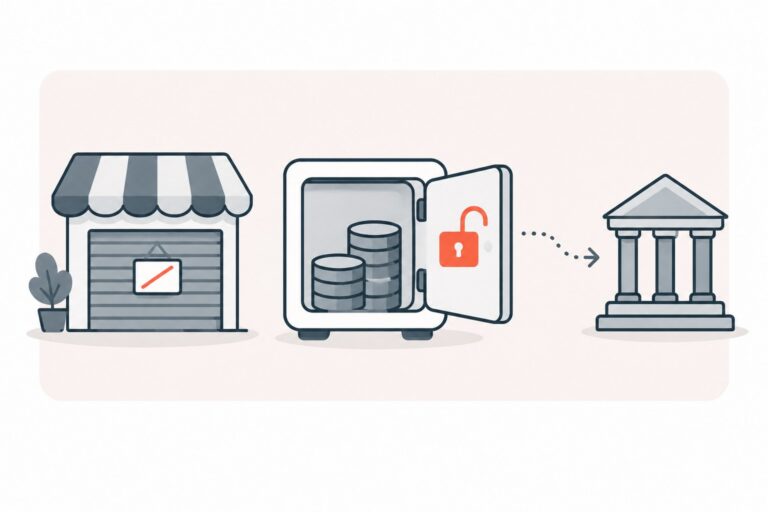
A reserve is money withheld under your payment-processing arrangement to cover potential refunds, chargebacks, fees, or other liabilities. Two common structures are:
- Rolling reserve: A percentage of transactions is held for a stated period, then released on a rolling schedule, subject to the account terms.
- Capped reserve: The reserve is limited to a stated balance. The agreement determines whether funds continue to be added or released once that cap is reached.
The agreement determines when any remaining reserve balance is payable and what deductions or conditions may apply. A reserve is different from unsettled transactions or a general funding hold, so first ask the provider what type of funds it is holding. Stripe’s reserve guidance explains that release timing and deductions depend on the reserve terms for the account.
Why funds may remain held after closure
Cardholders may dispute transactions after a sale, and merchants may still owe refunds, fees, or other amounts after processing stops. Subscription and delayed-fulfillment businesses may also have customer obligations that remain open after account closure. The length and calculation of the hold depend on the agreement and the provider’s assessment of remaining exposure.
ACH returns have their own rules and timeframes, which can differ based on the entry and whether the account is consumer or business. If ACH activity is part of your account, check the specific return information and ask the provider which unresolved returns affect your reserve. Nacha’s explanation of unauthorized return timeframes distinguishes between consumer and non-consumer accounts.
The processor or acquiring bank that controls the reserve makes the release decision under the applicable agreement.
An agent may help communicate with that party, but may not control the funds or release date.
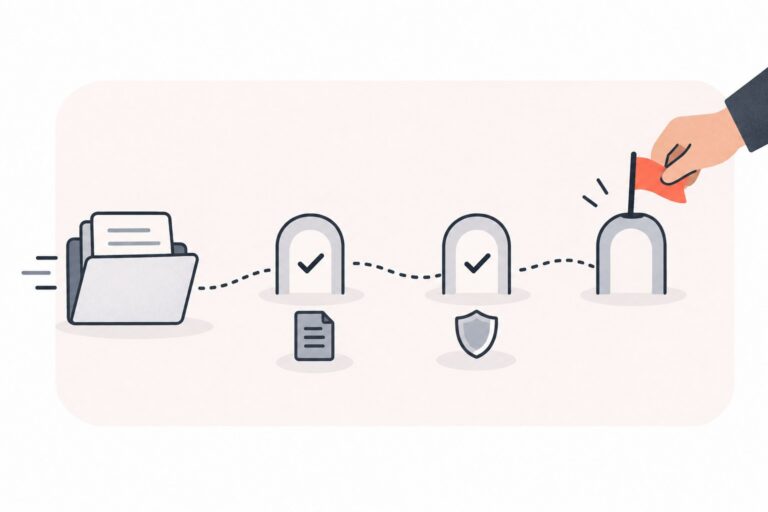
Step 1: Confirm the release trigger and date in writing
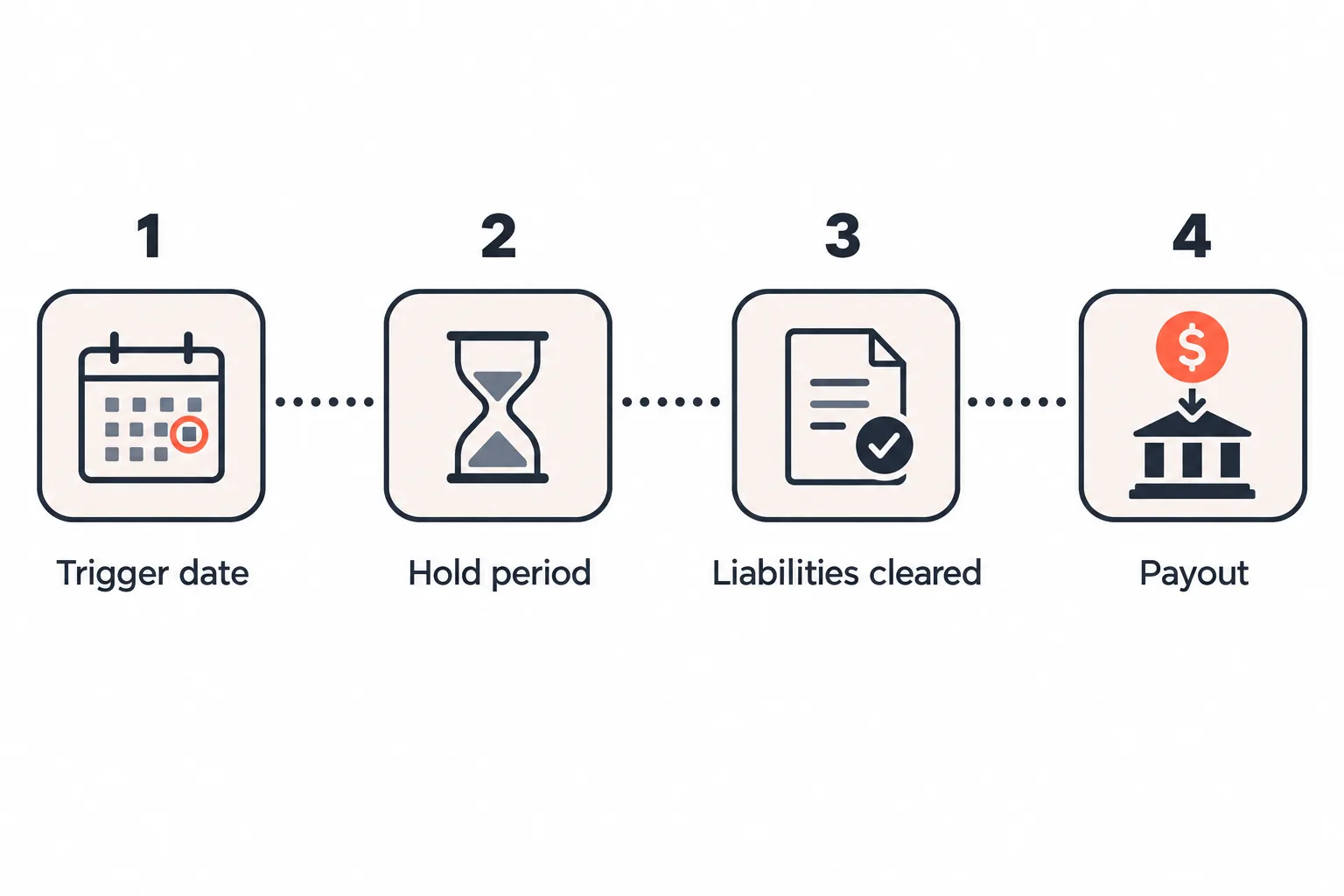
Ask for the closure notice, reserve notice, and the date the provider uses to calculate the hold. Confirm whether the trigger is the closure date, the last transaction date, or another date stated in your agreement. Checkout.com, for example, says its Merchant Services Agreement specifies the hold period and refers to the last transaction date; your own terms may differ. Read Checkout.com’s account-termination guidance.
Then review the reserve clause in your merchant agreement. Look for the reserve percentage or cap, release schedule, required notices, deductions, and any conditions that can delay or reduce a payout. Request a current reserve statement and ask whether the remaining balance is expected as one payment or in stages.
Email gives you a written record. If you call, send a short recap afterward and ask the provider to confirm the details.
Step 2: Confirm what kind of funds are being held
Ask the provider to identify whether the balance is a contractual reserve, unsettled transactions, a funding hold, or another account restriction. Request an itemized current balance, any deductions already applied, the agreement clause governing the hold, the exact release trigger, and any remaining conditions. This can help you follow the right process instead of treating every unavailable balance as a reserve.
Step 3: Resolve outstanding liabilities
Outstanding liabilities may delay some or all of a release, depending on the agreement and the provider’s review. Ask which amount is affected and what action or document is still needed.
- Respond to open chargebacks by the stated deadline and keep copies of your submissions.
- Ask how to handle refunds you still owe. Keep records of refunds and customer cancellation requests.
- Keep customer support available after processing ends so customers can reach you with billing questions.
- Stop future recurring billing and confirm that scheduled charges have been canceled.
- Review ACH returns and their reason codes with your provider; do not assume every return has the same timeframe or effect on the reserve.
PPO offers risk and fraud management services that include chargeback and dispute support. That is relevant to future processing and dispute management; the acquiring bank or processor still controls the release of an existing reserve.
Step 4: Keep payout details current
A closed or outdated bank account can prevent a payout from reaching you. Confirm the receiving account details with the provider in writing, and ask what documentation it accepts, such as a voided check or bank letter. Verify that the legal business name on the processing account matches the bank account records. Ask which payment method will be used and when the provider expects to send it.
Step 5: Follow up based on the provider’s timeline
Set reminders based on the expected release date or review date the provider gives you. If it has not given you a date, request a written status update and a specific next review date. Include your merchant ID, business name, closure date, reserve balance, and prior case number in each message.
Start with the support channel listed in your closure or reserve notice. If support cannot answer, ask for the risk or reserve team and, where relevant, your agent or relationship manager. If the expected release date passes, ask which specific liability or contract term is holding some or all of the funds and when the provider will review the balance again. Keep your messages in one email thread when possible.
What may delay or reduce a release?
An unresolved dispute, refund, fee, ACH return, missing document, or failed payout may affect the amount or timing of a release, depending on your agreement. Ask the provider to identify the specific issue and whether it is holding the full balance or only part of it. A new dispute may also affect the reserve if the agreement allows it; do not assume that every dispute automatically restarts the full hold period.
Reduce avoidable problems with your next account
Some account closures involve issues a merchant can address, such as unclear billing descriptors, a trial-to-recurring flow customers did not expect, disputes, or business details that do not match the merchant’s actual activity. Use a recognizable billing descriptor, make recurring terms clear before checkout, and send renewal reminders where appropriate. These steps may help reduce confusion and prevent some disputes; they cannot guarantee approval or prevent every account closure.
If your business has multiple brands, channels, or legal entities, ask the provider whether separate merchant accounts are appropriate and disclose how each will be used. Do not use additional accounts to bypass a closure, reserve, or risk decision. PPO describes high-risk merchant payment options, but account eligibility and terms depend on underwriting and the relevant provider.
Before opening a new account, ask how the reserve is calculated, what events can change it, what date starts the release period, and what happens after termination. Strong documentation can help an underwriter assess your business, but it does not guarantee a particular reserve type, amount, approval, or release date.
FAQs
Related readingHow to Appeal a Merchant Account TerminationRead the guide →Frequently asked questions
Can a processor hold my reserve indefinitely?
Do reserve funds earn interest?
How long does the release payment take to reach my bank?
Can I get funds released early?
Does the reserve period start on the closure date or the last transaction date?
What should I include in a reserve-release request?
Talk it through before the next account opens
If you are setting up card or ACH payments again after a closure, contact Premier Payments Online to discuss your payment-processing needs. PPO works with acquiring and processing partners; the provider holding your reserve controls its release decision and timing.