Mobile payment processing has shifted from a convenience to a core requirement for U.S. businesses. The rise of smartphones, digital wallets, and portable card acceptance tools transformed how consumers pay and how merchants manage transactions.
This guide explains how mobile payment processing works, where the U.S. market is heading, what risks exist, and how business owners can choose a system that fits their operations today and in the future.
What Mobile Payment Processing Means for U.S. Businesses
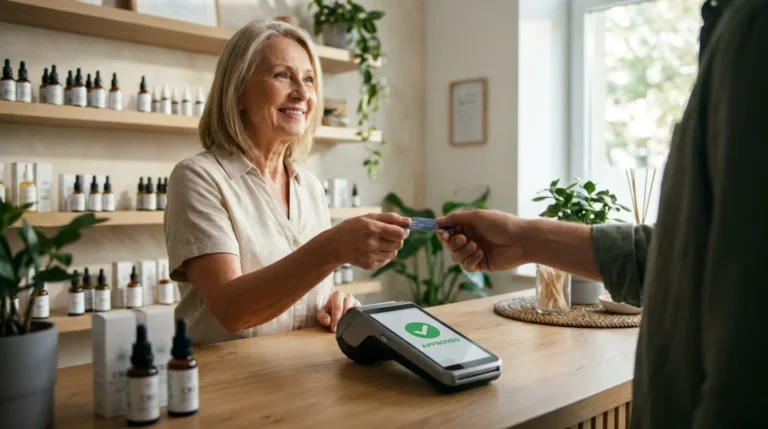
Mobile payment processing refers to the technology that allows credit and debit card payments to be accepted on a mobile device. Whether through a mobile payment app, an mPOS reader, tap-to-pay on iPhone, or online mobile payment tools, businesses gain flexibility in how they handle transactions.
The core idea is simple: a smartphone or tablet becomes a secure point of sale, allowing merchants to accept credit card payments in real time without a traditional checkout counter.
Most U.S. businesses now use mobile payment systems either as their primary method or as part of an omnichannel strategy. Consumer behavior changed rapidly. According to the 2024 Diary of Consumer Payment Choice from the Federal Reserve, credit and debit cards accounted for over 60% of all consumer payments in 2023, marking a continued shift from cash to electronic and card-based methods. The rapid shift forced businesses to adapt to mobile payment technology faster than expected.
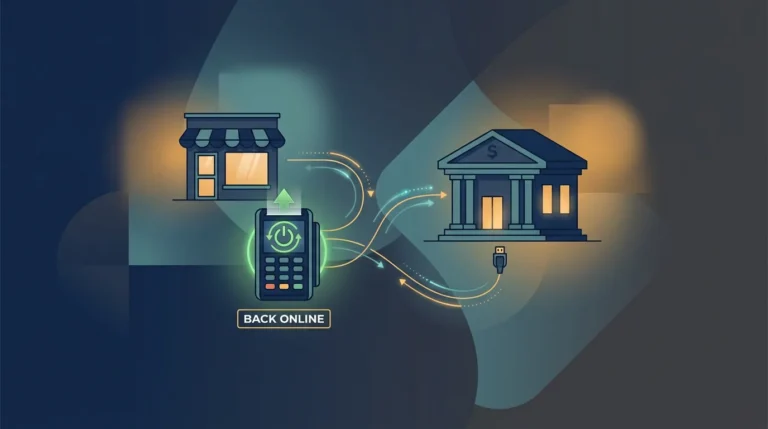
Systems behind mobile payment processing vary in design, but they all connect the merchant, payment processor, issuing bank, acquiring bank, and card networks into a single workflow. The payment travels across secure rails and returns authorization in seconds. Whether the customer uses Apple Pay, a contactless card, or a physical chip card connected to an Android device via a reader, the merchant receives approval within moments.
How Mobile Payment Processing Works
Mobile payment systems follow the same transaction logic as traditional credit card processing, though the technology layer is lighter and often faster. A mobile device initiates the transaction, a payment processor handles the authorization, and funds settle into the merchant account in the usual time frame, depending on the provider.
Major Mobile Payment Technologies Used in the U.S.
Payment technology used in the U.S. falls into four main categories:
| Technology Type | Description | Typical Use Cases |
| NFC Contactless | Wireless communication enabling tap-to-pay with smartphones or cards | Retail counters, hospitality, in-store checkout |
| Mobile POS Reader | Physical card reader paired with a mobile device | Food trucks, field services, and small retail |
| QR Code Payments | Customer scans a code to initiate payment | Restaurants, digital invoices, pop-up shops |
| Virtual Terminal | Keyed entry through a browser or app | Phone orders, remote billing, service businesses |
Several businesses still use ACH-based tools for recurring billing or invoice-based payments. These methods integrate easily with systems such as a merchant’s online bill pay platform or modern ACH acceptance tools. Some providers, including those using secure risk and fraud management solutions, combine multiple payment rails inside one platform to reduce declined transactions.

The U.S. Mobile Payment Market: Growth and Trends
The rise of mobile credit card processing overlaps with broader shifts in consumer expectations. Younger audiences adopted mobile wallets early, but older demographics followed as contactless acceptance spread across the country.
According to a recent market-research report, the U.S. mobile payments market was valued at around USD 290 billion in 2024, with a forecast to grow to USD 650 billion by 2032.
Digital payment technologies expanded significantly due to three factors: widespread smartphone ownership, merchant adoption of modern POS systems, and growing trust in mobile payment security solutions. Payment processors developed safer tokenization, encryption, and biometric tools, which reduced fraud and encouraged more merchants to accept mobile payments.
Businesses that rely on on-the-go sales, such as contractors, delivery providers, vendors at events, and mobile service professionals, increasingly use portable credit card processing systems. These systems operate on the same networks as enterprise-level processors, though with lighter hardware and faster onboarding.

Why Businesses Adopt Mobile Payment Solutions
Mobile payment solutions offer advantages that extend far beyond card acceptance. For many U.S. merchants, the biggest benefit is agility. A mobile device becomes a payment terminal and a customer engagement tool in one. Whether the business is small or mid-sized, mobility helps reduce wait times, shorten checkout lines, and create a smoother customer experience.
Mobile payment technology also supports real-time reporting across multiple channels. When integrated with an omnichannel payment structure, it becomes possible for a merchant to track online orders, in-store transactions, and mobile sales inside a single dashboard. Providers offering unified in-store systems or advanced online payment tools allow this type of consolidation.
Small businesses in particular benefit from the low setup cost. There is no need for a large POS installation, and many merchants start with a simple mobile card reader and scale from there. Larger businesses often combine mobile payment tools with their existing point-of-sale environments so employees can process payments anywhere on the floor.
Mobile payments have become a necessity rather than an extra feature. Customers increasingly expect to pay with a mobile wallet, a contactless card, or their smartphone app. By accepting payments across multiple formats, merchants reduce friction and prevent sales loss at checkout.
Core Security Features Required in Mobile Payment Processing
| Security Measure | Purpose | Impact on Merchant Operations |
| Tokenization | Replaces card numbers with secure tokens | Prevents raw card data exposure |
| End-to-End Encryption | Protects data from the device to the processor | Reduces risk during transmission |
| PCI DSS Compliance | Industry security framework for merchants and processors | Avoids violations and penalties |
| Fraud Intelligence Tools | Detects risky transactions in real time | Lowers chargebacks and false approvals |
How to Choose the Right Mobile Payment Processing Service in the USA
Evaluating mobile payment processors requires a deeper look than simply comparing transaction fees. Many businesses focus on price alone, but long-term effects like settlement reliability, customer support, and integration capability matter even more. Top payment processors in the U.S. vary significantly in fee structures, technology stacks, and the level of control offered to merchants.
A strong mobile payment processor should support iOS and Android devices, allow credit and debit card acceptance across multiple transaction types, and provide a virtual terminal for remote orders.
Equally important is the ability to merge mobile credit card processing with in-store systems and online payment tools. Businesses that want a unified model often choose providers offering omnichannel infrastructure, allowing them to manage every transaction through one platform.
Security and compliance are non-negotiable. A provider should supply information on PCI requirements, testing options, and expectations for merchants. Businesses that require ACH, check acceptance, or alternative payment methods should ensure the processor supports those features through verified ACH programs.
Support matters as well. Merchants benefit from specialists who can advise on payment routing, settlement timelines, funding questions, and dispute management. Firms that prioritize transparency and customer service become long-term partners rather than short-term vendors.

Future Trends in Mobile Payment Systems
Mobile payment systems continue to evolve as the U.S. payment landscape modernizes. Biometric authentication has become commonplace, pushing the expectation of one-touch or tap-to-pay checkout experiences.
Businesses now rely on mobile payment technology not just for front-end transactions but for back-office efficiency as well, including invoice processing, electronic billing, intelligent payment routing, and automated reconciliation.
The next growth stage is centered on two developments: expanded mobile wallet adoption and deeper integration of contactless payment rails with traditional banking systems. As more merchants adopt wireless payment systems and customers shift from physical cards to mobile wallets, demand for flexible mobile payment platforms will rise. Payments will continue to move toward unified systems where online orders, mobile transactions, and in-store payments all operate under a central merchant account with consistent reporting.
Conclusion
Mobile payment processing has moved far beyond a passing trend in the United States. It now sits at the center of how businesses accept card payments, manage transactions, and interact with customers.
The growing popularity of digital wallets, mobile apps, and smartphone-driven checkout options means businesses can no longer treat mobile payment systems as an optional upgrade. The modern merchant must support flexible, secure payments across mobile devices, online channels, and traditional point-of-sale environments.
This market continues to expand as technology matures and consumer expectations evolve. By understanding how mobile payment processing works, examining the security requirements, and selecting a provider that offers reliable support and unified processing across channels, businesses position themselves for both immediate efficiency and long-term growth.