After a shift, employees may want access to card tips before the next payroll date. A tip payout card can be one option, but the card itself does not make funds available sooner. Timing depends on how tips are calculated, when the merchant’s funds settle, and whether the payout provider waits for settlement or advances the money. This guide explains the main options, costs, and rules to check before choosing a setup.
What a tip payout card actually is
A tip payout card is a reloadable debit card assigned to an employee and funded by your business. Instead of holding card tips until the next pay run, you load them onto the card, often the same day.
Three things get mixed up constantly:
- Payroll card: receives wages through an employer’s payroll arrangement; a program may also distribute tips, depending on its design.
- Tip payout card: receives gratuities through a tip-distribution program. It may be a separate card or an account linked to an existing pay-card program.
- Push-to-card or instant payout: sends funds to an eligible debit card or bank account the employee already uses, so a new card may not be needed.
These options differ in who issues or manages the account, how the payment is funded, which fees apply, and whether employees can choose another way to receive pay.
How the money actually moves, step by step
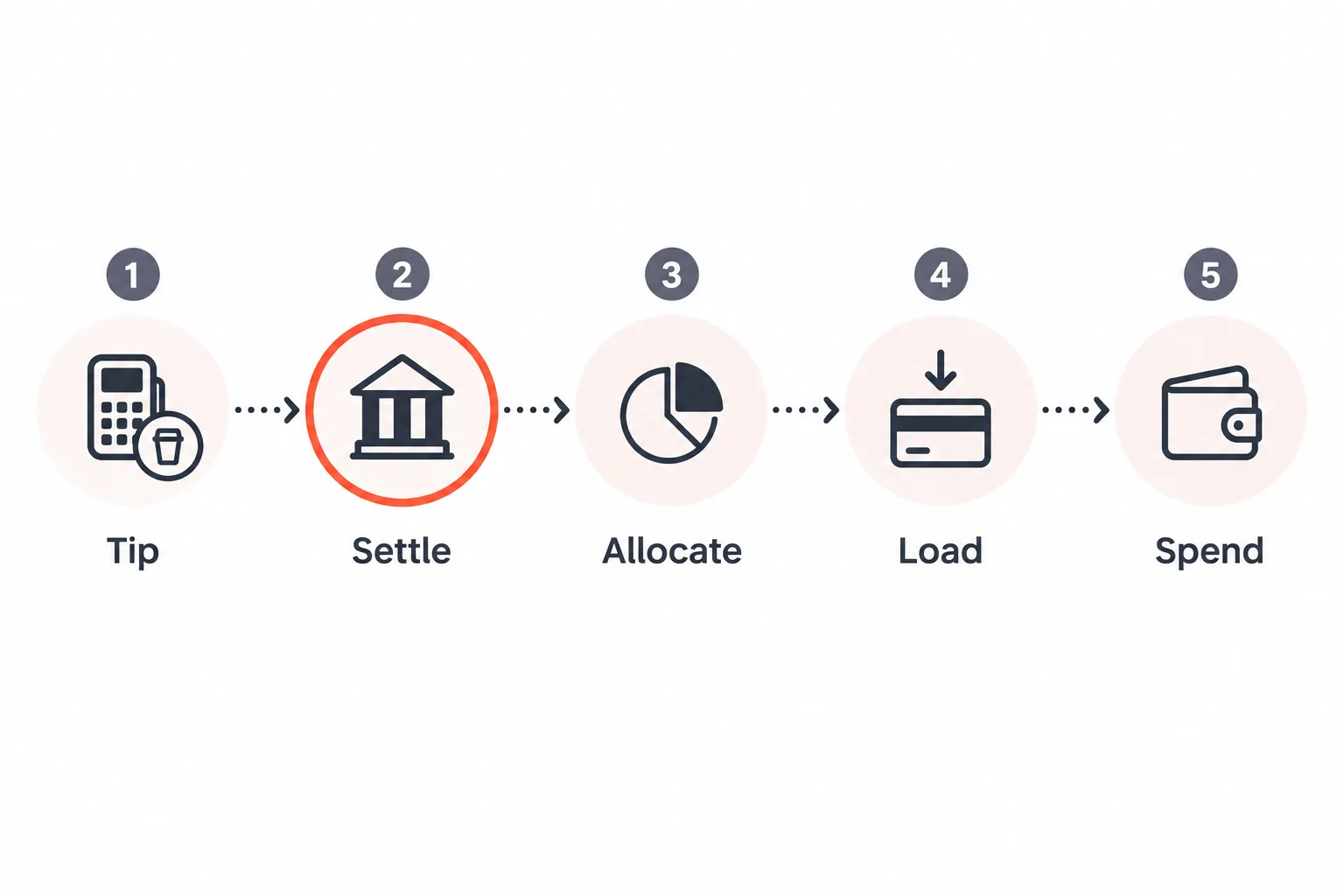
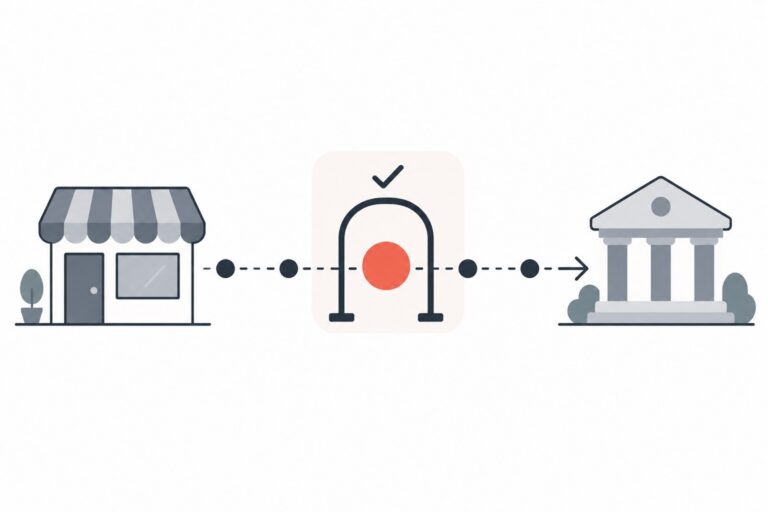
1. The client adds a tip at checkout. Depending on the point-of-sale system and transaction type, the tip may be captured with the initial payment or added through an approved adjustment process. 2. Your processor settles the batch according to your account’s funding schedule. The program may draw on settled merchant funds, a prefunded balance, or funds advanced by the provider; confirm which applies. 3. You or your tip platform allocate tips per employee, individually or by pooled split. 4. Funds load onto each card by ACH credit, same-day ACH, or push-to-card, if the program supports that rail and the employee’s destination account is eligible. 5. The employee spends, pulls cash at an ATM, or moves it to a personal account, subject to the card program’s access rules and fees.
The payout method and funding source, not the card alone, determine when money is available.
How settlement and payout method affect timing
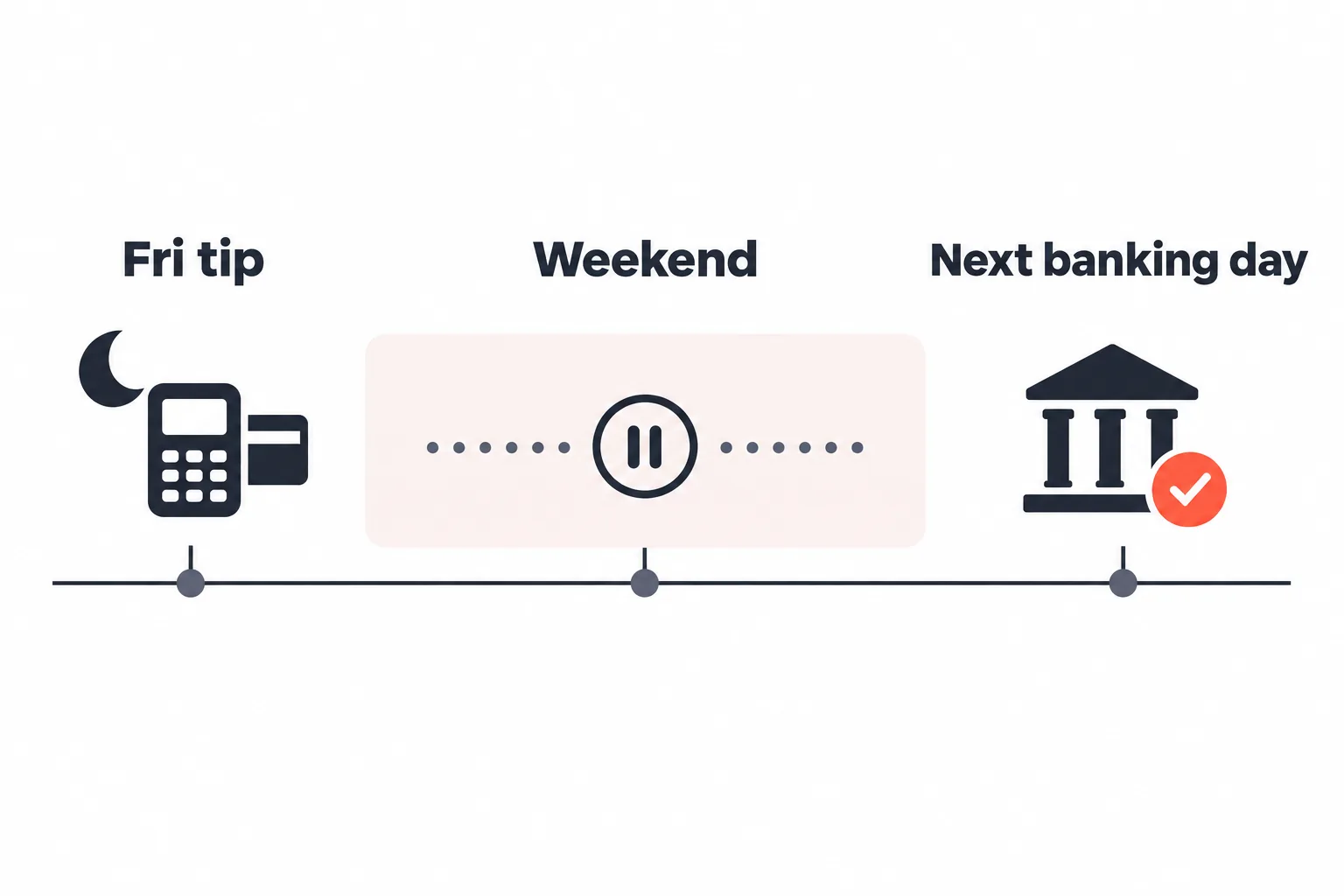
People ask how long an ACH transfer takes and expect one number. ACH credits can settle the same day, the next banking day, or within two banking days. The exact availability depends on the submission time, banking calendar, receiving bank, and payout program. Same-day ACH has processing windows and cutoff times; push-to-card is also subject to provider support, eligibility, and service availability. For more on ACH timing, see Nacha’s explanation of ACH settlement.
A Friday-night tip may not be available until the next banking day if the program relies on ACH and does not advance funds. Some providers may make funds available sooner through a different funding arrangement. Ask what happens on weekends and holidays, and whether the provider is advancing funds or waiting for your merchant deposit.
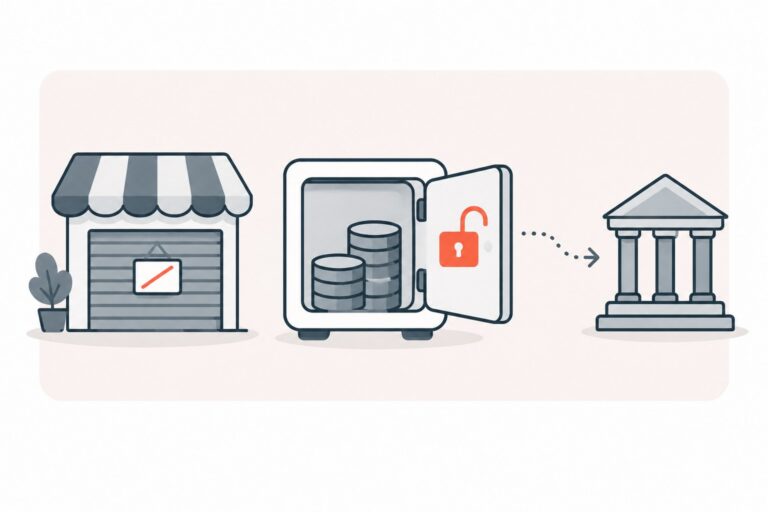
Your merchant account terms also matter. A rolling reserve, delayed funding, or weekly settlement can affect the money available to distribute. These terms vary by acquirer and account; don’t assume your payout provider can release tips before the underlying funds are available. Ask for your funding schedule and any reserve terms in writing.
Before choosing a provider, ask: what is the daily cutoff, what happens on weekends and holidays, what funds the loads if my deposit has not landed, and who is responsible if a load fails or is reversed?
Tip payout methods at a glance
The names can sound interchangeable, but the money may move through different systems. Confirm the exact method with the provider before comparing a “same-day” promise.
| Method | How it is funded | What affects availability |
|---|---|---|
| Payroll or tip payout card | The employer or payout provider loads an employee card. | The provider’s funding model, load cutoff, card terms, and whether funds are advanced or wait for merchant settlement. |
| ACH credit to an employee account | The payout program sends an ACH credit to the employee’s bank account. | Submission time, banking days, settlement timing, and receiving-bank posting. |
| Push-to-card | A supported program sends funds to an eligible debit card. | Provider and card eligibility, service hours, cutoffs, and any review or delay. |
| Payroll-cycle distribution | Tips are included in the employer’s regular payroll process. | The employer’s payroll schedule, payroll cutoff, and applicable wage-payment rules. |
The table describes common arrangements, not a guarantee that every provider offers each method or delivers funds within a particular time.
What these cards can help with
For employees, a digital payout may provide faster access to card tips, a way to check balances, and less need to wait for a paper check or a scheduled payroll date. Availability and account fees depend on the program.
For owners, digital tip distribution can reduce cash handling and manual envelope calculations, and may provide records for reconciliation. Confirm what reports the provider supplies and how those records connect to payroll.
Who pays the processing fee on a tip?
A card tip is part of the transaction processed under your merchant agreement. The fee impact depends on your pricing terms and how the tip is captured. If pricing includes a percentage of the transaction amount, the tip may increase the amount on which that percentage is calculated; a per-transaction fee may work differently. Check your statement and agreement rather than assuming every fee component applies identically.
The cost of credit card processing can include interchange, card-network assessments, and your processor or ISO markup. Credit card processing rates may be quoted as a percentage plus a flat per-transaction fee. Average credit card processing fees vary with card type, how the card was accepted, and the merchant’s agreement.
Federal law permits an employer, in certain circumstances, to deduct only the proportional credit-card fee actually paid on a charged tip. State or local law may provide greater protection. Review the Department of Labor’s guidance for tipped employees and confirm the rules that apply where your employees work before making a deduction.
Compare card-program fees separately from processing: monthly per-card fees, load fees, ATM and out-of-network withdrawal fees, inactivity fees, and replacement-card fees. Ask who pays each fee, whether employees can avoid it, and how the fee schedule is disclosed before enrollment.
Rules that quietly decide your setup
- Tips belong to employees, subject to a valid tip pool and applicable law. The federal rules for tip pools depend in part on whether the employer takes a tip credit and on who participates.
- For payroll cards, employers generally must offer at least one alternative payment method. State law determines which alternatives are permitted or required. Review CFPB guidance on payroll-card choices and applicable state requirements. Do not assume the same rule applies identically to every tip-only payout product.
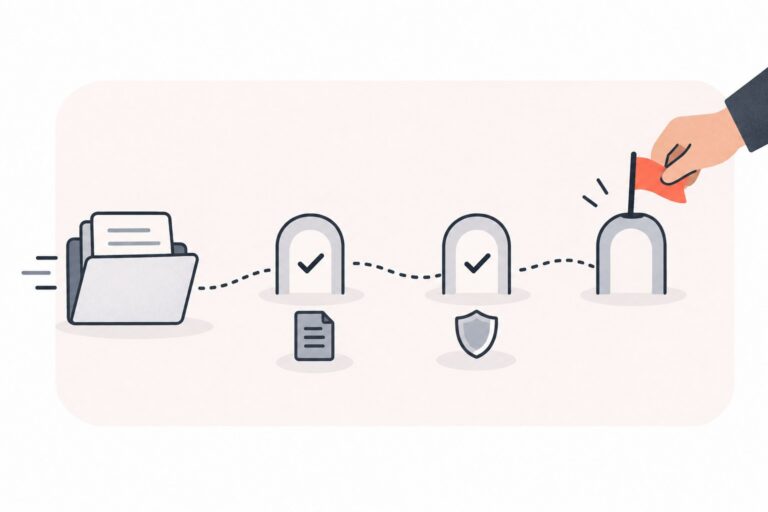
- A payout card does not remove tip reporting or payroll-tax responsibilities. Employers must keep records and handle applicable withholding and reporting. See the IRS guidance on tip recordkeeping and reporting.
- Distinguish voluntary tips from mandatory service charges. The IRS treats service charges distributed to employees as wages, not tips.
- Tip-pool eligibility and the treatment of managers, supervisors, and back-of-house employees depend on federal, state, and local rules and the employer’s wage practices. Check the applicable rules before configuring an automated pool.
How tip volume and adjustments can affect your merchant account
Tip-adjusted transactions can change your average ticket and monthly processing volume. Tell your acquirer how tips are added and include realistic tip amounts in your expected processing profile. Ask about any account-specific ticket or volume limits and the approved adjustment process for your POS or gateway. Review and funding policies vary by provider.
Keep a clear record of the amount the customer authorized, any permitted tip adjustment, the final transaction total, and the employee allocation. If a customer disputes the amount, those records can help explain the transaction. Disputes are handled through the merchant’s payment acceptance process; do not describe them as a guaranteed chargeback against an employee.
For help with transaction monitoring and dispute processes, see PPO’s Risk & Fraud Management services.
Choosing a setup without painting yourself into a corner
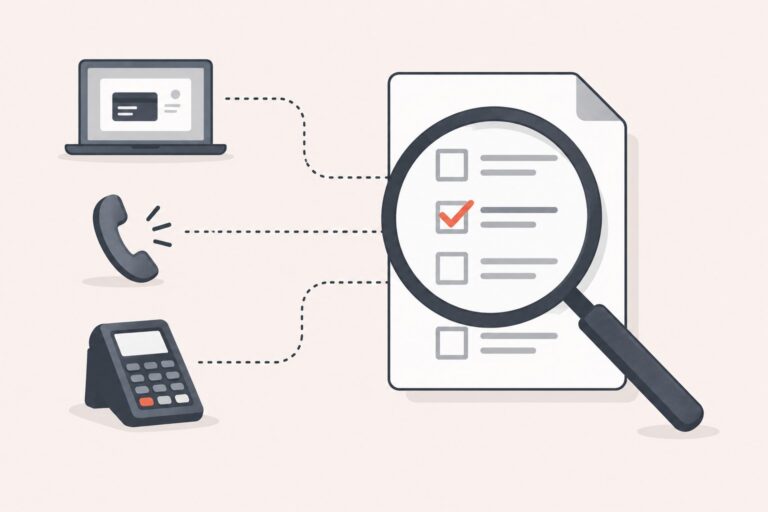
- Does the tool read tips straight from your POS or processor batch, or does someone upload a spreadsheet every night?
- Who issues the card and manages the program, and what does the fee schedule actually disclose?
- What identity and onboarding steps do employees face before their first load?
- Can employees choose a payroll card, an existing bank or debit account, or another permitted method? What happens if an employee cannot use the card?
- Does the provider calculate tip pools, export payroll records, and reconcile adjustments, or does your team still need to do those tasks?
- How are failed payouts, returned transfers, card replacement, and support requests handled?
- If you are considering more than one merchant account, disclose the arrangement to the acquirer and get approval for the intended processing and routing. Do not use a second account to bypass a funding restriction.
- Keep tip payouts separate from merchant deposits in your books so month-end reconciliation stays simple.
PPO’s site describes its gift, loyalty, and payroll-card program. Confirm directly whether the current program supports employee tip payouts, required integrations, payout timing, and fees; the published page does not specify those tip-payout features.
Frequently asked questions
How long does an ACH transfer take for a tip payout?
Can a tip payout card provide same-day access?
Can an employer deduct credit-card processing fees from tips?
Are cash tips and card tips handled differently?
Do employees pay fees to use a tip payout card?
Can employees be required to accept a payout card?
Are card tips taxed the same as wages?
What is the difference between a tip payout card and a payroll card?
Talk it through before you commit
Tip payouts only work as well as the account underneath them. If your funding is delayed, reserved, or unstable, a card program may not be able to make funds available sooner unless its provider offers a separate funding arrangement.
If you are weighing a tip payout setup, or you are already fighting funding delays, thin approval odds in a closely reviewed vertical, or a rising chargeback count, it is worth a conversation before you sign anything. PPO can discuss card and ACH acceptance, merchant funding timelines, and dispute handling for your situation. Its published materials do not confirm a dedicated tip-payout card or software offering, so ask whether the current payroll-card program fits your use case. We will explain the rule behind the answer, look at what is workable, and be clear about what depends on your acquirer. No guarantees of approval, because nobody can honestly offer those.
For a review of your payment setup, contact Premier Payments Online.
Written by Irini Tomei, Operating Principal, Premier Payments Online.