If your acquirer asks about “high-brand risk registration,” it may be referring to Visa’s current Integrity Risk Program (VIRP). Visa replaced the Global Brand Protection Program (GBPP) with VIRP in 2023, and current Visa rules use “High-Integrity Risk” terminology. The exact requirements depend on the merchant’s activity, assigned MCC, transaction type, and the acquirer’s approved category and tier.
The acquirer handles the Visa registration process; the merchant does not file directly with Visa. The merchant may need to provide business, website, licensing, billing, and processing information.
Registration is not the same as approval for a merchant account, and neither a registration nor an application guarantees acceptance.
Quick answer: what Visa high-brand risk merchant registration means
VIRP sets controls for Visa acquirers and their agents that support designated High-Integrity Risk (HIR) merchants and transactions. Before submitting covered transactions, the acquirer must obtain Visa approval for the applicable HIR acquiring registration and register covered merchants through Visa’s process. Visa’s public rules also require ongoing due diligence and monitoring.
Older processor emails may still use “high-brand risk” or “GBPP.” These terms can help identify what a request refers to, but use the current Visa rules and your acquirer’s instructions to confirm what applies to your business. Registration is a compliance step, not a punishment or a guarantee that a merchant account will be approved.
How GBPP became VIRP, and what changed
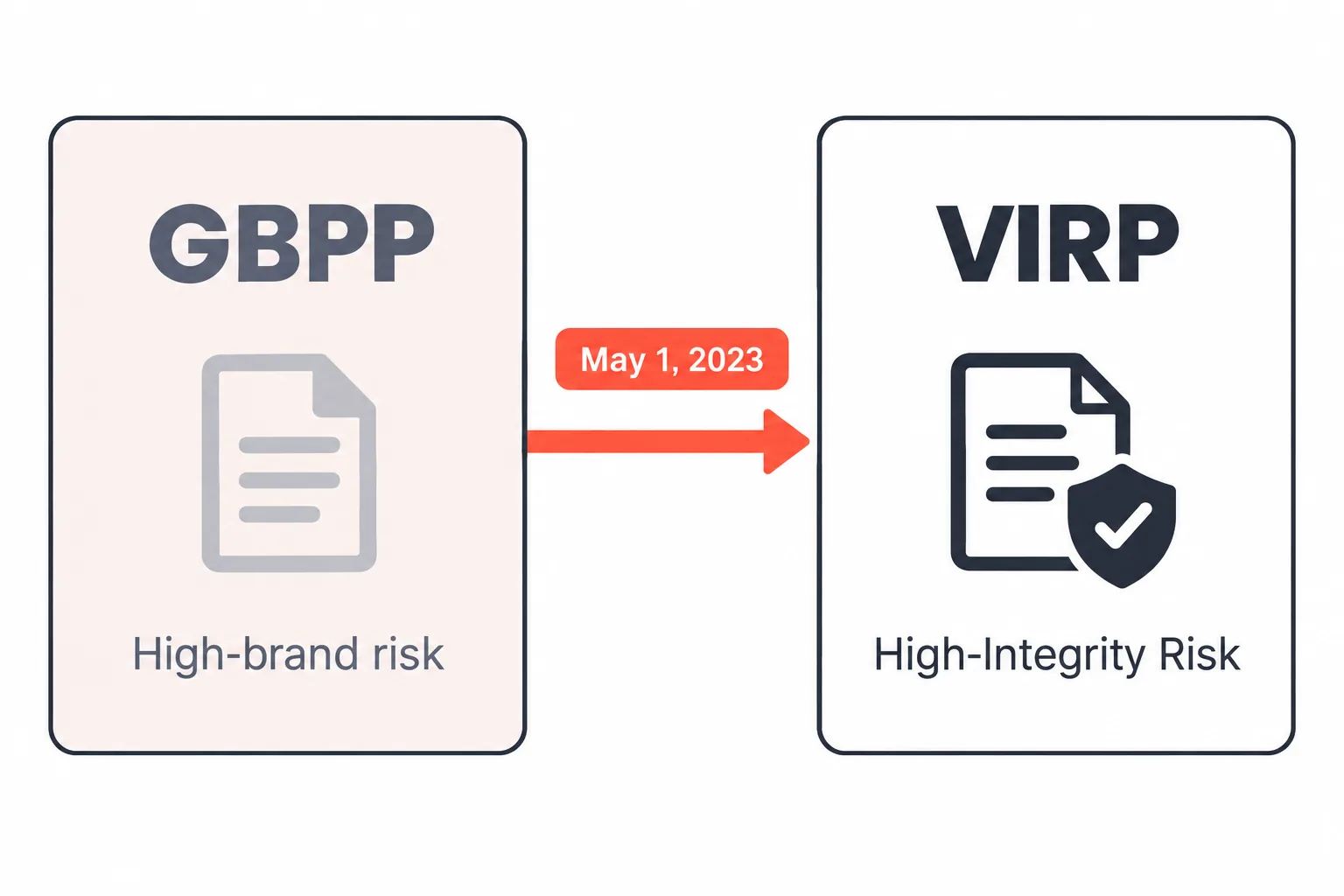
Visa’s Integrity Risk Program took effect on May 1, 2023, replacing the Global Brand Protection Program. The terminology changed from “high-brand risk” to “High-Integrity Risk,” and the program describes tiered controls for acquirers and designated business types. Older forms and processor messages may still use the former names. LegitScript’s VIRP explainer provides background on the transition; Visa’s current rules govern when terminology or third-party summaries differ.
That means a request for documents should be read in context. Ask the acquirer to identify the Visa rule or category it is applying, the MCC and activity under review, the registration status, and any merchant-specific conditions.
Which industries and activities may fall within VIRP?
Visa identifies High-Integrity Risk merchants by reference to MCCs and activities in its current VIRP materials. Some requirements apply to specified card-absent activity, but the scope is not accurately reduced to one rule that every “high-risk” business with online or phone payments must register. Visa’s current Core Rules require acquirers to use the applicable HIR categories and complete registration before submitting covered transactions.
Examples in Visa materials include certain pharmacy, adult-content, dating, gambling, outbound-telemarketing, subscription, financial-trading, and defined digital-asset activities. These examples are not a complete or permanent list: the current Visa guide, MCC, activity, transaction type, and region determine the applicable requirements.
A merchant category code (MCC) is a four-digit code used to describe a business’s primary line of business. The acquirer assigns the MCC based on what the business actually sells; merchants should not select a different code to avoid review. PPO’s high-risk merchant account guide explains how industry, sales channel, billing, and other factors can affect underwriting. Confirm your code and VIRP scope with the acquirer.
A telehealth, peptide, weight-loss, or subscription business is not automatically in scope just because of that label or billing model. Ask the acquirer to confirm the actual MCC, activity, and Visa requirements. Visa’s current rules also state an exception from HIR registration for certain merchants assigned MCC 5122 or 5912 if accredited by the National Association of Boards of Pharmacy or another regulatory body Visa recognizes. Confirm whether that exception applies before relying on it.
Who handles registration and ongoing requirements?
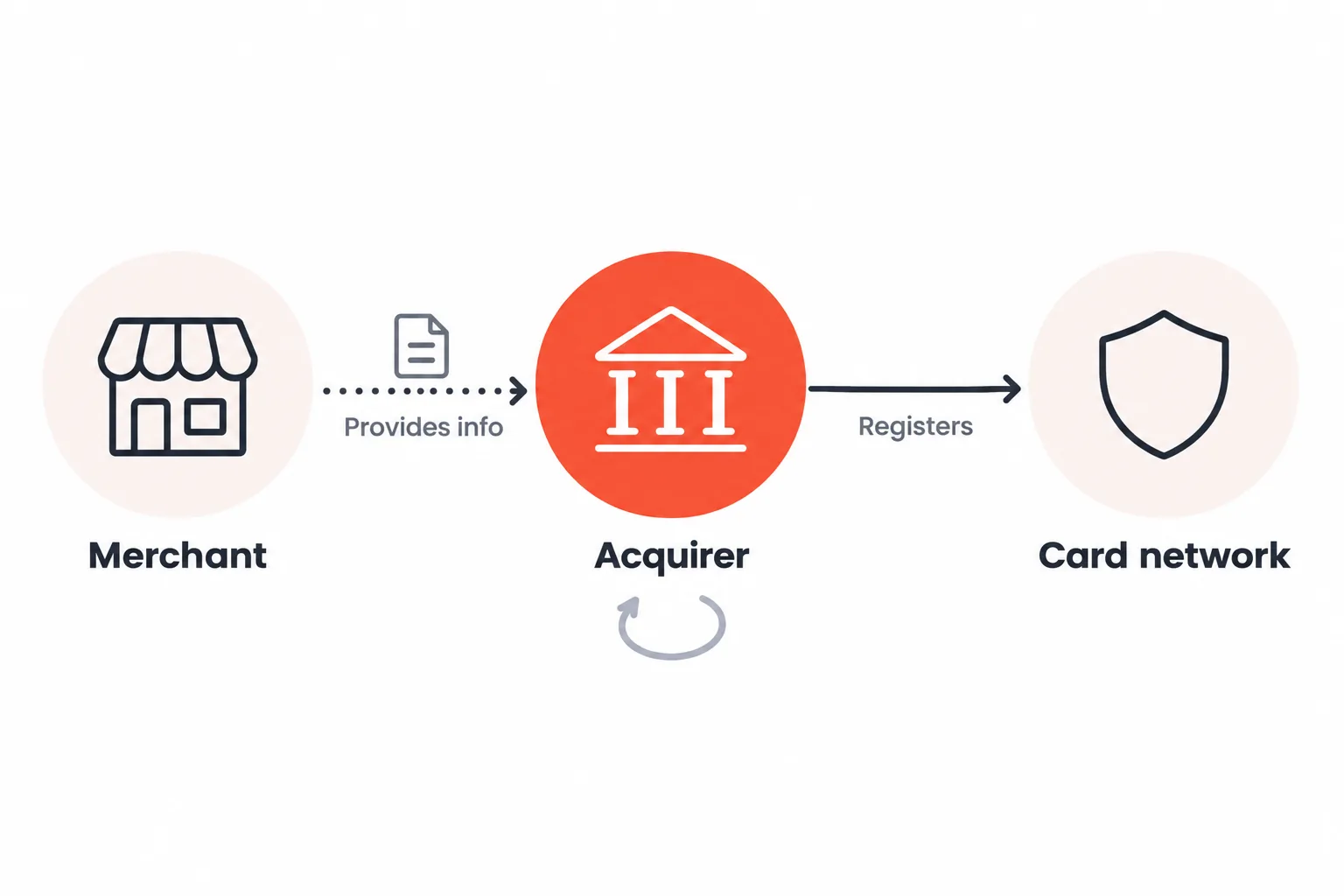
The formal registration applicant is the acquirer. The merchant supplies accurate information and follows the conditions in its merchant agreement. Visa’s requirements also vary by acquirer tier; the merchant should not be told that every business has the same yearly filing or attestation obligation.
Related readingWhy Is My Business Considered High Risk? 2026 GuideRead the guide →| Party | Role |
|---|---|
| Visa | Defines HIR categories and requirements, reviews acquirer registration applications, and may impose requirements under its rules. |
| Acquirer | Applies for the relevant HIR acquiring registration, completes required due diligence, registers covered merchants, and monitors activity. |
| Merchant | Provides accurate business, website, licensing, billing, and processing information; operates within approved terms; and tells the acquirer about material changes. |
| Payment facilitator, when involved | May have separate Visa registration and sponsored-merchant obligations. Ask the acquirer which party is responsible for each filing. |
Fees: what to ask before signing
Visa’s published acquirer risk standards describe a designated one-time, non-refundable application fee for an acquirer’s HIR registration. They also describe annual control self-assessments for acquirers supporting Tier 1 and Tier 2 categories; Tier 3 assessments may be requested. Those acquirer-level requirements are not the same as a universal annual Visa renewal fee charged to every merchant. See Visa’s Global Acquirer Risk Standards for the published control framework.
Your acquirer or processor may separately charge a merchant-level application, registration, compliance, or maintenance fee, or pass through network costs under your agreement. The amount and frequency can vary by category, region, acquirer, and current pricing. Ask for an itemized written explanation of the amount, who charges it, who pays it, and whether it recurs. PPO’s high-risk merchant fee guide explains broader processing costs; it does not replace a quote for your account.
Mastercard has separate registration requirements for certain categories. Ask your acquirer whether a Mastercard filing or charge applies to your specific business; do not assume every merchant pays two registrations.
What the acquirer may ask you to provide
- Website and policy information: terms, refund and cancellation policies, recurring-billing disclosures, working contact details, and the billing descriptor customers will see.
- Licenses and professional oversight: documents relevant to the products or services, the jurisdictions where you sell, and any regulated professionals involved.
- Certification, if required: ask whether LegitScript or another certification applies to your exact category and acquirer. Certification does not replace Visa registration or the acquirer’s approval.
- Marketing and sales information: landing pages, product claims, advertising, affiliate relationships, and traffic sources.
- Processing history: statements, refunds, disputes, prior processing relationships, and any previous account closures, when requested.
- Business and ownership documents: legal entity information, ownership, settlement account, and other underwriting documents requested by the acquirer.
Visa’s standards call for enhanced due diligence on HIR merchants, including review of the goods or services, marketing, location, prior processing history when available, and compliance with applicable law. The exact merchant document list comes from the acquirer and the category under review.
Step-by-step: how the process may work
1. Ask the acquirer to confirm the MCC, business activity, relevant Visa category, and applicable tier. 2. Request the current document checklist and written details of any merchant-level fees or conditions. 3. Update your website, billing disclosures, licensing documents, and certification if the acquirer says it applies. 4. The acquirer submits the applicable registration materials to Visa. Ask who will provide status updates and what approval must be received before processing begins. 5. Do not submit covered Visa transactions until the acquirer confirms the required registration is approved and the account is authorized to go live. 6. Keep the registered business information accurate. Tell the acquirer before changing products, domains, descriptors, billing models, or fulfillment arrangements. 7. Calendar only the renewals, reporting, and attestations the acquirer confirms apply to your business. Tier-specific acquirer assessments should not be presented as a universal merchant filing.
What can happen if registration or required controls are missing
Visa’s rules require acquirer registration before covered transactions are submitted. Visa can assess non-compliance against an acquirer, and its rules allow consequences where a merchant intentionally circumvents Visa programs. Whether the merchant faces a hold, revised terms, termination, or pass-through costs depends on the facts, the acquirer’s action, and the merchant agreement. A Visa assessment to an acquirer is not automatically a charge passed directly to the merchant.
Do not use an inaccurate MCC, another account, or a different payment route to conceal activity or bypass a registration requirement. Ask the acquirer how to correct a mismatch and document its instructions.
Maintaining compliance after approval
Keep the acquirer informed when your products, websites, descriptors, billing terms, or fulfillment partners change. Make sure your customer-facing disclosures and actual processing match the information reviewed by underwriting.
For recurring billing, make the renewal terms and cancellation process clear, keep authorization records, and monitor refunds and disputes. PPO’s chargeback management guide covers practical dispute-prevention steps.
A second merchant account or payment-routing setup does not guarantee uninterrupted processing and must not be used to evade Visa rules or account limits. Disclose the full arrangement to each acquirer and follow each agreement. ACH may be another payment option for some businesses, but it has separate authorization, return, and settlement requirements; it does not remove any Visa registration obligation for Visa transactions.
Frequently asked questions
Can I register with Visa directly?
Is VIRP the same as the old high-brand risk program?
Does every high-risk merchant need VIRP registration?
Does a pharmacy or telehealth business automatically need registration?
Is there an annual Visa registration fee for every merchant?
Can I process Visa transactions while the acquirer registration is pending?
Does registration mean my merchant account is approved?
Does LegitScript certification replace VIRP registration?
Talk it through before the paperwork does the talking
Not sure which Visa category or MCC your acquirer is applying for? Review PPO’s high-risk merchant account options and contact PPO to discuss the request and what information your acquirer may need. Any approval, registration, fees, and account terms remain subject to the acquirer and the current Visa rules.
Written by Irini Tomei, Operating Principal, Premier Payments Online. PPO describes itself as a Pennsylvania-based registered ISO/MSP and agent working with multiple acquirers and processing partners. Specifics depend on the business, acquirer, Visa category, and applicable rules.