A high risk merchant account helps businesses accept credit cards, debit cards, ACH, and online payments when banks or payment processors see extra risk in the business model. That risk may come from chargebacks, fraud exposure, recurring billing, high-ticket sales, regulated products, international transactions, or a limited processing history.
Here’s the thing: being called high risk does not mean a company is unsafe, dishonest, or poorly run. In many cases, it simply means the business needs a more specialized merchant account provider, stronger fraud prevention tools, better underwriting, and a payment setup built for its real-world operations. For companies that sell online, serve regulated markets, or process large transaction volumes, a standard processor may not be enough.
What Is a High Risk Merchant Account?
A high risk merchant account is a payment processing account for a business that banks, acquirers, or payment processors view as more exposed to financial loss. That loss could come from customer disputes, chargebacks, fraud, refund spikes, legal restrictions, or sudden transaction volume changes. Stripe describes high-risk merchant accounts as accounts for businesses that face higher risk from issues such as chargebacks and fraud, with factors such as card-not-present sales and high-ticket purchases also part of the classification process.
In simple terms, a high risk merchant account gives a business access to card processing when a regular account may be declined or closed. It can support credit card payments, debit card payments, ACH, recurring billing, online checkout, virtual terminal payments, and, in some cases, international payment processing.
For many high risk businesses, this type of account is not a luxury. It is the difference between accepting payments reliably and losing sales because a standard payment processor high risk policy does not fit the business. A company that sells CBD products, runs a subscription program, offers tech support, handles travel bookings, sells high-ticket products, or serves international customers may need a high-risk merchant account from a provider that understands underwriting, compliance requirements, and chargeback controls.
Premier Payments Online works in this exact space by helping merchants find high-risk merchant account support built around the actual business model rather than a one-size-fits-all payment setup.
Why Businesses Get Labeled as High-Risk Merchants
A high-risk merchant label usually comes from how banks and processors judge exposure. The decision is not based on one detail. Underwriters may review the industry, sales channel, refund policy, owner credit, chargeback history, fulfillment timeline, monthly volume, average ticket size, and the type of product or service sold.
For example, a local bakery with in-person payments and low ticket sizes may be low risk. A subscription eCommerce brand selling supplements nationwide has a different risk profile. Customers may forget they subscribed, dispute recurring charges, or request refunds after shipment. That does not make the business bad; it simply makes risk management more important.
| Risk Factor | Why It Matters to Payment Processors |
| High chargeback activity | Chargebacks can create losses for the processor, acquiring bank, and merchant. |
| Card-not-present sales | Online, phone, and invoice payments often carry more fraud risk than in-person card payments. |
| Recurring billing | Customers may forget renewal dates or dispute repeat charges. |
| High average ticket size | One disputed transaction can create a larger financial loss. |
| Regulated products or services | CBD, gaming, credit repair, adult, travel, and similar industries need closer review. |
| International transactions | Cross-border payments can involve more fraud, currency, and compliance concerns. |
| Limited processing history | New merchants give underwriters less data to evaluate. |
| Poor credit or past account closure | Banks may see more financial exposure if the owner or business has prior issues. |
| Future delivery | Travel, ticketing, coaching, and pre-order models carry refund and cancellation risk. |
A high risk merchant account does not remove responsibility from the merchant. It creates a better-fit structure for the risk already present in the business.
High-Risk Merchant Account vs Low-Risk Merchant Account
A low-risk merchant account is usually easier to approve because the business has predictable sales, low chargebacks, clear fulfillment, and a standard industry type. A high-risk merchant account takes more review because the processor needs to understand how the merchant sells, how customers pay, and what controls are in place.
| Feature | Low-Risk Merchant Account | High-Risk Merchant Account |
| Approval process | Usually fast and simple | More detailed underwriting |
| Processing fees | Lower rates in most cases | Higher rates due to added exposure |
| Rolling reserves | Rare or limited | More common, especially for higher-risk industries |
| Chargeback tolerance | Lower tolerance | More flexible, but still monitored closely |
| Payment methods | Standard card processing | Credit card, ACH, virtual terminal, gateway, recurring, and international options may apply |
| Contract terms | Often more flexible | May include stricter conditions |
| Fraud tools | Basic tools may be enough | Advanced fraud prevention tools are often needed |
| Best fit | Local retail, restaurants, and professional services | High risk ecommerce, subscriptions, travel, CBD, adult, credit repair, tech support, and high-volume merchants |
A low-risk merchant account works well when the processor sees little chance of loss. A high-risk merchant account structure works better when there is greater complexity. That complexity might include high chargebacks, cross-border sales, subscription rebills, large-ticket items, regulated categories, or sales across several channels.
This is where the right payment processing solutions matter. A high risk merchant services provider should not just approve the account and disappear. The provider should help the business set up the right payment gateway, transaction routing, fraud tools, reserve structure, chargeback process, and customer support workflow.
Common High-Risk Industries and Business Models
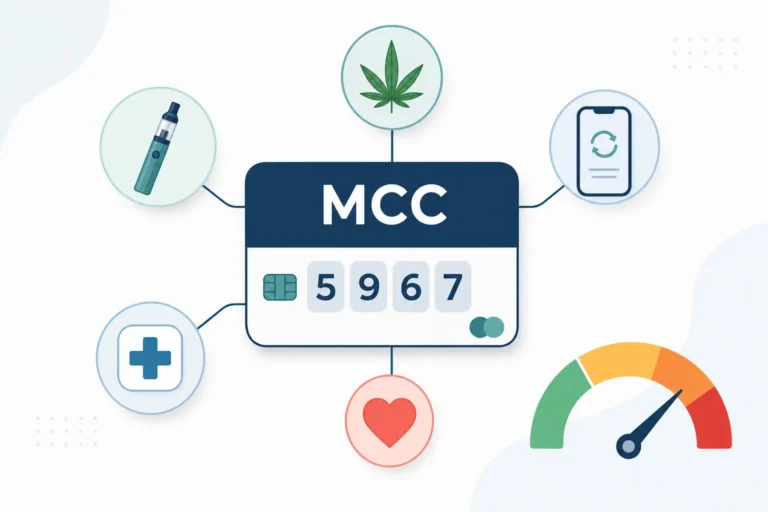
High risk industries often share one thing: they create more uncertainty for banks and processors. Sometimes the issue is regulation. Sometimes it is fraud. Sometimes it is customer behavior. In subscription businesses, for example, disputes may come from unclear billing terms. In travel, disputes may come from cancellations or future delivery. In online sales, the concern may be card-not-present fraud. Each of those categories maps to a specific merchant category code, and knowing which merchant category codes trigger high-risk pricing helps explain why your approval odds and fees look the way they do.
| Industry or Business Model | Common Reason for High-Risk Classification |
| CBD and hemp | Regulation, product restrictions, and changing compliance requirements |
| Travel and ticketing | Future delivery, cancellations, and refund disputes |
| Subscription ecommerce | Recurring billing confusion and chargeback exposure |
| Adult entertainment | Reputational, regulatory, and card-brand restrictions |
| Gaming and gambling | Legal restrictions, age controls, and cross-border risk |
| Credit repair and debt services | Compliance scrutiny and customer disputes |
| Nutraceuticals | Product claims, refunds, and subscription models |
| Tech support and software | Fraud exposure and intangible delivery |
| High-ticket online retail | Larger dispute amounts |
| International e-commerce | Currency, fraud, and settlement complexity |
| MLM and network marketing | Business model scrutiny and customer complaints |
| High-volume merchants | More transactions can mean more exposure if controls are weak |
Many merchants are surprised when they find out their business is high risk. A company may have strong sales, good customer service, and a clean reputation, yet still be declined by a mainstream provider. The problem is not always the business itself. Often, the issue is that the payment processor high risk policy does not support the category.PPO’s own service model is built for businesses that need more than a basic processor. Its online payment processing setup supports e-commerce merchants, while its omni-channel payment processing can help businesses connect online, in-store, mobile, and scheduled payments under a more unified setup.
How High Risk Payment Processing Works?
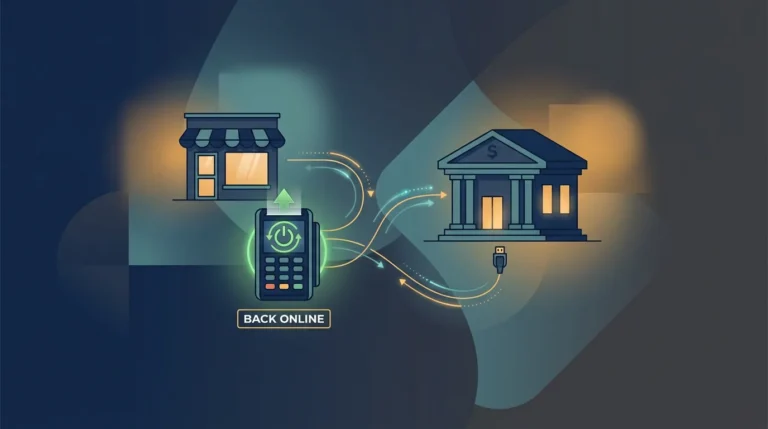
High risk payment processing follows the same basic payment path as standard card processing, but the account is underwritten and monitored more closely. When a customer pays, the payment gateway captures the transaction data and sends it securely through the processor. The acquiring bank, card network, and issuing bank review the transaction. If approved, the payment settles with the merchant, although payout timing may vary.
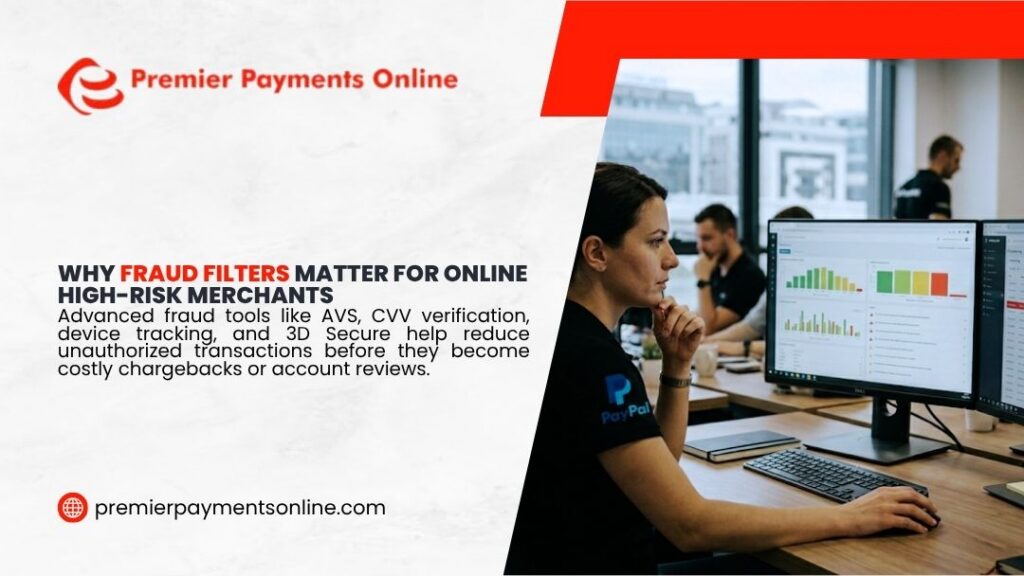
The difference sits behind the scenes. A high-risk processor may apply stronger fraud filters, set transaction limits, review chargeback ratios, require reserves, or monitor refund patterns. For online sellers, the gateway may use tools such as AVS, CVV checks, velocity controls, device checks, 3D Secure, tokenization, and real-time risk scoring.
Security is not optional here. The PCI Security Standards Council states that “PCI DSS provides a baseline of technical and operational requirements designed to protect payment account data.” That matters because a high-risk merchant account often handles sensitive payment data in environments where fraud and disputes can hit harder.
A merchant that sells online may need a secure payment gateway with tokenization, fraud controls, reporting, and chargeback visibility. A business that accepts bank payments may also need ACH and eCheck acceptance to reduce card costs or offer customers another way to pay. Retail merchants, meanwhile, may need in-store payment processing options that connect POS terminals, reporting, and customer data.
High Risk Merchant Account Fees and Rolling Reserves
High risk merchant account fees are usually higher than standard merchant account fees. That is not random. The processor and acquiring bank take on more exposure, so the pricing reflects that risk. The exact cost depends on the business type, chargeback history, transaction volume, average ticket, refund rate, payment method, country, and underwriting result.
A high risk merchant account may include transaction fees, monthly account fees, payment gateway fees, PCI compliance fees, chargeback fees, batch fees, virtual terminal fees, and, in some cases, application or setup fees. A rolling reserve may also apply. A rolling reserve means the processor holds back a small percentage of sales for a set period, then releases it later if the merchant account stays in good standing.
For example, a processor may hold 5% or 10% of processed volume for 90 or 180 days. The reserve protects the acquiring bank if refunds, fraud, or chargebacks spike. It can strain cash flow, but it may also help a high-risk business obtain a high risk merchant account when approval would otherwise be difficult.
Ramp notes that high-risk merchant accounts may involve higher transaction fees, rolling reserves, longer approval times, and deeper compliance checks. That does not mean every high risk account is expensive in the same way. A well-documented business with low chargebacks, clear policies, and steady volume may qualify for better terms than a merchant with unclear billing, weak support, and a messy dispute history.
Pros and Cons of High-Risk Merchant Accounts
A high-risk merchant account can solve a real payment problem, but it is not free of trade-offs. The best approach is to look at both sides before signing with any merchant account provider.
| Benefits | Trade-Offs |
| Let’s high-risk merchants accept card payments when standard processors may decline them | Fees are usually higher than low-risk accounts |
| Supports complex business models such as subscriptions, high-ticket sales, and international ecommerce | Underwriting requires more documentation |
| Can offer stronger fraud prevention tools and chargeback controls | Rolling reserves may affect cash flow |
| May support credit card, ACH, virtual terminal, and gateway payments | Approval is not guaranteed |
| Gives hard-to-place merchants a more stable payment path | Contracts may include stricter terms |
| Can improve payment continuity for high-risk businesses | Ongoing monitoring is part of the relationship |
The main benefit is access. A high risk business merchant account gives a company a way to accept payments without trying to squeeze into a processor that was never built for its category. The main drawback is cost. Higher risk usually means higher pricing, more review, and tighter rules.
But here’s the problem with chasing only the lowest rate: the cheapest provider may not be the safest provider. If the processor does not understand the merchant’s industry, the account may be approved quickly and closed just as quickly. A lower rate is not a bargain if the business loses its ability to process payments.
What Documents Are Needed to Apply?
When a business applies for a high-risk merchant account, the provider needs to see enough information to make a fair underwriting decision. A complete file can speed up review and reduce back-and-forth. A weak file can slow approval or lead to poor terms.
| Document or Detail | Why It Helps Approval |
| Business formation documents | Confirms the legal business entity |
| Owner identification | Supports underwriting and compliance review |
| Business bank account details | Shows where funds will settle |
| Processing statements | Shows sales volume, refunds, and chargeback history |
| Bank statements | Helps prove cash flow and financial stability |
| Website URL | Let’s underwriters review products, pricing, policies, and checkout flow |
| Refund, privacy, and shipping policies | Shows customers have clear terms before they pay |
| Product or service description | Helps the processor understand actual risk |
| Supplier or fulfillment details | Useful for physical products and future delivery |
| Chargeback history | Helps structure pricing, reserves, and risk controls |
| PCI or security information | Shows how payment data is protected |
The application process may feel detailed, but it serves a purpose. A high risk merchant account provider needs to understand the business before it can place the account with the right acquiring partner. Hiding information almost always backfires. A merchant that sells in a restricted category, uses recurring billing, or has prior processing issues should be direct from the start.
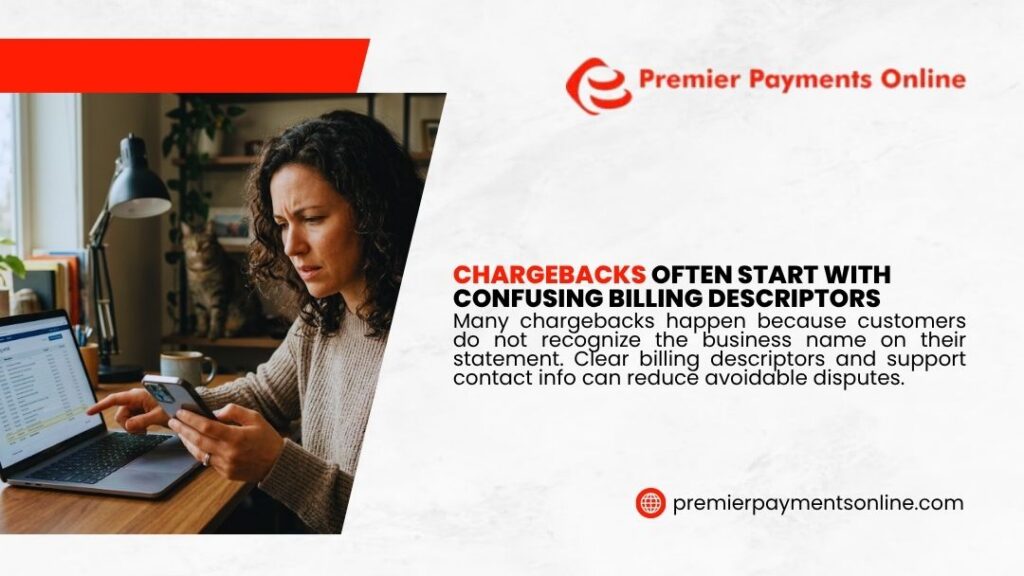
Merchants can also strengthen their application by using clear checkout language, visible customer support details, accurate product claims, and a recognizable billing descriptor. A customer should know exactly who charged them and why. That simple detail can cut down disputes before they become chargebacks.
How to Improve Approval Odds for a High-Risk Merchant Account
Approval is not just about industry. It is also about presentation and risk control. A business that looks organized, transparent, and responsive is easier to underwrite than one with missing policies and vague billing terms.
Start with the customer experience. The website should clearly show the business name, contact details, refund policy, privacy policy, shipping terms, subscription terms, and cancellation process. The checkout page should not hide costs or renewal language. Customers who feel misled are far more likely to dispute charges. For a full playbook on cutting chargebacks as a high risk merchant, see our guide on reducing chargeback ratios before they threaten your account.
Next, review fraud controls. A high risk payment gateway should support tools such as address verification, CVV checks, velocity limits, device checks, 3D Secure, blacklist controls, and transaction review rules. For recurring billing, card-on-file and account updater tools can reduce failed payments. For high-ticket transactions, manual review may be worth the extra step.
Chargeback management also matters. The Federal Trade Commission explains that consumers have legal rights to dispute billing errors under the Fair Credit Billing Act. Merchants should respect that process while also keeping strong evidence. Order records, delivery confirmation, signed agreements, customer communication, refund logs, IP addresses, and terms acceptance records can help when a dispute occurs.
PPO’s risk and fraud management tools are relevant here because high risk payment processing is not only about approval. It is about keeping the account healthy after approval.
High-Risk Payment Gateway vs High-Risk Merchant Account
Many business owners use these terms as if they mean the same thing. They do not.
A high-risk merchant account is an account that allows a business to accept and settle payments. It is tied to underwriting, risk review, reserves, chargebacks, and banking relationships. A high-risk payment gateway is the technology that securely passes payment data from the checkout page, invoice, virtual terminal, or POS system to the processor.
A high-risk e-commerce merchant account often needs both. The merchant account handles the financial side. The gateway handles the transaction flow and security layer. Without the right gateway, even an approved merchant account may not work well for the business. Without the right merchant account, even a polished checkout page may fail once underwriting catches up.
PPO explains the difference in its payment gateway vs payment processor comparison, which is useful for merchants comparing high risk gateways, processors, and account providers.
Can You Get High Risk Merchant Account Instant Approval?
A phrase like high risk merchant account instant approval sounds attractive, but it deserves caution. True instant approval is uncommon for high-risk merchant accounts because underwriting requires review. A provider may offer fast pre-approval, same-day review, or a quick conditional decision, but the acquiring bank still needs to verify the business.
The same is true for guaranteed merchant account approval. No responsible provider can honestly guarantee approval for every high-risk business. Some industries, products, legal jurisdictions, or chargeback histories may not qualify. A better promise is transparent review, accurate placement, and practical guidance.
Fast approval can happen when the merchant has clean documents, clear processing statements, a compliant website, low chargebacks, and a business model the provider already understands. Slow approval is more likely when documents are missing, the product category is unclear, the website lacks policies, or prior processing history raises questions.
So, what is a high risk merchant account in this context? It is not a shortcut around underwriting. It is a specialized account that requires the right fit between merchant, provider, processor, acquiring bank, and gateway.
How Chargebacks Affect High Risk Merchant Processing
Chargebacks sit at the center of many high risk merchant processing decisions. A chargeback occurs when a cardholder disputes a transaction with the issuing bank. Some disputes are valid. Others may come from confusion, buyer’s remorse, fraud, unclear billing, poor customer support, or friendly fraud.
Card networks and processors track chargeback levels because high dispute ratios can create financial and compliance problems. Chargebacks and card disputes also exist for a consumer-protection reason. The FTC explains that the Fair Credit Billing Act gives credit card users a dispute process to correct billing errors, including certain unauthorized, incorrect, or unresolved charges. For merchants, that makes clear billing, fast support, refund records, and delivery proof essential.
For merchants, the answer is not to fight every dispute blindly. The better approach is to prevent avoidable disputes before they happen. Clear billing descriptors, quick support replies, plain refund terms, shipment tracking, subscription reminders, and honest product descriptions can reduce friction. When a dispute does occur, the merchant needs organized evidence and a fast response.
This is why high-risk merchant services often include chargeback alerts, dispute tools, fraud analytics, and real-time monitoring. The goal is not only to win disputes. The goal is to keep the account below risk thresholds so the business can keep processing.
What to Look for in a High Risk Merchant Account Provider
Choosing the right high risk merchant account provider is one of the most important decisions a business can make. A provider should understand the industry, ask detailed questions, explain pricing clearly, and recommend a setup that fits the business model.
A good provider should be able to discuss gateway compatibility, fraud tools, chargeback ratios, reserves, settlement timing, contract terms, ACH options, card processing, virtual terminal access, and support availability. Those conversations look different by vertical, so if you sell supplements our guide to getting a nutraceutical merchant account approved walks through what underwriters actually ask for. The provider should also know whether the merchant needs domestic acquiring, international high risk merchant accounts, offshore options, or a multi-channel setup.
| Selection Factor | Why It Matters |
| Industry experience | A provider that knows the merchant’s category can place the account more accurately. |
| Transparent pricing | Clear fees reduce surprises after approval. |
| Reserve terms | Merchants need to know how much may be held and for how long. |
| Gateway compatibility | The account must work with the website, CRM, billing tool, or POS system. |
| Fraud prevention tools | Strong controls reduce chargebacks and account reviews. |
| ACH support | Bank payments can help some merchants reduce card dependency. |
| Chargeback support | Dispute help is critical for high risk accounts. |
| Customer support | High-risk merchants need real answers, not endless transfers. |
| Contract clarity | Terms should be reviewed before the merchant signs. |
| Scalability | The provider should support volume growth, new channels, and future payment methods. |
Premier Payments Online positions itself as a customer-focused payment partner rather than a generic account seller. Businesses that need payment fraud prevention or payment tokenization can pair approval with stronger account protection.
Red Flags Before You Sign a High-Risk Processing Contract
Not every high risk processor is a good fit. Some providers use aggressive claims to win merchants who feel desperate after a decline. That is risky. A high-risk business should read the agreement carefully before signing.
Be careful with providers that promise guaranteed approval, avoid written pricing, hide reserve terms, refuse to explain chargeback fees, use vague gateway language, or pressure the merchant to sign quickly. Also watch for long contracts with steep cancellation fees, weak customer support, unclear PCI responsibility, and no plan for fraud or disputes.
A serious provider will ask questions. That may feel slower, but it is a good sign. High risk payment processors that do no review at all may not be placing the account properly. When risk finally surfaces, the account may face frozen funds, sudden termination, or rolling reserves that were never explained clearly.
The best high risk merchant account is not always the fastest one. It is the one that matches the business type, payment volume, risk profile, and long-term growth plan.
Is Stripe a Fit for High-Risk Businesses?
Many merchants start with Stripe, PayPal, Square, or another easy sign-up processor because setup is simple. For low-risk businesses, that can work well. For some high-risk merchants, however, an aggregator model may not offer the stability they need.
The issue is not that Stripe high risk business rules are unfair by default. Large processors must manage risk at scale. The problem is fit. A business that sells in a restricted category, has high ticket sizes, accepts recurring payments, or sees sudden volume spikes may need an underwritten high-risk merchant account rather than a quick-start processing account.
If a merchant has been declined, reviewed, or terminated by a mainstream provider, the next step should not be to hide the business type and try again elsewhere. The smarter move is to apply for high risk merchant account review with accurate documents and a provider that already works with high risk merchants.
High Risk ACH Processing and Alternative Payment Methods
Credit card processing high risk merchant accounts are important, but card payments are not the only option. Some businesses also need high risk ACH processing, eCheck acceptance, wire options, or alternative payment methods. ACH can help reduce card dependency, especially for invoices, B2B payments, recurring billing, and higher-ticket transactions.
ACH is not risk-free. Returns, unauthorized debits, and bank account errors still happen. But for some merchants, ACH can lower processing costs and offer customers a familiar way to pay. It may also be useful when card networks place limits on a category.
Invoice-heavy businesses can also benefit from invoice payment automation, especially when manual collections slow cash flow. A business that sends invoices, accepts online payments, and uses recurring terms may need a blended payment strategy rather than one payment method.
What Is a High Risk Merchant Account for E-commerce?
For e-commerce merchants, what is a high risk merchant account really solving? It solves the gap between online sales growth and payment stability. Online merchants face card-not-present risk, fraud attempts, shipping disputes, refund requests, cross-border orders, and recurring billing issues. A high-risk e-commerce merchant account gives the business a payment setup designed for that environment.
The right setup may include a high risk online payment gateway, fraud filters, customer authentication, tokenized payment data, chargeback alerts, recurring billing controls, and detailed reporting. It may also include multiple merchant accounts or routing options for larger merchants that need redundancy.
This can help a business avoid a common trap: growing fast on a processor that was never built for its risk level. When sales rise, disputes rise, too. Without the right account structure, a merchant may face holds, reserves, or sudden shutdowns at the worst possible time.
How to Reduce Risk After Approval
Approval is only the first step. A high-risk merchant account must be maintained. The processor will continue to review chargebacks, refunds, transaction volume, fraud activity, and business changes. If the merchant changes products, increases volume sharply, expands internationally, or adds recurring billing, the provider should know.
Risk management should become part of business operations. Customer support should respond quickly. Refunds should be handled before frustrated customers call their bank. Subscription reminders should be clear. Product pages should avoid exaggerated claims. Fulfillment delays should be communicated early. Fraud rules should be adjusted as order patterns change.
Good payment operations are not glamorous, but they protect revenue. A merchant that treats disputes, fraud, and compliance as afterthoughts may lose the account it worked hard to obtain. A merchant who tracks issues early has more control.
FAQs About High-Risk Merchant Accounts
What is a high-risk merchant?
A high-risk merchant is a business that operates in an industry, sales model, or transaction environment that creates added risk for payment processors. Common reasons include chargebacks, online sales, recurring billing, international customers, regulated products, poor credit, or prior processor issues.
Are high-risk merchant accounts legal?
Yes, high-risk merchant accounts are legal when the business itself is legal and compliant. Some industries require more documentation, licensing, age controls, product restrictions, or legal review before approval.
Why was my business labeled high risk?
Your business may be labeled high risk because of your industry, chargeback history, average ticket size, recurring billing model, international sales, refund rate, owner credit, or prior processing history. The label is based on risk exposure, not just business quality.
How much do high risk merchant account fees cost?
Fees vary by business type, volume, chargeback history, payment method, and underwriting result. High-risk merchant account fees are usually higher than low-risk fees and may include transaction rates, monthly fees, gateway fees, chargeback fees, and rolling reserves.
Can I get a high-risk merchant account with bad credit?
Some providers work with merchant accounts for bad credit, but approval may require stronger documentation, reserves, lower initial limits, or additional underwriting. Bad credit does not always mean denial, but it can affect terms.
What is a rolling reserve?
A rolling reserve is money held back from merchant sales for a set period to protect the processor or acquiring bank from chargebacks, fraud, and refunds. After the hold period ends, the reserve is usually released on a rolling schedule if the account remains in good standing.
Do high-risk merchants need a special payment gateway?
Many do. A high-risk payment gateway can support fraud filters, tokenization, recurring billing, virtual terminal payments, 3D Secure, and reporting. The gateway should match the merchant account and business operations.
A Smarter Way to Handle High-Risk Payments
A high-risk label should not stop a solid business from accepting payments. Neither should a closure that was based on incomplete information, which is why it helps to know how to appeal a terminated merchant account before assuming the decision is final. It should push the business toward a better-fit payment structure. The right account can support card payments, ACH, online checkout, recurring billing, fraud prevention, and chargeback management without forcing the merchant into a processor that does not understand its industry.
So, what is a high risk merchant account? It is a specialized payment account for businesses that need closer underwriting, stronger risk controls, and a provider that understands complex payment models. CBD sellers face an especially strict version of this, so it is worth reading how CBD merchants get approved and stay approved before you apply. For merchants in ecommerce, CBD, travel, subscriptions, credit repair, tech support, international sales, or other hard-to-place categories, the right account can protect both revenue and continuity.
Premier Payments Online helps businesses review their payment needs, risk profile, processing channels, and account options before choosing a path. If your business has been declined, placed under review, or needs a more stable high risk payment processing setup, speak with PPO and get a clearer route forward.